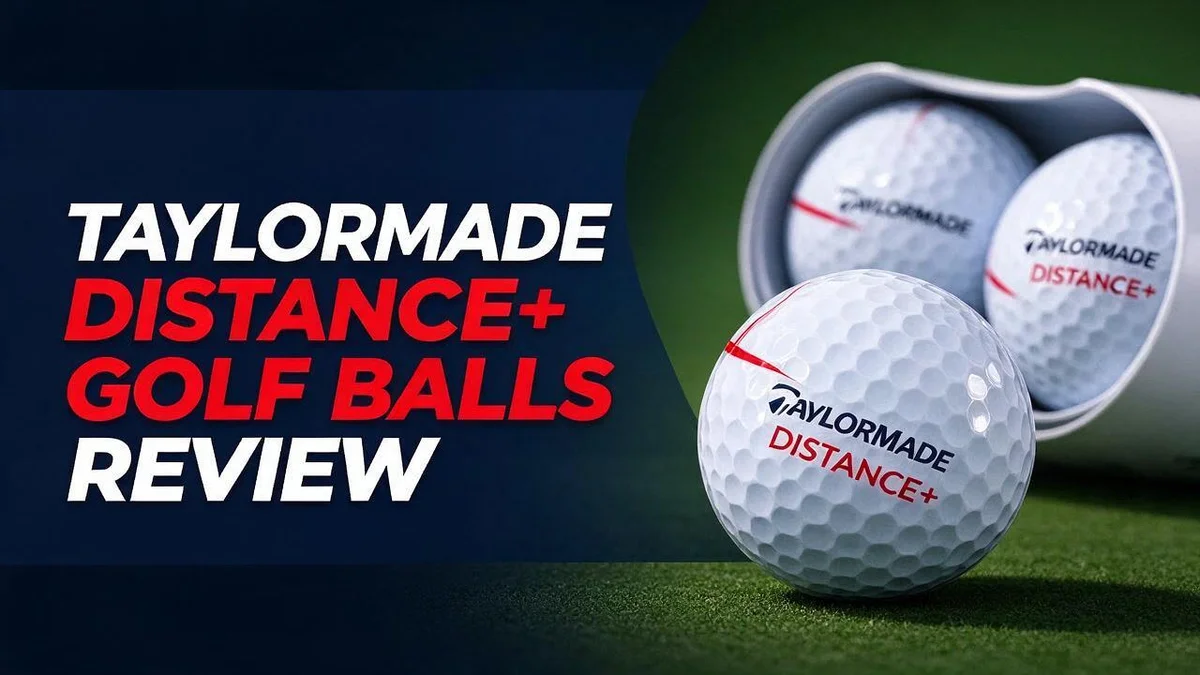
TaylorMade Distance+ Golf Balls Review: Distance, Feel and Durability Tested
Want more yards off the tee without losing a soft feel? TaylorMade Distance+ Golf Balls aim to deliver exactly that.
This ball uses a two piece construction with a mid compression feel. The REACT Speed Core helps launch shots fast. Low drag aerodynamics keep the ball flying farther.
Swing Yard named it the best overall distance ball in 2024. It also earned a bronze in a Today’s Golfer robot test at 78 mph.
Golfers also like its durability and the yellow version’s easy visibility. Advanced players may want more spin, though.
In this review, I compare it with rivals like the Callaway Supersoft and Titleist Tour Soft. Let’s see if it fits your game.
In a Nutshell
-
REACT Speed Core powers the ball for strong distance on every shot. You get extra yards from the driver down to the irons.
-
Low drag aerodynamics help the ball keep its speed in the air. That means a steady, penetrating flight.
-
The ball won bronze for full performance in a Today’s Golfer robot test at 78 mph. That result shows solid results from tee to green.
-
It works best for golfers who want straighter shots. The design helps cut down on big misses.
-
The alignment aid helps you line up tee shots and putts with more confidence.
-
Advanced players may want more spin around the greens. This ball favors distance over short game control, so low handicappers might prefer other options.
-
Casual golfers will likely enjoy it most. It also sits in the same conversation as the Callaway Warbird Distance+ and the TaylorMade Speed Soft.
Construction and Core Technology
The inside of a golf ball does most of the heavy lifting. Engineers design the core to store energy from the clubface. Then the core releases that energy as speed.
This ball uses just two layers. A solid core sits in the center, and one outer cover wraps around it. Fewer layers mean less energy gets lost during impact.
Think of the core like a tight spring. When the clubhead strikes the ball, the core compresses and snaps back with force. That snap sends the ball down the fairway.
The cover matters just as much. It controls spin on long shots. A firmer outer layer keeps spin lower off the driver, so the ball flies on a steadier path.
Less spin means the ball does not climb too high. This helps it cut through gusts on windy days. Golfers often notice that their drives stay on line even when the breeze picks up.
Consistency is another quiet strength. Engineers aim for every core to perform the same way. When each ball behaves alike, you can trust your distance from one shot to the next.
Many golfers overlook this detail. They focus on the brand name or the color of the cover. Yet the internal design shapes how each shot behaves.
Want to spot this layout yourself? Check the packaging or product details. Look for the words two layer or two piece. These clues tell you how the ball is built.
Golfers with moderate swing speeds often find this structure works well. The core compresses enough to launch the ball with ease. It also keeps the flight predictable.
In short, the construction explains the ball’s behavior. Knowing how the layers work helps you understand every shot. Next time you tee up, you will know why the ball flies the way it does.

- Designed for Speed - Featuring a REACT Speed Core, TaylorMade Distance plus golf balls are designed...
- Maximize Distance - Ideal for hitting long drives, the all-new Extended Flight Dimple Pattern helps...

Last update on 2026-11-04 / Affiliate links / Images from Amazon Product Advertising API
Distance and Ball Flight Performance
Ball flight tells the real story. A good distance ball launches at a steady angle and holds its line. This makes your carry numbers easier to predict on the course.
Carry distance matters more than total roll. Many golfers focus on how far the ball rolls. This ball aims to fly farther before it touches down. You gain yards in the air, so you can clear hazards with less worry.
Launch angle plays a big role here. A medium compression ball often launches a little higher with mid irons. That higher flight can add carry, especially when your swing speed sits in the moderate range.
Approach shots benefit from predictable landings. A steady flight helps you pick a target and trust the yardage. Your target stays clear in your mind. Less guesswork leads to cleaner approaches into the green.
Consistency across the bag builds confidence. Distance gaps between your driver, woods, and irons can shift without warning. This ball helps keep those gaps more even. You then know your numbers from one round to the next.
Compare it with rivals before you decide. The Callaway Warbird Distance+ and TaylorMade Speed Soft target slightly different players. Try a few sleeves on the range before you commit to one for a full round.
Strike quality still matters. Off center hits lose speed fast. This ball still responds well when you find the center of the face. Practice your contact, and the distance gains show up more clearly.
Dogleg holes reward a straight flight. When the ball flies on a steady line, you can aim for the corner without wide misses. This ball supports that approach for many casual rounds. Keep your tempo smooth for best results.
In short, the flight pattern gives casual golfers a reliable path to more yards. Steady flight and soft feel work together on every hole.
Feel, Spin and Short Game Control
Feel changes how you judge every short shot. This ball gives you clear feedback through the clubface. You know quickly whether you struck it well.
The sound and touch at impact help you learn. A soft response tells you when you made solid contact. Use that feedback to adjust your swing.
Spin is where this ball plays it safe. It carries less spin than a premium tour ball, so the ball does not grab the green like a sticky pitch.
That lower spin makes it tougher to stop the ball quickly. Plan for a little extra roll when you pitch.
A bump and run shot suits this ball well. Land it a few feet onto the green and let it roll. The roll stays steady and predictable.
Chipping from tight lies asks for crisp contact. Keep your hands ahead of the ball and make a smooth stroke. Clean strikes give this ball its best result.
Bunker shots call for a different plan. Open the clubface slightly and strike the sand an inch behind the ball. Practice these shots before your next round.
Wet conditions change how much the ball holds on the green. Expect slightly more roll after rain. Adjust your landing spot by a few yards and trust your feel.
Try this simple drill. Hit ten chips with this ball and ten with your usual ball. Compare how each one stops on the same green. This quick test shows the spin gap in minutes.
Confidence around the greens grows with repetition. Short shots feel easier when the ball responds the same way each time. Many golfers feel calmer over the last 30 yards.
Short game success starts with honest expectations. This ball will not spin like a premium tour option. It does offer soft feedback, steady roll, and simple control. For many casual golfers, that balance fits well.
Top 3 Alternatives
Titleist Pro V1

- Pro V1 has a softer feel, less spin and flatter trajectory than Pro V1x, which makes it the...
- New faster high gradient core delivers more speed and iron and wedge spin for more control
Last update on 2026-11-03 / Affiliate links / Images from Amazon Product Advertising API
Many golfers choose the Titleist Pro V1 for its soft feel. It spins well around the greens. Players who want control on approach shots often pick this ball.
The Pro V1 keeps ball flight steady in windy conditions. Skilled golfers trust it for precise iron play and sharp short game shots. Many tour players use it every week.
Callaway Chrome Soft

- Outstanding tour performance with soft feel.
- New Hyper Fast Soft Core produces exceptionally fast ball speeds.
Last update on 2026-11-04 / Affiliate links / Images from Amazon Product Advertising API
The Callaway Chrome Soft gives golfers a soft and quiet feel. It launches high and stops quickly on the green. Mid-handicap players often enjoy its reliable performance.
This ball offers long carry off the tee. Its multi-layer build helps golfers hit straighter shots. Golfers who want a balance of distance and spin will like it.
Bridgestone Tour B X

- VeloSurge core-mantle integration for unmatched distance
- Higher compression for swing speeds OVER 105 mph
Last update on 2026-11-04 / Affiliate links / Images from Amazon Product Advertising API
The Bridgestone Tour B X suits players who want a firm feel. It produces low spin off the driver for extra roll. Golfers with faster swing speeds may find it helpful.
Many players praise its crisp feel and sharp greenside control. The ball works well for anyone who wants a consistent flight that stays straight.
Durability and Visibility on the Course
Every golf ball takes a beating during a round. It gets knocked off cart paths, scraped through bunkers, and bounced off tree roots. Durability matters more than many golfers think.
A ball that holds up well stays in play longer. Many players notice scuffs and nicks after nine holes. Those marks can change how the ball reacts around the greens.
Durability shows up as a clear strength for this ball. Golfers who play often can get more rounds from each one. That means less time swapping balls and more time playing.
Visibility is another strong point. The yellow version stands out against green grass, blue skies, and sandy bunkers. You can track it easily after a long drive. That clear view helps you find it fast.
The yellow version also works as an alignment aid. Its bright color makes it easier to line up your target. Set the ball down, look at the color, and aim with confidence.
Visibility matters in low light, too. Early tee times and late evening rounds can make balls hard to track. A bright ball gives you a clearer view of its flight and landing spot.
Muddy fairways and wet rough test any ball. Wipe the ball after each hole to keep its surface clean. A clean ball is easier to spot on the fairway and keeps its look longer.
Keep a few spare balls in your pocket. Losing one in the trees can slow your round. A bright option helps you spot a ball fast and move on quickly.
Many golfers skip this simple habit. Check your ball after each round for deep cuts or large scuffs. Replace it if the damage affects how it flies.
Think about your usual course conditions. If you often play in dim light or thick rough, the bright option may suit you well. Your eyes and your playing style should guide your choice. Durability and visibility work together. A ball that lasts and stays easy to spot saves time and frustration, which makes every round feel smoother.
Value and Pricing
Think about your current game before you choose a ball. The TaylorMade Distance+ suits players who want more yards from every club. It also fits golfers who like straight shots and fewer surprises off the tee.
Independent tests back up its strengths. In a Today’s Golfer robot test at 78 mph, it earned bronze for tee to green performance. Swing Yard also named it the best overall distance ball of 2024.
Rival balls take different paths. Callaway Supersoft and Titleist Tour Soft focus on a softer feel. Callaway Warbird Distance+ and TaylorMade Speed Soft also chase long carry, so compare them side by side.
TaylorMade Project (a) offers another route for players who want a different feel from the ball. Test a few options before you settle on one.
Match the ball to your skill level. Beginners and casual players often gain the most from this design. Low handicap players may want more control around the greens and extra shot shaping options.
Swing speed matters too. Players with moderate speeds often see the biggest jump in distance. Faster swingers may already compress premium balls well and might prefer a different model.
Weather plays a role as well. Cool mornings and dense air can shorten your carry, so a distance focused ball may help on those days.
Run a simple trial round. Play three or four holes with the ball before you commit to a full box. Track where your drives land and how often you find the fairway.
Look at your scorecard, not only the box. Fewer lost strokes often matter more than a few extra yards. This ball can help you build steady progress over the season.
Your playing style makes the final call. Choose the ball that helps you enjoy every round. A good match brings more fun to the course and more confidence to each shot.
Pros and Cons
Pros
- Ranked bronze for tee to green play in a 78 mph robot test
- Named the best overall distance ball of 2024 by Swing Yard
- The REACT Speed Core helps the ball launch fast off the face
- Feels soft at impact, so it stays comfortable on every shot
- Suits straight hitters who want a steady ball flight
Cons
- Players who shape shots may want more control
- Golfers chasing a premium tour feel may prefer another option
- Strong winds can carry it farther than planned
- Advanced players may find the design too focused on distance
Who Should Buy It
Golfers who want an everyday ball should take a close look at this option. It removes guesswork from the bag. Many players switch balls every few holes, and this one can end that habit.
Returning golfers also make a strong match. A rusty game often loses a few yards off the tee. This ball helps those yards come back.
Parents and friends who play once a week fit the profile too. Their rounds are short, and their time is limited. They want a ball that works without any fuss.
Golf group organizers can benefit as well. Friends often lose balls on the same holes, so a shared stash keeps everyone playing. Having one reliable model makes sharing simple.
Golfers who track their stats gain something new. Distance numbers stay consistent from round to round. That makes club gapping easier to read on a range app.
Practice-minded golfers also gain from this choice. They can use one ball for range sessions and course rounds. That gives a clear read on how their swing changes over time.
Players on tight, narrow courses may appreciate the predictable flight. A ball that behaves the same way each time helps a player stay out of trees and hazards. They can focus on the target instead of worrying about the ball.
Golfers who play mostly for fun should consider it too. Relaxed rounds with friends call for a ball that feels good and performs well. Fun rounds reward simple choices.
In short, this ball suits golfers who want ease and consistency. Ask yourself how often you want to think about your ball. If the answer is rarely, this may be your pick.
Final Verdict
The TaylorMade Distance+ earns a clear recommendation from me. It does its main job well. It adds yards without making the game feel harder.
Durability is a quiet strength here. The cover handles scuffs from cart paths and tree branches. One ball can last through several holes without looking worn out.
The alignment aid gives you a small bonus. The printed line helps you aim tee shots and short putts. It also gives you a simple visual cue before every swing.
This ball keeps the game simple. You tee it up, make your swing, and watch it fly. That ease builds confidence over a full round.
Now let’s look at the trade off. The ball gives up some spin around the green. Better players may miss the bite on short pitches. They may also want more feedback from their wedges.
Most weekend golfers will not care about that. They want fewer lost balls and longer drives. This ball delivers on both goals.
Similar options exist, but each has a different focus. Callaway Supersoft and TaylorMade Speed Soft also lean toward soft feel and easy distance. Titleist Tour Soft sits a bit closer to the premium end.
The Distance+ stands out because it stays focused. It does not try to be a tour ball. It tries to be a dependable ball for everyday rounds, and it succeeds.
My final take is simple. Pick it up if distance is your top goal. Skip it if short game spin matters more to you.
For the golfers it fits, this is an easy ball to like. It performs well and asks very little of you. That makes it a smart choice for anyone who wants to enjoy the game and hit it farther.
Frequently Asked Questions
Is this ball good for beginners?
Yes, it suits new players well. The soft feel and steady flight build confidence on the course. Longer drives also feel rewarding early in the learning process.
Does the yellow version help in low light?
It does. The bright color stays easy to track in fading light. Many players find it simpler to follow off the tee on dim or overcast days.
Will it spin enough around the greens?
It offers moderate spin. Most casual golfers get enough bite on chips and short approaches. Players who need heavy spin on every wedge shot may notice less stop on firm greens.
Who should skip this ball?
Skilled players who want maximum feedback may want to look elsewhere. Better players who rely on greenside control often prefer a ball built for more spin.
How can I test it before committing?
Play a few rounds with a single sleeve first. Track your drives, approach shots, and short game results. Then compare those numbers to your current ball. This gives you clear proof of how it fits your game.