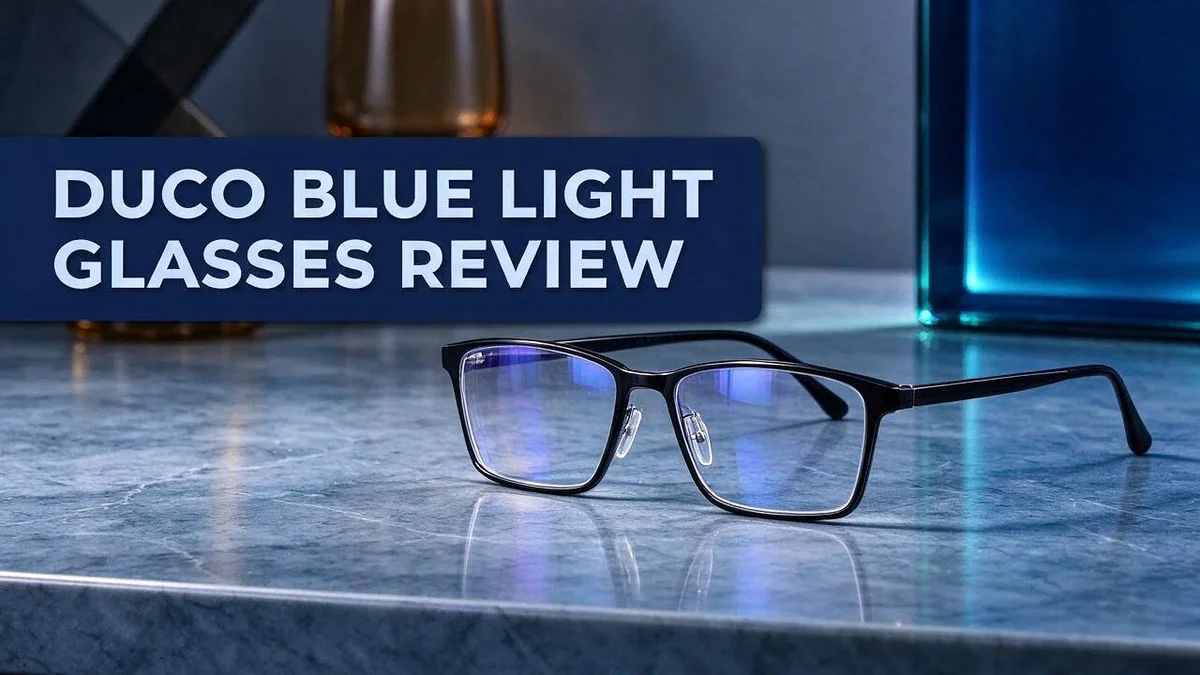
DUCO Blue Light Glasses Review: Do They Really Reduce Eye Strain?
Your eyes work hard every day. Screens glow at you from morning until bedtime. Eye strain now feels normal for many of us.
That is why people look at DUCO Blue Light Glasses. The brand says the lenses have multiple layers of blue light filter coating on the inside and outside surfaces.
The frames use acetate and 100% natural wood. That gives them a warm look you rarely see on screen glasses.
But do they actually work? The American Academy of Ophthalmology does not recommend blue light blocking glasses. It points to a lack of scientific evidence.
Reddit users also share mixed opinions. Some feel relief, and others notice no change.
This review covers the facts. You will see what DUCO promises, what the evidence says, and who may enjoy these glasses.
In a Nutshell
-
Coating: The lenses carry multiple layers of blue light filter coating on the inside and outside surfaces, according to the maker.
-
Maker claims: DUCO says the glasses reduce eye strain, ease fatigue, improve work efficiency, and support restful sleep.
-
Missing data: The brand does not share lumens or light transmission numbers. You cannot check the filter strength yourself.
-
Proof is thin: Independent evidence for these benefits is limited. Treat every claim as possible, not proven.
-
Easy test first: A screen warming tool like Windows Night Light shifts your display color. You can try it before you decide on any glasses.
-
Our take: These glasses suit people who like a stylish, simple screen accessory and accept some uncertainty. If you need proven medical results, talk to an eye doctor.
Lens Coating and Blue Light Filtering Claims
Lens coatings follow a simple idea. A filter layer aims to reduce certain light wavelengths before they reach your eyes.
Most blue light you receive each day comes from the sun, not from your phone or laptop. Indoor lights and screens add smaller amounts. That means a coated lens cannot block all of your daily exposure.
Two coating locations serve different jobs. The outside layer may cut reflections from lamps and windows. The inside layer may reduce light that bounces off the back of the lens into your eyes.
Coating quality matters more than the label. Thin layers can wear down over time, especially after cleaning with harsh wipes. Most buyers never test how the coating holds up under daily use.
Ask the brand a few direct questions. Good answers name the wavelength range that gets filtered. They also explain how the coating was tested.
Coating claims also shape how you use the glasses. Wear them during long evening sessions with screens. Pair them with good room lighting and regular breaks.
Glare reduction may feel more useful than filtering. Many people notice fewer reflections on glossy screens. That comfort can make screen tasks feel lighter, even if the color effect is small.
Set realistic expectations before you buy. A coating can add comfort, but it cannot fix poor posture or dry eyes. Blink often and keep your screen at arm’s length.
Think about your own habits first. If you work late, a simple routine may help more than any lens. Dim the room, take short breaks, and use a warmer screen tone at night.
Use the glasses as one tool, not a complete fix.

- ✔️KIDS BLUE LIGHT GLASSES: Kid's and teens retina is clearer than adult retina so harmful blue...
- ✔️CLEAR GLASSES FOR KIDS AGE 6-10: These Blue light blocking glasses for kids are specially...
Last update on 2026-10-31 / Affiliate links / Images from Amazon Product Advertising API
Frame Materials and Build Quality
Frame material shapes how your glasses feel all day. Acetate is a plastic made from plant cellulose. It feels smooth and light against your skin.
Acetate frames take color well and hold their shape. This helps them sit steady on your face during long workdays.
Wood adds a warm, natural look to the frames. Each piece has its own grain pattern, so no two pairs look exactly the same.
Wood needs more care than plastic does. Keep the frames away from heat, standing water, and strong sunlight. Heat can warp the material over time.
Build quality depends on the small parts. Hinges, screws, and nose pads often fail first. Open and close the hinges a few times to check that they move smoothly.
Hinge strength also affects daily use. Spring hinges let the arms flex without snapping. Solid hinges keep the arms in place when you put the glasses on and take them off many times a day.
Look closely at where the wood meets the acetate. A clean joint shows careful assembly. Loose edges or visible gaps can signal weak construction.
Frame weight matters during long sessions. Lighter frames reduce pressure on your nose and ears. Wear the glasses for at least an hour to test the fit.
Wooden frames may not suit everyone. Some people prefer the flexible feel of plain plastic. Others enjoy the natural style that wood brings.
Think about your daily routine before you choose a frame style. Frequent travelers may want a sturdy wood pair. Office workers may prefer a light acetate option.
Clean the lenses and frames with a soft microfiber cloth. Avoid harsh chemicals and rough towels. Gentle care helps the finish last longer.
Comfort, Fit and All-Day Wearability
Comfort decides whether you keep your glasses on. A pair that feels fine for ten minutes may bother you after two hours. So check the fit before you commit to daily use.
Start with the bridge, which rests on your nose. A bridge that sits too high or too low can slide down or pinch. Look for nose pads that adjust, since they help the frame sit level.
Temple arms matter just as much. They should hold the frame gently behind your ears without digging in. Watch for arms that feel loose too, since they can slip during movement. Tight arms can cause headaches for some wearers after a long day.
Lens size and position also affect how the glasses feel. Larger lenses cover more of your view but may sit closer to your cheeks. Smaller lenses feel lighter but can leave gaps at the sides.
Think about how you use them. If you need to wear them over prescription glasses, check that the frame still fits comfortably with both pairs. Some people also notice warmth near the temples on warm days.
Try a short wear test at home. Put the glasses on for thirty minutes while you work. Notice any pressure points, slipping, or itchy spots. These small signals tell you more than a product photo can.
Keep the fit in good shape. Clean the lenses with a soft cloth and avoid pulling the frame by one arm. Store them in a case when you are not wearing them. Gentle handling keeps the alignment steady, which protects comfort over time.
Good comfort does not prove the coating works. Still, a pair you enjoy wearing is more likely to see regular use. Consistent wear helps you judge the glasses fairly in your own daily routine.
Top 3 Alternatives
Gunnar Intercept

- Recommended by doctors, our blue light blocking computer & gaming glasses (Patented Lens...
- Unlike other blue light blocking glasses, GUNNAR developed the Blue Light Protection Factor, telling...
Last update on 2026-10-31 / Affiliate links / Images from Amazon Product Advertising API
Gunnar Intercept glasses are a popular pick for people who stare at screens all day. The amber tinted lenses help reduce glare from phones, tablets, and computers.
Many users say their eyes feel less tired after long work sessions. Eye strain often builds up during long hours on a laptop. The frames are lightweight, so they feel comfortable from morning to night.
Felix Gray Eyewear

- BLUE LIGHT FILTERING GLASSES – Felix Gray proprietary blue light filtering technology is...
- OVERSIZED SQUARE FRAME – Jemison features a timeless square silhouette inspired by classic...
Last update on 2026-10-31 / Affiliate links / Images from Amazon Product Advertising API
Felix Gray Eyewear focuses on style as much as screen protection. The frames look sharp and modern, so they work at the office or out with friends.
The lenses filter blue light and feature a clean, minimal design. Many shoppers like the balance of comfort and style. If you want glasses that look like everyday eyewear, this brand is a strong choice.
Zenni Blue Light

- Blue Light Glasses Men : High-definition, scratch-resistant lenses designed for use with computers...
- High-Quality TR90 Frame:The lightweight TR90 frame offers flexibility and impact-resistant for...

Last update on 2026-10-31 / Affiliate links / Images from Amazon Product Advertising API
Zenni Blue Light glasses give you a simple way to add screen protection to your routine. You can choose from a wide range of frame shapes and sizes.
Many people like that they can pick a frame that fits their face well. Take a few minutes to compare lens options so you know what fits your daily needs. Check the lens coating before you order, so you get the protection you need for long hours on your devices.
Style and Design Options
You may wear these glasses every day, so style matters as much as the lenses. DUCO keeps its designs simple and clean. Most frames suit an office, a home desk, or a quick trip out.
Frame shape is the biggest style choice. Round frames give a soft, vintage feel. Square frames look sharper and more modern. Oval frames sit somewhere in between.
Think about your face shape before you decide. Frames that match the width of your face often look more balanced. Try a few shapes in a mirror before you choose.
Color adds personality to any frame. Darker tones usually work well on busy office days. Lighter shades feel more relaxed and fit weekend wear.
Lens tint is another style detail to consider. Clear lenses look almost like regular eyeglasses. Amber or yellow tints give a warmer look, but they change how colors appear.
Some people want a subtle look. Others prefer a bold statement. Pick the style that feels like you. You will wear them more often when you like how they look.
Matching your glasses with your daily outfits helps too. A simple frame pairs well with most clothing. It also fits easily into a bag or a desk drawer.
Style alone does not prove the lenses work. The American Academy of Ophthalmology does not recommend blue light glasses because of limited scientific evidence.
Treat the design as a personal choice, not a promise of better sleep or less eye strain. Talk with an eye care professional if you have concerns.
What the Science Says About Blue Light Glasses
Many people ask if blue light glasses really work. The science is still unclear. The American Academy of Ophthalmology does not recommend blue light blocking glasses. Its main reason is a lack of solid scientific evidence.
Blue light comes from the sun too. Screens give off only a small amount of it. Many eye doctors believe that other screen habits cause most of the discomfort people feel.
Digital eye strain often comes from how we use screens. We blink less when we stare at a display. We also sit too close or hold the screen too low. A simple habit can help. Follow the rule of twenty: every 20 minutes, look at something about 20 feet away for 20 seconds.
Sleep is another common claim. Evening light may affect sleep for some people. A free option is Windows Night Light, which warms the color of your screen after dark. You can turn it on in minutes and see if you notice a difference.
Manufacturer claims need proof. The company promotes benefits like better focus and restful sleep. However, the research we reviewed did not find light transmission data. Ask for independent test results before you trust any promise on the label.
Online reviews are mixed. Some wearers feel better, while others notice no change at all. Your own experience matters, but it cannot replace controlled testing. Use these glasses as a comfort tool, not a medical fix. If your eyes often feel tired, see an eye doctor for a full checkup. A professional can find causes like dry eyes or a prescription that needs updating.
Price and Value for Money
Start with your goals. Ask yourself why you want blue light glasses in the first place. Your reason shapes how useful they feel to you.
Some people want comfort during long screen days. Others hope to sleep better at night. These two goals need different answers.
Clear expectations keep you from feeling let down. Manufacturers promote better focus and restful sleep, yet independent experts remain unconvinced. Keep that gap in mind.
Track how often you actually wear them. Glasses that sit in a drawer offer little use. Daily wear over several weeks gives you a clearer picture of their usefulness.
Compare the glasses with habits you already have. Windows Night Light is built into Windows and warms the screen at night. Testing it for a week takes only a few clicks.
Check the return options before you commit. Store policies can differ, so read the details before you buy. A trial period, if offered, gives you room to decide without pressure.
Your eyes matter most. If you notice ongoing discomfort, talk with an eye doctor. A professional can check your vision and suggest the best steps.
Make a simple decision checklist. Write down your main goal, your daily screen hours, and your comfort level after a week. Compare those answers against the glasses you plan to buy. This quick method keeps your decision clear and practical.
Keep expectations realistic. Glasses can make screens feel less harsh for some people. They cannot replace breaks, good lighting, or regular eye checkups. Simple habits, like taking regular breaks, add the most benefit.
Pros and Cons
Pros
- Natural wood frames appeal to people who prefer natural materials.
- The maker says both sides of the lenses carry filter coating.
- Putting on the glasses can cue regular screen breaks.
- Acetate and wood frame options give you a choice in material feel.
- The glasses are a simple accessory to try before changing screen habits.
Cons
- No lumens or light transmission data is published, so filter strength stays unclear.
- The glasses do not change how long you spend on screens.
- Built in settings like Windows Night Light can warm screen color without extra eyewear.
Who Should Buy It
Heavy screen users often look for small comfort changes, and this group may find the design appealing. Think about your daily screen habits first, because that answer shapes whether these glasses fit your routine.
Remote workers and students who sit at a desk for hours fit well here. Wearing a simple accessory can feel like a small ritual that marks the start of focused work. Many long workdays feel easier when small habits feel fresh.
Night owls who scroll late may like the idea of a calmer evening routine. The glasses alone will not fix a late bedtime, though. Pair them with a set wind down time for the best chance at a restful night.
Gift buyers can also consider this pair. A practical present suits someone who complains about tired eyes after work. Share the facts, though, so the person knows results vary.
Office managers might test a few pairs for staff who ask about eye comfort. Gather honest feedback after a few weeks. Let people decide for themselves whether the glasses earn a place on their desks.
People who care about materials may appreciate the frame choices. Wood and acetate suit different tastes. Pick the style that feels right when you hold it.
On the other hand, some buyers should wait. Anyone who wants a medical fix may feel disappointed. People with a specific eye condition should ask a doctor before they rely on any new accessory.
In short, this design suits curious people who want to test a simple idea with an open mind. It suits less those seeking proven results. Keep your expectations realistic and enjoy the experiment.
Final Verdict
The DUCO Blue Light Glasses are a low risk experiment for people who want a little extra screen comfort. They are not a proven fix for eye strain or poor sleep.
The honest bottom line: the brand makes bold promises, but the science is not settled. The American Academy of Ophthalmology does not recommend blue light glasses because evidence is thin.
That does not mean you will feel nothing. Some wearers report a calmer feeling during long work sessions.
Think of these glasses as a helper, not a cure. They work best next to good habits.
Try a simple two week test:
- Wear them during your longest screen blocks.
- Follow the 20 20 20 rule: every 20 minutes, look 20 feet away for 20 seconds.
- Lower your screen brightness in the evening.
- Note how your eyes feel at the end of each day.
This plan gives you real feedback. You will know if the glasses help you, not just other reviewers.
Keep your expectations modest. Do not expect a dramatic change in sleep or focus. Small gains are more realistic.
If your eyes still hurt, the glasses are not the answer. Book an eye exam to rule out vision problems or dry eye.
My verdict: DUCO earns a cautious thumbs up as a trial pair. It makes sense for curious, practical buyers who accept the evidence gap.
If you want proof before you try anything, skip it for now. Start with breaks and screen settings first.
If you enjoy the idea and keep the glasses on your desk, they may serve you well. Trust your own results over any marketing claim.
Frequently Asked Questions
What do eye experts say about blue light glasses?
The American Academy of Ophthalmology does not recommend blue light blocking glasses. Its main reason is the lack of solid scientific evidence behind them. Eye care experts want stronger proof before they endorse these lenses. You can still try them, but keep that research in mind.
Can I wear them over my prescription glasses?
Many people ask this question. Some frames fit well over prescription eyewear, while others sit crooked or press too hard. Ask your eye doctor before you layer any extra lenses over your current pair. A proper fit keeps your vision clear and your nose and ears comfortable.
How will I know if they help?
Track your eye comfort for two weeks. Write a short note each evening about dryness, headaches, or tired eyes. Look for patterns in your notes. Honest records give you a clearer answer than marketing claims or online opinions.
Are they a good choice for kids?
Children have growing eyes and different screen habits. Talk with a pediatric eye doctor before buying glasses for a child. Focus on screen time limits and regular breaks for young users. These habits often matter more than any lens coating.
Should I use them instead of an eye exam?
No. Glasses should never replace regular eye exams. Keep your yearly checkups even if you feel comfortable with your new pair. Your eye doctor can spot problems that no lens can fix.