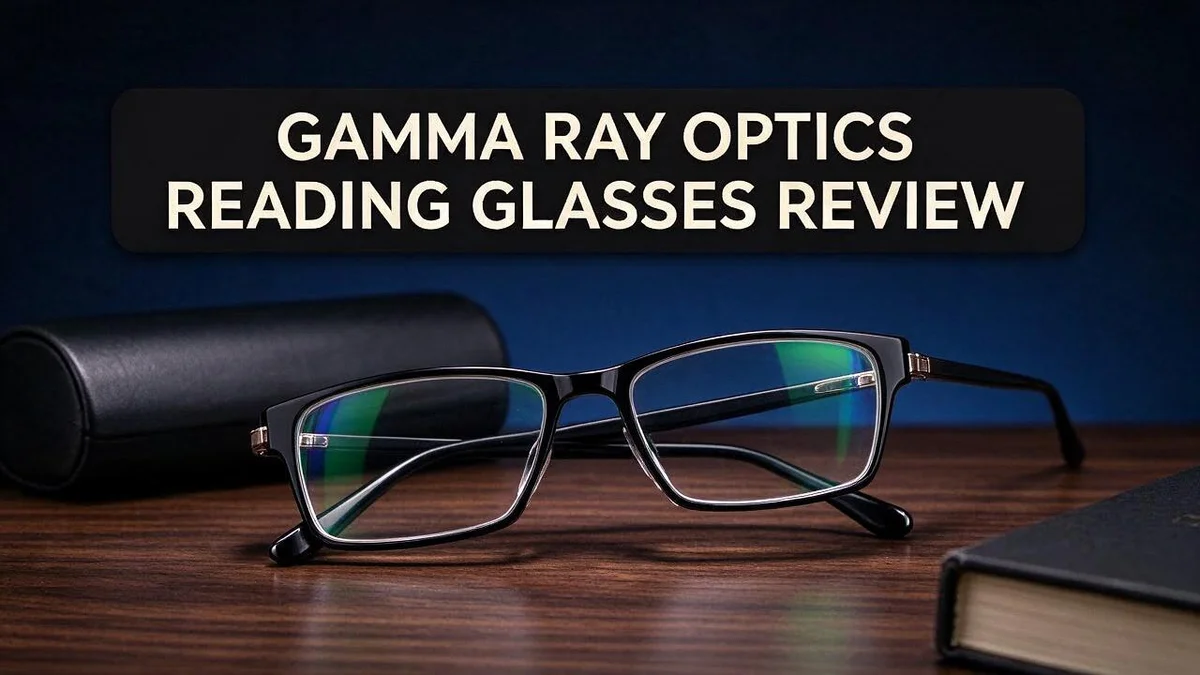
Gamma Ray Optics Reading Glasses Review: Bifocal Readers Tested for Comfort, Clarity and Durability
Tired eyes after a long day on screens? You are not alone. Many people want glasses that help them read small print and ease screen strain.
Gamma Ray Optics Reading Glasses try to cover both needs. The brand offers bifocal style readers with a clear top lens and magnification on the bottom.
The blue light model lists 0.00x magnification, so it focuses on blocking blue light. Spring hinges and flexible frames add comfort. Amazon also shows 400+ bought in the past month.
Still, an older Lifehacker review said the frames feel less sturdy than some rivals. We looked at the facts so you can choose with confidence.
Let’s see if these glasses deserve a place on your nose.
In a Nutshell
-
Bifocal layout: The top lens has no prescription. The bottom section holds the magnification for close reading, so you can glance up without removing the glasses.
-
Comfort features: The listing mentions spring hinges and flexible frames. These should help the glasses fit different head sizes without pinching.
-
Plenty of choice: Gamma Ray offers multiple styles and strengths. You can pick a look and a power that match your reading needs.
-
Shopper interest: Amazon shows 400+ bought in past month. That suggests steady demand, though it does not prove quality.
-
Brand claim: Gamma Ray calls its blue light model the #1 Rated Blue Light Blocking Glasses on Amazon. The brand reports this itself, so treat it with care.
-
Missing proof: We found no independent review ratings in our research. We also found no named rivals to compare against, so real user feedback matters before you decide.
Lens Design and Magnification Options
The lens design splits into two zones, and each zone does a different job for your eyes. The bottom zone holds the magnification. Hold a book or phone there and small text looks sharper.
Think of it as a reading window. Your eyes look down through it when you read, write, or scroll.
Magnification strength matters most. Lower numbers suit light reading, while higher numbers help with fine print. Many people start with a mild strength and move up only if small words still look blurry.
Test your reading distance first. Hold your favorite magazine at a comfortable arm length to see which strength feels right.
Screen use needs a different setup. Most people sit about an arm length from a monitor. That distance often calls for a clear or very mild lens, so the glasses do not push your focus too far.
Your eyes also shift between distances during the day. A bifocal design helps you switch focus without removing your glasses.
Keep the fit in mind. The lenses should sit level with your pupils. Poor alignment can cause eye strain, even when the strength is right.
Check the clarity before you commit. Look through each zone at a sign or screen. Smooth, sharp edges show a lens that is working well.
An eye care professional can confirm the right strength for you. A quick eye exam gives you a clear starting point.
Some readers notice a slight jump between zones. Give your eyes a few days to adjust to the shift.
Test the glasses for a short time first. Wear them during one reading session, then check for headaches or blur.
Small changes in strength can make a big difference. Move up in small steps for better comfort.

- Package Includes: Set of 4- Mixed Bifocal Reading Safety Glasses Readers: More than just protective...
- MAINTAIN CLEAR VISION: Anti-scratch and ballistic-resistant, our reading safety glasses allow you to...
Last update on 2026-10-31 / Affiliate links / Images from Amazon Product Advertising API
Frame Build and Hinge Durability
Frame build matters more than most shoppers think. The frame carries the lenses every day, so it must handle regular wear. Let’s look at what the frame and hinge should do for you.
The hinge takes the most stress. Each time you fold the arms, the joint works hard. A loose joint can also shift the lenses out of level. Check that the arms open and close with smooth motion and no wobble.
Frame material also shapes how long the glasses last. Lightweight plastics bend more easily, which can help during a drop. Metal parts may feel sturdier but can loosen over time if the screws are weak.
Lifehacker’s 2014 review says the frames may be less durable. That review is older, so it does not show current build quality. Look at recent photos and customer comments that mention hinges.
Try a simple home check. Hold the frame by the bridge and gently twist the arms. Watch for creaks, gaps, or lenses that shift. Press the nose pads and confirm they grip without pinching.
Think about daily habits too. Store your glasses in a case when they go into a bag. Avoid leaving them on a hot dashboard, since heat can warp plastic. Fold them with both hands to spread the force across the frame. Clean the hinge area with a soft cloth to remove dust.
Finally, watch for early signs of trouble. A loose screw often comes before a broken hinge. Tighten it with a small screwdriver or take the glasses to an optician. Quick fixes save both your frame and your comfort.
Comfort and Fit for Extended Wear
Comfort matters most when you wear reading glasses for hours. A pair that feels fine for five minutes can turn painful by lunchtime.
Start with the nose pads. They should rest softly on the sides of your nose. Pads that press hard leave red marks and headaches. Loose pads let the frame slide down, so you keep pushing it back up.
Next, check the temple length. The arms should reach past your ears without pinching. Short arms can pull the frame forward. Long arms can wobble. A snug, even grip keeps the weight balanced across your face.
Weight adds up over time. Light frames feel gentle after several hours. Heavy frames press on the bridge and create tension in your forehead. Notice how the glasses feel after one hour of reading, because that feeling tells you a lot.
Watch for pressure points. Some people feel tenderness behind the ears or along the temples. Others notice a tight band around the head. These signs suggest the frame size does not match your face width.
Good lighting also reduces strain. Dim rooms push you to lean in, which tilts your head and shifts the frame. Place a lamp beside your reading spot so the page stays bright.
Trial time matters too. Wear the glasses during a normal reading session at home. Pay attention to any itch, heat, or pinch. A short test shows you more than any product photo can.
Build in short breaks. Remove the glasses every hour or so. Rest your eyes by looking at something far away. Your nose and ears will thank you.
Finally, keep the lenses clean. Smudges force your eyes to work harder. Wipe them with a soft cloth each day. Clear lenses reduce strain and make long sessions easier.
Top 3 Alternatives
If you want other options, these three alternatives are worth a look. Each one offers a different style, fit, and feel for daily reading.
Foster Grant Readers

- Reading Glasses Variety Pack: Our pack of 2 reading glasses for men features a timeless design in...
- Scratch & Impact Resistant: Our durable magnifying glasses for reading feature scratch- and...

Last update on 2026-10-31 / Affiliate links / Images from Amazon Product Advertising API
Foster Grant offers a wide range of simple, classic reading glasses. Many shoppers like the lightweight frames and clear lens strengths.
The brand also makes styles for many face shapes. This makes finding a good fit feel easy.
Peepers Reading Glasses

- UV360 PROTECTION & SCRATCH-RESISTANT LENSES: Blocks 99.9% of UVA/UVB light rays with dual...
- PREMIUM ASPHERIC LENSES: Ultra-thin lenses with magnification distributed evenly across the full...
Last update on 2026-10-31 / Affiliate links / Images from Amazon Product Advertising API
Peepers focuses on fashion forward readers that look good all day. The brand offers fun colors and bold patterns that add personality to any outfit.
Its blue light filter options may help people who stare at screens for long stretches. This choice suits anyone who wants glasses that feel like an accessory.
Warby Parker Readers

- Retro Trendy Style Design: The round eyeglasses frames and double rivet decoration create you a...
- Blue Light Blocking Lens: Blue light reading glasses can effectively resist 99% harmful blue light...
Last update on 2026-10-31 / Affiliate links / Images from Amazon Product Advertising API
Warby Parker mixes modern design with a clean, minimal look. Its readers come in many frame shapes, sizes, and colors.
Many people enjoy the soft, comfortable fit that sits well on the nose. The brand also offers a home try on option, so you can test frames before you decide.
Blue Light Blocking Claims and Visual Clarity
Blue light glasses promise sharper vision and less eye strain. Many shoppers buy them for screen time. But the claims deserve a close look.
The blue light model in this line lists 0.00x magnification. That means the lenses do not enlarge text. They only filter light.
Blue light filtering and visual clarity are different things. A tinted lens may reduce glare. It cannot fix blurry text by itself.
Independent evidence on blue light glasses remains limited and mixed. Expect modest results, not miracles.
Look closely at the lens color. Many blue light lenses show a faint yellow or amber tint. Clear lenses usually filter less blue light.
Colors may look different. Tinted lenses can shift how screens and printed photos appear. Design or photo work may need a clear pair.
Also check the lens coating. An anti reflective coating can cut glare from screens and lamps. Look for it in the product details.
Try a simple clarity test first. Read small print at your normal distance. Then look at a screen for ten minutes.
Note any blur, headaches, or dizziness. If text looks crisp and your eyes feel calm, the pair may suit you.
Ask yourself what problem you want solved. If tired eyes come from long workdays, habits often matter more than lens color.
Clear vision depends on correct magnification and lens quality. The blue light label alone cannot guarantee sharper sight.
Lighting and breaks help too. Use soft room light and take regular breaks. Every twenty minutes, look at something about twenty feet away for twenty seconds.
Bottom line: treat blue light claims with a healthy dose of doubt. Judge the glasses by how clearly and comfortably they let you see.
Style Choices and Everyday Versatility
Style matters more than many people expect. Reading glasses sit on your face for hours each day. They should suit your look too.
Gamma Ray Optics offers multiple styles for different tastes.
Start with your daily wardrobe. A bold frame can make a casual outfit stand out.
A simple frame often blends in with office clothes. Pick the shape that fits how you dress most days.
Your face shape also plays a role. Round faces often look balanced with angular frames.
Square faces may suit softer, rounded edges. Try a few shapes in the mirror before you decide.
Versatility is another big question. Some people want one pair for reading, screens, and errands.
Others keep a second pair in the car, by the bed, or at work. Think about where you use them most.
Color choices change the feel too. Dark frames look bold and polished.
Light or clear frames look soft and modern. Neutral shades pair easily with most outfits.
Your routine matters as well. A pair that looks great in photos may feel wrong during long reading sessions.
Balance looks with comfort in daily use. That way, you wear your glasses often instead of leaving them in a drawer.
Some shoppers build a small collection. One pair may suit work, and another may suit weekend reading. Owning two or three styles lets you switch without fuss.
In short, the best style is the one you reach for every morning. Your glasses should feel like a part of who you are.
Value and Customer Reputation
Shoppers often check reputation before they buy. Customer feedback tells a useful story about how glasses perform over time.
Brand claims need a closer look. Gamma Ray Optics calls itself the #1 rated blue light blocking glasses on Amazon. That claim comes from the brand itself, so treat it as a starting point.
Sales numbers also help. The store listing shows 400+ bought in the past month. Strong recent sales suggest many shoppers picked this pair lately.
Still, sales do not prove quality. Popularity shows interest, not satisfaction. Read the reviews to learn what owners actually say.
Independent reviews are missing. Research found no outside rating from trusted testers. Shoppers must rely on buyer feedback and personal testing.
The main review source is old. Lifehacker wrote about these glasses in 2014. Products change over the years, so newer feedback matters more.
Look at review dates too. Recent comments reflect current batches and lens quality. Older comments may describe past versions of the product.
Try this simple approach. Sort reviews by most recent. Look for the verified purchase label. Check how many one star and five star reviews appear.
Read the middle reviews too. Three star comments often describe real strengths and small problems. They give a balanced view.
Check photos from buyers. Customer images show the true color and frame shape. Photos also show the frames look in daylight, and how they sit on real faces.
Finally, check the questions section. Other shoppers often ask about strength, fit, and lens clarity. Answers from the brand or past buyers can settle doubts quickly.
Reputation also builds trust over time. Brands that answer complaints openly often earn loyal fans. Watch how the brand responds to unhappy customers.
Pros and Cons
Pros
- Multiple styles let shoppers choose a look that fits their taste.
- Spring hinges add flexibility for a comfortable fit.
- The bifocal design pairs a top lens for distance with magnification below.
- Strong recent sales show steady interest from shoppers.
- Frames are described as flexible, which can help with daily wear.
Cons
- An older Lifehacker review questions how the frames feel.
- Some reviewers may find the frames less solid than expected.
- Independent review ratings are missing, so quality is hard to confirm.
- Long-term durability remains unclear without recent testing.
Who Should Buy It
Who should buy these glasses? People with mild near vision needs are the best match. If small print on menus or phone screens feels hard to read, a simple bottom magnifier may help.
Someone who wants a light everyday pair may also like them. Readers who need help for only a few tasks often skip heavy prescription lenses. They can grab a pair for the kitchen, the couch, or a quick crossword puzzle.
Screen users are another group to consider. Long hours at a computer can leave eyes tired. The blue light model lists zero magnification, so it suits people who only want a filter without any lens power.
Older adults who feel tired reading small text may benefit most. Reading glasses can make daily tasks like checking medicine labels or reading recipes much easier.
Gift buyers can also find a good match here. Many people ask for reading help as a present for parents or friends. Multiple styles and strengths make it easier to choose something that fits the person.
On the other hand, some shoppers should look elsewhere. Anyone with a strict prescription needs custom lenses from an eye doctor. Off the shelf readers cannot correct astigmatism or other specific eye conditions.
People planning rough daily use should think twice. Some reviewers question how sturdy the frames feel over time. Shoppers who need firm, long lasting frames may prefer a brand with stronger proof of durability.
Finally, a quick eye exam can confirm the right strength before any purchase. Confident choices start with clear facts about your own vision. That approach keeps expectations realistic and helps you feel satisfied with your choice.
Final Verdict
Gamma Ray Optics reading glasses earn a cautious thumbs up from us. They suit shoppers who want a simple pair for light reading and daily tasks.
The evidence points in two directions. Buyer interest looks healthy. Proof of lasting quality still feels thin.
That gap shapes our verdict. We like the idea, but we cannot call these glasses a sure winner. Confidence has limits until fresh, independent testing appears.
Think of this pair as a low risk trial. Wear them for a few days at home.
Read a book, check your phone, and scan a menu. Notice any eye strain or pressure near your nose and ears.
Check the seller’s return options before you order. That step protects you if the fit feels off. It also lets you judge the frames in your own hands.
Our final advice is simple. Pick the style and strength that match your habits. Test first, then commit.
If the glasses feel comfortable and your text looks sharp, you have a good match. If the frames feel flimsy or your eyes tire quickly, try another option.
Your own comfort matters more than any rating. A good pair should disappear on your face while you read. You should forget you are wearing it.
Overall, Gamma Ray Optics offers a friendly choice for casual readers. It works best when you keep expectations realistic. Treat it as a handy everyday helper, not a lifetime purchase.
We would happily try them again. We would also watch for new reviews over time. Fresh feedback could raise our rating quickly.
Until then, this pair stays a solid maybe that leans toward yes.
Frequently Asked Questions
Can I wear these glasses for driving?
Not really. The top lens has no prescription, so distance views stay unchanged. Use them for reading and close work only.
How do I know if the strength fits me?
Hold a book at your usual reading distance. If small letters look sharp and your eyes feel relaxed, the strength may work well. If words blur or headaches start, try a different strength.
Do blue light models help with sleep?
The research does not include clinical proof for sleep benefits. Many people dim their screens at night anyway. Talk with a doctor if sleep problems continue.
How should I care for the frames?
Wipe the lenses with a soft, dry cloth. Hold the glasses by the frame, not the lenses, when you put them on or take them off. Store them in a case when you are not using them.
What should I do if the frames loosen over time?
Check the hinge screws every few weeks. Tighten them gently with a small screwdriver if they feel loose. If the frame still wobbles, a local optician can adjust it for you.