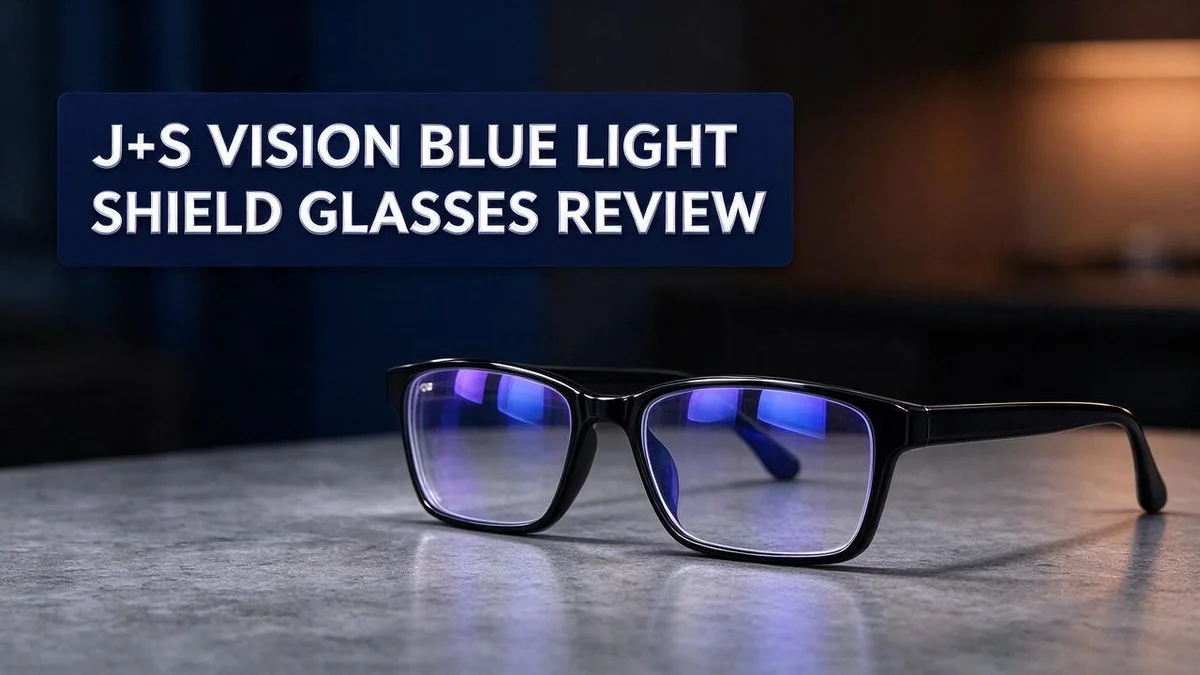
J+S Vision Blue Light Shield Glasses Review: Do They Really Reduce Eye Strain?
Screens fill most of our day. Your eyes feel tired, and your head may ache by evening. Blue light glasses promise some relief.
The J+S Vision Blue Light Shield Glasses claim to block about 90% of high energy blue light between 400 and 430 nm. They also pass about 70% of low energy blue light.
The brand offers a classic rectangle frame for computer and gaming use. It also makes reading styles for men and women.
But do they really work? Independent proof is limited. One Reddit user found that warm color screen settings did much the same job.
This review covers the claims, the styles, and rivals like Gunnar Razor FPS and ZEISS DuraVision. Let’s see if these glasses suit you.
In a Nutshell
-
Lens balance: The lens lets through about 70% of low energy blue light. That means it filters the harsher range and leaves the rest in place.
-
Style options: Reading models come in men’s and women’s versions. They fit medium to small faces.
-
Claimed benefits: The brand promotes less eye strain, less fatigue, better sleep, and higher productivity. These are manufacturer claims.
-
Evidence check: Support comes from a vendor demo video and a YouTube review by an eye doctor. No clinical testing showed up in our research.
-
Other options: PCGamesN (2024) points gamers to Spy Discord and fashion fans to Tom Ford. Smart Buy Kennedy also made the list. JINS Screen uses clear lenses and blocks about 25% of blue light.
-
Bottom line: These glasses make sense as a low risk experiment. Keep your expectations modest until stronger proof appears.
Lens Technology and Blue Light Filtering Claims
Lens technology decides how well blue light glasses work. Most pairs use a tinted lens or a special coating. Each method targets a specific part of the light spectrum.
Blue light sits in the visible range, close to violet. Shorter wavelengths carry more energy than longer ones. Eye care brands focus on this shortest band.
Absorption and reflection work in different ways. An absorptive lens soaks up light inside the material. A reflective coating bounces unwanted light away from the eye. Both methods can reduce glare.
Tint color offers a clue about strength. Amber or orange lenses usually block more blue light. Clear lenses filter less, but they look more natural for daytime wear.
Lens quality matters as much as the filter. Scratch resistant coatings keep the surface clear over time. Poor optics may cause distortion, so test clarity before you commit.
Lens coatings can also wear down over time. Cleaning with harsh cloths may remove the filter layer. Gentle microfiber cloths help protect the coating longer.
Frame fit affects lens performance too. Gaps at the top or sides let extra light reach the eyes. A snug fit keeps the lens angle where it should be.
Our research found no independent lab data for these lenses. Manufacturer claims are helpful starting points. However, third party test reports offer stronger proof.
Ask whether the brand shares its test method. Good companies publish wavelength charts and transmission data. Missing details often signal weak evidence.
Screen settings also shape daily light exposure. Many phones and computers offer night mode or warm tones. Combining these settings with glasses may give you more control.
Think about your own habits before deciding. Long work sessions may call for stronger filtering. Light use may need only basic protection.
Finally, set realistic expectations. Lenses can ease discomfort from screens. They cannot replace regular eye exams or breaks from the screen.

- [Experience Relief with Blue Light Glasses]: non-prescription glasses that filter out high-energy...
- [Blocks 90% of the most harmful blue light*] - engineered to filter out 90% of the most harmful high...
Last update on 2026-10-24 / Affiliate links / Images from Amazon Product Advertising API
Frame Design, Fit and Comfort
Frame design does more than look good. A solid frame keeps the lenses in the right spot, so the filter stays in front of your eyes.
Lens height and frame depth also matter. A deeper frame may block more light from above and below, though this depends on how you sit and move.
Fit starts at the bridge. If the frame slides down your nose, you will keep pushing it back up all day. A good fit also keeps the glasses steady during quick head turns, like checking a second monitor.
Look for soft or adjustable nose pads. They spread weight evenly and reduce red marks on the bridge of your nose.
Temple arms deserve attention too. Arms that are too long may press behind your ears after a few hours. Arms that are too short can slip on a wider head.
Weight plays a quiet role in comfort. A lighter frame feels easier during long work sessions, so it rarely feels heavy by lunchtime. Sturdy hinges matter as well, since they keep the frame steady when you fold and unfold the glasses many times each week.
Many people wear prescription glasses too. If you do, test whether the frame sits over them without pinching or pushing the lenses out of line.
Measure your face before you buy. Compare the lens width and bridge size with a pair of glasses that already feels right to you.
Frame color can also affect how often you reach for the glasses. Neutral tones blend in with most outfits, which makes them easier to wear all day.
Keep the frame clean. Skin oils and dust can build up on the nose pads and hinges, which may cause itching or loosen the fit over time.
Try a pair during a normal workday. Notice any pressure near the temples, heat behind the ears, or itching on the nose. Comfort decides whether you wear them at all.
Everyday Use: Screen Work, Gaming and Reading
Your daily routine shapes how well these glasses fit in. Most buyers use them for three main tasks. Each task asks something different from your eyes.
Screen work comes first. Spreadsheets, emails, and video calls keep your eyes busy for hours. Wear the glasses from the start of your shift. Waiting until eye strain hits makes them far less useful.
Look at your room too. A bright overhead light can create glare on the lenses. Sit near a soft lamp and place your screen below eye level. This setup helps more than any lens alone.
Gaming sessions feel different. Many players sit in dim rooms for long stretches. Dark rooms make screens look harsher, so test your brightness settings first. Then decide whether the glasses still help your comfort during a match.
Pay attention to color. Tinted lenses can shift how colors look on screen. Notice whether reds or greens seem off during a match. Accurate color matters for competitive play, where small details count.
Reading needs its own test. Paper books rarely emit much blue light, so the benefit may feel small. Ebook readers and tablets behave more like screens, so the glasses may suit them better. Read a chapter on each device and compare.
Track your breaks. Many people skip rest even with glasses on. Follow a simple rule: every twenty minutes, look at something twenty feet away for twenty seconds. Glasses cannot replace this simple reset.
Keep a simple log for one week. Write down your screen hours, headaches, and sleep quality each evening. Patterns often show whether the glasses make a real difference. This plain record beats guessing.
Your own notes matter most. Give the glasses a fair test over several weeks before you decide. Your results will tell you more than any ad or review.
Top 3 Alternatives
Gunnar Intercept

- Recommended by doctors, our blue light blocking computer & gaming glasses (Patented Lens...
- Unlike other blue light blocking glasses, GUNNAR developed the Blue Light Protection Factor, telling...

Last update on 2026-10-24 / Affiliate links / Images from Amazon Product Advertising API
Many people want a lighter option for long screen days. The Gunnar Intercept offers a clean, classic frame that fits most faces.
It uses amber tinted lenses that help filter blue light from phones and laptops. Many shoppers like its sleek look for work and casual wear.
The frame feels comfortable, so you can wear it for hours. It is a simple choice for anyone who spends the day in front of a screen.
Felix Gray Dawes

- Reduce eye strain and fatigue with our blue light blocker glasses for women and men, designed to...
- Reduce eye strain and fatigue with our blue light blocker glasses for women and men, designed to...
Last update on 2026-10-24 / Affiliate links / Images from Amazon Product Advertising API
Felix Gray Dawes glasses pair a modern style with simple lens options. The frame feels light and sits well on the nose.
Many wearers enjoy the rounded shape because it suits many face types. Some people prefer its softer tint during evening use.
This option works well for anyone who wants a trendy look. It also fits a busy routine with long hours at a desk.
Zenni Blue Light Glasses

- 【Best Blue Light Glasses for Men】ZanyLen rectangular blue light blocking glasses are made of...
- 【Product Dimension】Lens Width: 52mm(2.05 inches), Lens Height: 45mm(1.77inches), Temple Length...
Last update on 2026-10-24 / Affiliate links / Images from Amazon Product Advertising API
Zenni Blue Light Glasses give you a flexible way to protect your eyes from digital strain. The online shop offers many frame shapes, sizes, and colors.
You can pick a style that matches your face and daily routine. Each pair includes lenses that reduce glare from computer and phone screens.
This choice fits people who want variety and easy customization. You can try different frames until you find a favorite.
Evidence and Real-World Effectiveness for Eye Strain and Sleep
What the evidence really shows matters more than a bold claim on the box. The maker says these lenses block about 90 percent of high energy blue light between 400 and 430 nm. That number describes the lens itself. It does not tell you how your eyes feel after a long workday.
No outcome study has tested whether these glasses reduce eye strain or fatigue. The research found a vendor demo video and a YouTube review by an eye doctor. Neither one tracks results over weeks, so real proof is still missing.
Sleep claims deserve the same care. Many brands say blue light blockers support better rest. However, no study in the research links these glasses to longer or deeper sleep.
One Reddit user made a useful point. Many screens already include warm color settings that cut blue light. For some people, those built in settings may do the same job without extra gear.
Try a simple test at home. Wear the glasses for one week during evening screen time. Keep a short log of headaches, dry eyes, and how quickly you fall asleep. Then spend a second week without them. Change only one thing at a time, so you can see what actually made the difference.
Other brands take different approaches. ZEISS DuraVision Plus BlueProtect uses a lens coating, while JINS Screen uses clear lenses. Comparing lens types helps you understand the options, but numbers alone do not prove results.
Your own experience gives the clearest answer. Treat these glasses as one tool among several, not a cure. Regular breaks, good room lighting, and smart screen settings still do most of the heavy lifting.
Value for Money and Style Options
Style matters as much as function for daily wear. You may wear these glasses for hours, so you want a frame you enjoy looking at. The right look can make you reach for them every day.
J+S offers a classic rectangle frame for computer and gaming use. It also sells reading models in men’s and women’s styles. Each option fits a different routine, so start with your main activity.
Match the frame to your main activity. A rectangle frame suits long office days and gaming sessions. Reading models make more sense if you mostly use glasses for books and documents.
Some people keep two pairs for different jobs. One pair can handle screen work, while another pair handles reading. This split lets each pair match its task. A second pair also helps when the first one goes missing.
Brand choice also shapes the overall look. Gunnar Razor FPS ranked as the top overall pick in a 2024 PCGamesN list.
Spy Discord targets gamers, while Tom Ford adds a designer touch. People who want glasses that double as a fashion piece may prefer that route. Smart Buy Kennedy gives shoppers another style to compare.
Lens type changes the look too. JINS Screen uses clear lenses, so the glasses look close to regular frames. ZEISS DuraVision Plus BlueProtect uses a lens coating instead of a visible tint. Clear options may suit people who dislike colored lenses.
Ask yourself a few simple questions. Do you want glasses that others notice? Do you prefer a subtle frame that blends in at the office? Your answers point you to the right style.
Try a few styles in person if you can. Wear each pair for a short time and notice how it feels with your daily tasks. Your own preference will guide the final choice.
Pros and Cons
Pros
- Medium-small reading fits may suit smaller faces
- Men’s and women’s styles give shoppers more choice
- A vendor demo video offers a quick visual look
- An eye doctor’s YouTube review adds a professional viewpoint
- The lens blocks high energy blue light from screens
Cons
- Brightness and lumen data are missing from the product details
- Most positive claims come from the maker itself
- The tint may not suit every person’s daily routine
- Sleep benefits lack proof from outside testing
Who Should Buy It
Long hours at a screen can leave anyone feeling worn out. This group often includes office workers, students, and remote staff. Here is a closer look at who may gain the most from this pair.
People who work late into the evening may find these glasses useful. They can wear them during the last hours of a shift. Their eyes may feel less tired when the day ends.
Students who study in dim rooms might also like them. Many students scroll through notes, videos, and chats after dark. Wearing glasses during those sessions can add a small layer of comfort.
Remote workers who sit in front of a laptop all day may also fit the profile. They often switch between video calls and documents. A lightweight pair can make that routine feel easier to manage.
Gamers who play for long stretches may consider them too. Late sessions can feel intense. Some players like having a dedicated pair just for play.
Designers and photographers who judge colors should be careful. Tinted lenses can shift how colors look on a screen. These people may want to test the glasses before relying on them for color work.
Commuters who scroll on phones during rush hour form another group. Some people find small screens tiring in dim train cars. A pair for travel may suit them well.
On the other hand, some people may not need them. If your screens already feel comfortable, you may not notice much change. People who wear prescription lenses should ask an eye doctor first. An eye care professional can confirm whether a clear or tinted option suits your needs.
Think about your daily habits before you buy. Your schedule, your screen time, and your comfort all matter. A clear plan makes the choice simpler. Write down which activities you do most each day. Your list will show whether these glasses fit your routine.
Final Verdict
The J+S Vision Blue Light Shield Glasses earn a cautious thumbs up. They make sense as a simple, low risk trial for people who stare at screens every day.
Keep your expectations realistic. The brand promises less eye strain and better rest, but outside proof is thin. No clinical testing backs those claims yet.
A Reddit user also felt that blue light glasses overlap with warm color screen settings. That point deserves attention. Try your device’s night mode first. Then add the glasses and see whether you notice extra comfort.
Our advice: test them for two weeks. Wear them during your longest screen sessions. Note how your eyes feel at the end of the day. Track how easily you fall asleep, too.
Comfort decides whether you keep wearing them. A pair that slips or pinches ends up in a drawer.
Pair the glasses with healthy habits. Take short breaks every 20 minutes. Look at something far away for 20 seconds. Blink often. These steps help with or without glasses.
Consider alternatives if you want a different approach. Gunnar Razor FPS took the best overall spot in the 2024 PCGamesN roundup. ZEISS DuraVision Plus BlueProtect offers a lens coating for your own prescription frames.
Who should buy? Shoppers who want a straightforward pair for daily screen work will probably feel happy. People who like the idea of extra filtering during long sessions fit here too.
Who should skip? Anyone who expects a cure for headaches or poor sleep should talk to an eye doctor first. Persistent eye pain needs a professional exam, not just new glasses.
Bottom line: J+S Vision offers a practical, easy experiment. We see these glasses as a helpful supporting tool, not a main treatment. Stay modest in your expectations, watch how your eyes respond, and decide from your own results.
Frequently Asked Questions
Do J+S Vision Blue Light Shield Glasses really work?
The maker claims the lens blocks about 90% of high energy blue light between 400 and 430 nm. The brand also says the glasses may help reduce eye strain and support better sleep. However, no outside clinical tests confirm these results yet, so keep your expectations realistic.
Who gets the most from these glasses?
Office workers, students, and remote workers who sit in front of a laptop all day may find them helpful. People who work late into the evening can also give them a try. Gamers who play for long stretches may like them too.
Are these glasses a good fit for designers and photographers?
Not always. The tint can shift how colors look on screen. People who judge color should be careful and test a pair during a regular work session first.
Do I still need blue light glasses if my screen has a warm setting?
Maybe not. A Reddit user felt that these glasses overlap with warm color screen settings. Try the warm setting first and see if it solves the problem before you add new frames to your routine.
What should I do if I get headaches or poor sleep?
Talk to an eye doctor first. Glasses alone cannot cure headaches or sleep problems. Pair them with healthy habits, such as short breaks and a regular bedtime.