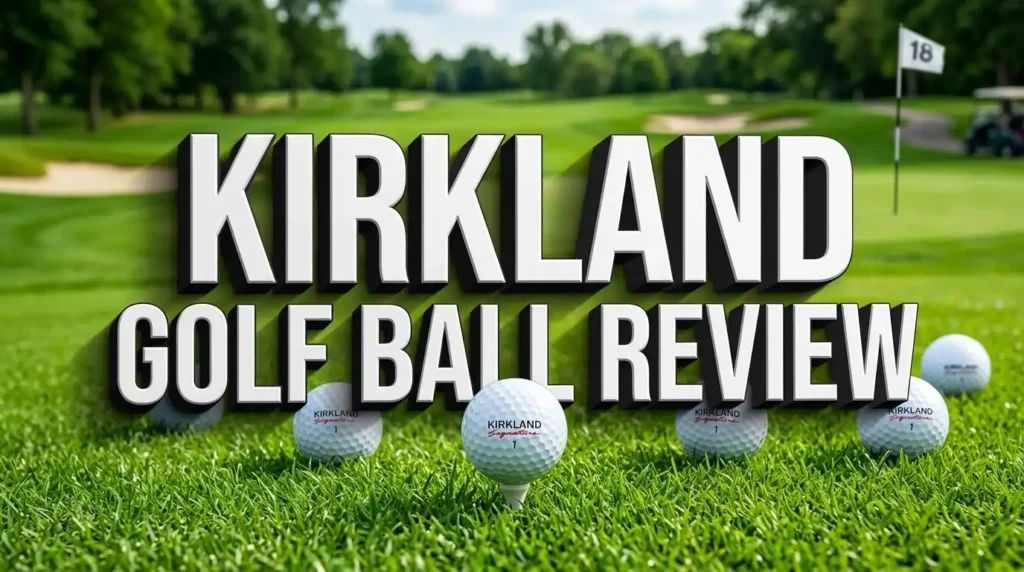
Kirkland Golf Ball Review 2026: Is Costco’s Budget Ball Worth It?
If you have ever paid full price for a dozen premium golf balls, you know the sting of watching one splash into a water hazard. That pain is exactly why millions of golfers have turned to Kirkland Signature golf balls from Costco. These budget-friendly urethane balls promise near-premium performance at a fraction of the cost.
But do they actually deliver? In this Kirkland golf ball review for 2026, we break down everything you need to know. We cover distance, spin, feel, durability, and value. We compare them head-to-head with the Titleist Pro V1. We also share real-world data from launch monitors and on-course testing.
Whether you are a weekend warrior or a serious club golfer, this review will help you decide if the Kirkland Signature Performance Plus V3.0 deserves a spot in your bag. Stick around because the results may surprise you.
Key Takeaways: Kirkland Golf Ball Review at a Glance
- The Kirkland V3.0 is a 3-piece urethane-covered golf ball that retails for about $1.50 per ball, which is roughly one-third the price of a Titleist Pro V1. This makes it the best price-to-performance ratio in golf.
- Distance is close but not identical. Expect to lose about 2 to 5 yards off the tee compared to a Pro V1. For most recreational golfers, this gap will not show up on the scorecard.
- Spin rates are surprisingly high on iron and wedge shots. The V3.0 generates strong backspin that stops the ball on greens effectively. However, this extra spin can cause mid-iron shots to balloon slightly.
- Short game feel is the biggest trade-off. The ball feels firmer than premium options around the greens. Delicate chips and pitches lack the same grab-and-stop quality of the Pro V1.
- Durability has improved significantly with the V3.0. Each ball can handle multiple rounds without major scuffing or cover damage.
- This ball is ideal for mid-to-high handicap golfers who want urethane performance without the premium price tag. Single-digit players who rely on short game finesse may want to look elsewhere.
Kirkland Signature Performance Plus V3.0 Overview

- 3 Piece Golf Balls, USGA Certified
- CORE - Soft, high elastic core provides distance
Last update on 2026-09-10 / Affiliate links / Images from Amazon Product Advertising API
The Kirkland Signature Performance Plus V3.0 is the latest golf ball from Costco’s house brand. It is a 3-piece construction with a cast urethane cover. This puts it in the same category as premium tour balls like the Titleist Pro V1 and Callaway Chrome Soft.
Costco first shook up the golf ball market in 2016 with a 4-piece design that performed almost identically to the Pro V1. Legal battles and supply issues led them to switch to a 3-piece construction. The V3.0 represents the most refined version of that 3-piece formula.
Each ball features a soft, high-elastic rubber core for distance. A speed-boosting mantle layer sits between the core and cover. The 338-dimple pattern creates a penetrating ball flight that holds its line in wind. The compression sits at approximately 93, placing it in the medium-firm range.
You can purchase these balls at Costco stores or through Amazon. A two-dozen pack typically costs around $28 to $35, depending on the seller. That price point is what makes the Kirkland ball so appealing to budget-conscious golfers everywhere.
Construction and Build Quality
The Kirkland V3.0 uses a three-layer design that mirrors the architecture of balls costing three times as much. The core is a large, soft rubber compound built to deliver maximum ball speed off the driver face.
The mantle layer works with the cover to control spin. On long shots, the mantle reduces spin for straighter, longer drives. On short shots, the urethane cover engages to produce more spin and stopping power.
Out of the box, these balls look clean and professional. The dimple pattern is uniform across every ball. The alignment line on the side is crisp and useful for putting. The “K” logo has become a familiar sight on courses around the world.
Compression consistency is an important quality metric. Testing shows the V3.0 averages about 93 compression with minimal ball-to-ball variation. This level of quality control is impressive for a ball at this price point. You can trust that each ball in the box will perform the same way.
Driver Distance Performance
Distance off the tee is one of the first things golfers want to know about any ball. The Kirkland V3.0 delivers solid but not top-tier distance with the driver.
Launch monitor data shows the V3.0 loses about 2 to 5 yards compared to the Titleist Pro V1 off the tee. This gap comes partly from slightly higher driver spin rates. The 93 compression is also a touch firmer than the Pro V1’s 87, which affects energy transfer at impact.
For golfers with swing speeds between 85 and 100 mph, the distance loss is on the lower end. Faster swingers may notice a bit more gap. Still, 2 to 5 yards is a small price to pay for a ball that costs 66% less.
On the course, many testers reported they could not feel the distance difference during a round. The ball launches well and carries through the air with a medium-high trajectory. It holds its line in crosswinds and lands with good roll-out on firm fairways.
Top 3 Alternatives for Kirkland Signature Golf Balls
If you want to explore other options alongside the Kirkland V3.0, here are three strong alternatives worth considering.

- PLAYER PROFILE: Designed for players with high swing speeds, offering the most efficient energy...
- BALL CONSTRUCTION: Engineered with a 4-layer design, featuring a Cast Urethane cover for optimal...

Last update on 2026-09-10 / Affiliate links / Images from Amazon Product Advertising API

- New faster high gradient core delivers more speed and iron and wedge spin for more control
- Extraordinary Distance
Last update on 2026-09-10 / Affiliate links / Images from Amazon Product Advertising API

- FastLayer Core: leverages a gradual transition from soft inner core to firm outer edge. We gently...
- Spin Skin: Made from highly flexible molecular bonds, Spin Skin is a specialized coating that’s...
Last update on 2026-09-10 / Affiliate links / Images from Amazon Product Advertising API
The Vice Pro Plus is a 4-piece urethane ball that competes directly with the Kirkland at a similar price range. It offers a slightly firmer feel and lower driver spin, which benefits faster swing speeds.
The Titleist Pro V1 is the gold standard in golf balls. It costs significantly more, but it delivers superior short game feel and greenside control. If budget is not your main concern, the Pro V1 remains the best all-around ball in golf.
The Srixon Q-Star Tour is another excellent mid-price urethane ball. It suits moderate swing speed players and provides great spin control on approach shots. At around $30 per dozen, it sits between Kirkland and premium pricing.
Iron and Wedge Spin Performance
This is where the Kirkland V3.0 gets interesting. The ball generates high spin rates on iron and wedge shots. In testing, 7-iron spin rates averaged about 6,840 rpm, which is actually higher than many premium balls.
This high spin translates to approach shots that stop quickly on the green. If you struggle to hold greens with your current ball, the Kirkland V3.0 could make a noticeable difference. The ball bites into the putting surface and checks up well.
However, there is a trade-off. The extra spin can cause mid-iron shots to balloon in the air. On windy days, this ballooning effect becomes more pronounced. High-spin players may lose a few yards of carry on their 5, 6, and 7 irons because the ball climbs too steeply.
With pitching wedge and sand wedge, the V3.0 performs strongly. Spin rates are competitive with premium options on full wedge shots. The ball responds well to clean contact and generates enough spin to hold most greens from inside 130 yards.
Short Game Feel and Greenside Control
The short game is the biggest area of compromise for the Kirkland V3.0. Around the greens, the ball feels firmer than expected for a urethane-covered product.
On delicate chip shots and pitches inside 50 yards, the Pro V1 clearly outperforms the Kirkland. The Pro V1 has a softer compression at 87 versus 93 for the Kirkland. This softer compression creates a more responsive feel on partial swings.
The Kirkland V3.0 checks on the green, but it does not grab and stop with the same authority as premium balls. Balls tend to check and release slightly rather than biting and holding. For mid-to-high handicap golfers, this difference is hard to notice. For scratch players who depend on precise distance control around the green, it matters.
Putting feel is perfectly acceptable. The ball rolls true off the putter face. The alignment line printed on the ball is helpful for lining up putts. Most golfers will not detect a meaningful difference in putting between Kirkland and any premium ball.
Durability and Longevity
Early versions of Kirkland golf balls had a reputation for poor durability. The V3.0 has fixed that problem. The urethane cover holds up well over multiple rounds of play.
In multi-round testing, the V3.0 showed only minor scuff marks after 36 holes. Even bunker shots and cart path bounces did not destroy the cover. The dimple pattern stayed intact, and the ball continued to fly consistently through the third round.
This is a meaningful improvement over the V2.0 and earlier models. Golfers can now trust that a Kirkland ball will last through an entire round and beyond. For recreational players who do not lose many balls, this durability adds extra value.
The Pro V1 does scuff slightly more in side-by-side testing, likely because of its softer cover. This is one area where the Kirkland’s firmer feel actually works in its favor. You get a ball that looks good after 54 holes without sacrificing much performance.
Kirkland V3.0 vs Titleist Pro V1 Comparison

- Delivers High Velocity.
- Controlled Iron Spin and Consistent Flight.
Last update on 2026-09-10 / Affiliate links / Images from Amazon Product Advertising API
This is the comparison every golfer wants to see. The Kirkland V3.0 costs about $1.50 per ball. The Pro V1 costs about $4.50 per ball. That is a 66% savings with the Kirkland.
The Pro V1 wins on distance by 2 to 5 yards off the tee. It wins on short game feel with a softer, more responsive compression. It wins on greenside spin control with better grab-and-stop action. It also wins in wind performance with a more penetrating ball flight.
The Kirkland V3.0 wins on price, durability, and full-swing iron spin. It also wins on the “fearless factor.” You will not hesitate to aim at a tucked pin or take an aggressive line over water because losing a $1.50 ball does not sting.
The honest verdict is that the Pro V1 performs about 10 to 15% better overall. For tour players and scratch golfers, that gap matters. For the other 95% of golfers, the Kirkland V3.0 delivers performance that is close enough to save serious money over a season.
Who Makes Kirkland Golf Balls?
Costco designs and brands Kirkland golf balls under its house label. The actual manufacturing is done by Qingdao SM Parker, a company based in China. This factory produces golf balls for several well-known brands.
The original 2016 Kirkland ball was reportedly made by a different manufacturer, which led to speculation and lawsuits about how closely it matched the Pro V1. Since then, Costco has moved production and refined the design independently.
Costco’s approach is simple. They want to offer premium-quality products at warehouse prices across every category. Golf balls are no different. The Kirkland Signature brand follows the same playbook as their vodka, batteries, and clothing lines.
The company does not disclose all the details of its manufacturing process. But the performance data and construction quality suggest that Costco takes its golf ball program seriously. Each generation has shown measurable improvements in performance and consistency.
Value Analysis: The Cost Savings Over a Season
Let us do the math. If you lose an average of 2 balls per round and play 20 rounds per year, that is 40 balls per season.
With Titleist Pro V1 balls at about $4.50 each, your annual ball cost is around $180. With Kirkland V3.0 balls at about $1.50 each, your annual cost drops to about $60. That is a $120 savings per year.
Over five years, you save $600. That is enough for a new set of wedges, a quality putter, or several rounds at a top course. For golfers who lose more balls, the savings grow even larger.
There is also a psychological benefit to playing a cheaper ball. You swing freely at targets. You do not play conservative just to protect an expensive ball. This mental freedom can actually lower your scores more than any small performance difference between balls.
Who Should Buy Kirkland Golf Balls?
The Kirkland V3.0 is perfect for several types of golfers. Mid-to-high handicap players rated 12 and above will get excellent value. These golfers benefit from the urethane cover without overpaying for performance differences they cannot fully use.
Golfers who lose 2 or more balls per round should strongly consider the Kirkland. Paying $4.50 every time a ball lands in water or trees adds up fast. The Kirkland removes that financial pressure.
Budget-conscious players who currently use ionomer-covered balls like the Callaway Supersoft or Titleist TruFeel will notice a real upgrade in spin and greenside control. The Kirkland V3.0 is a step up in performance at a comparable or slightly higher price.
However, single-digit handicap golfers who prioritize short game feel should test before committing. The firmer compression and slightly less responsive greenside performance may frustrate skilled players. Low-spin players who already struggle with driver distance may also find the high-spin characteristics of the Kirkland unhelpful.
How the Kirkland Compares to Other Budget Golf Balls
The Kirkland V3.0 sits in a unique position in the market. It is priced like a budget ball but built like a mid-premium ball. The urethane cover is the key differentiator. Most balls under $25 per dozen use ionomer covers that do not generate the same spin or feel.
Compared to the Amazon Basics Core Soft ball at about $25 for two dozen, the Kirkland is clearly superior. The Amazon ball has a compression of 55, which suits very slow swing speeds. The Kirkland’s 97 compression works better for swing speeds above 85 mph.
Against the Vice Pro Plus, the comparison is closer. Vice offers a 4-piece construction with a urethane cover at a similar price point. The Vice spins slightly less off the driver and feels a touch firmer on approach shots. Both are excellent choices for value-minded golfers.
The Srixon Q-Star Tour costs a bit more at around $30 per dozen. It offers a softer feel and better greenside performance than the Kirkland. For golfers willing to spend a little extra, the Q-Star Tour bridges the gap between Kirkland pricing and Pro V1 performance.
Kirkland Golf Ball Performance in Different Conditions
Weather and course conditions affect how the Kirkland V3.0 performs. In calm conditions, the ball flies well and holds greens consistently. The high spin rates on irons work to your advantage on soft greens.
In windy conditions, the V3.0 faces a challenge. The medium-high launch and high spin make the ball susceptible to wind knockdown and ballooning. Shots into a headwind lose more distance than lower-spinning alternatives like the Pro V1x or Vice Pro Plus.
On firm and fast courses, the V3.0 performs well on approaches because the spin helps stop the ball. Off the tee, the ball gets good roll on hard fairways, which can offset some of the carry distance gap compared to premium balls.
In cold weather, the 93 compression feels firmer than usual. Golfers with slower swing speeds may notice reduced distance and a harder feel at impact. For winter golf, a softer compression ball may be a better choice.
The History of Kirkland Golf Balls
Understanding the Kirkland golf ball story adds context to this review. In 2016, Costco released a 4-piece urethane ball that tested almost identically to the Pro V1. The golf world went wild. Forums lit up, YouTube reviews went viral, and the balls sold out within hours.
Titleist noticed and filed a patent infringement lawsuit. After legal complications and supply chain issues, Costco pivoted to a 3-piece design starting with Version 1.0. Each version since then has brought improvements in durability, spin control, and consistency.
The V2.0 improved cover durability and adjusted spin profiles. The V3.0, released in 2023 and refined through 2025, represents the most polished version yet. MyGolfSpy robot testing confirmed the V3.0 is the closest Kirkland has come to the original 2016 ball’s performance.
Costco continues to invest in its golf line. Beyond balls, they now sell Kirkland wedges, putters, and golf gloves. The brand has become a legitimate force in the golf equipment market, all built on the promise of premium quality at wholesale prices.
Final Verdict: Is the Kirkland V3.0 Worth Buying in 2026?
The Kirkland Signature Performance Plus V3.0 is the best value golf ball you can buy in 2026. It delivers roughly 85 to 90% of Pro V1 performance at about 33% of the cost. That math is hard to argue with.
The ball excels at full-swing iron play, durability, and price. It falls short on short game feel and wind performance compared to premium options. For the vast majority of recreational golfers, the strengths far outweigh the weaknesses.
If you play once or twice a week and carry a handicap of 10 or above, the Kirkland V3.0 should be your go-to ball. The annual savings alone justify the switch. You get urethane performance, consistent construction, and a ball you can play without financial guilt.
For scratch golfers and competitive players, the Pro V1 remains the better choice. But for everyone else, the Kirkland V3.0 proves that great golf does not have to be expensive.
Frequently Asked Questions
Are Kirkland golf balls as good as Pro V1?
The Kirkland V3.0 performs at about 85 to 90% of the Pro V1’s level. It loses 2 to 5 yards off the tee and offers less greenside finesse. However, on iron shots and for durability, the Kirkland is competitive. At one-third the price, most recreational golfers will not see a meaningful score difference on the course.
What compression are Kirkland golf balls?
The Kirkland Performance Plus V3.0 has a compression rating of approximately 93. This places it in the medium-firm category. It is slightly firmer than the Pro V1 at 87 compression. This compression works best for swing speeds above 85 mph.
Where are Kirkland golf balls manufactured?
Kirkland golf balls are manufactured by Qingdao SM Parker in China. Costco designs and specifies the balls under their Kirkland Signature brand. Several other major golf ball brands also use Chinese manufacturing facilities for their products.
Can you buy Kirkland golf balls without a Costco membership?
Yes. While Costco stores require a membership, Kirkland golf balls are available on Amazon without any membership requirement. Prices on Amazon may be slightly higher than in-store Costco pricing. However, availability tends to be more consistent online.
How many pieces are Kirkland golf balls?
The current Kirkland Signature Performance Plus V3.0 is a 3-piece golf ball. It has a rubber core, a speed-boosting mantle layer, and a cast urethane cover. The original 2016 Kirkland ball was a 4-piece design, but Costco has focused on the 3-piece construction since 2017.
Do Kirkland golf balls spin too much?
The Kirkland V3.0 does generate high spin on iron and wedge shots. For most golfers, this is a benefit because it helps stop the ball on greens. However, high-spin players may notice mid-iron shots ballooning in the air, which can cost a few yards of carry distance on windy days.
Are Kirkland golf balls good for beginners?
Yes, Kirkland balls are an excellent choice for beginners. The urethane cover provides better feel and control than basic ionomer balls. The affordable price means losing a few balls per round does not break the bank. As a beginner’s swing develops, the ball’s performance will grow with them.