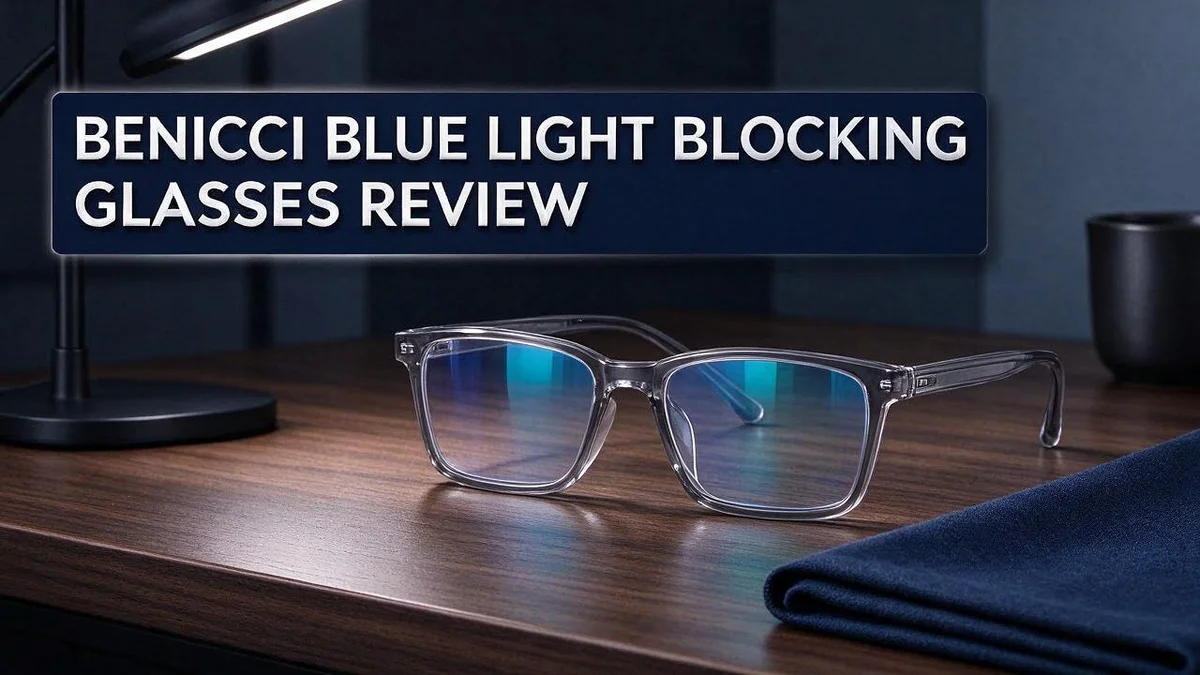
Benicci Blue Light Blocking Glasses Review: Do They Really Reduce Eye Strain?
Do your eyes feel tired after a long day on screens? You are not alone. Digital eye strain affects many people who work, study, or scroll for hours.
The Benicci Blue Light Blocking Glasses aim to help. Listings describe them as stylish, unisex frames that come with a case.
Vendors claim they reduce glare and ease strain from computers and phones. They also say the glasses support better sleep.
Here is the catch. Research on blue light glasses is mixed, and some lenses only filter blue light instead of blocking it.
So we checked the facts. This review covers what Benicci promises, what we could verify, and how it compares with rivals like Swanwick.
Let’s see if these glasses deserve a spot on your desk.
In a Nutshell
-
Style and extras: The Benicci glasses come in a unisex design and include a case. They suit daily wear at home, at work, or on the go.
-
Sleep claims: Listings say the lenses are sleep friendly. We found no independent tests that confirm this promise.
-
Missing data: The research shows no measured specs. We have no lens transmission figures or coating details to check.
-
Filter or block: Some blue light lenses filter light instead of blocking it. Benicci does not clearly say which type these are.
-
Evidence is mixed: Science on blue light glasses has not settled. Benicci also claims it beats other brands, but that is unverified marketing.
-
Main rival: A Reddit test of 30 pairs named Swanwick with a light yellow lens as the best daytime option. That test was anecdotal, so treat it as a hint, not proof.
Lens Technology and Blue Light Filtering Claims
Lens technology is where the real questions start. Most buyers never see what happens inside the lens. That makes it hard to know what the glasses really do.
Here is a simple way to think about it. A lens can absorb some blue light, or it can reflect it. These are different actions. Knowing which one applies helps you set fair expectations. The difference matters more than the marketing words.
Ask the seller a few direct questions before you buy. Ask what percentage of blue light the lens blocks at each wavelength. Ask whether the lens has a tint, and what color that tint is. A clear answer is a good sign. A vague answer is a warning sign.
Lens color matters too. A yellow or amber tint often means the lens filters more light. Clear lenses usually let more light through. Your own comfort tells you a lot. Wear them for one work session and notice how your eyes feel by the end.
Remember that screens cause strain in other ways. Dry eyes, poor posture, and bright rooms can all add to discomfort. Blue light is only one part of the picture.
Simple habits can help too. Try the twenty twenty twenty rule. Every 20 minutes, look at something 20 feet away for 20 seconds. Lower your screen brightness so it matches the room. Turn on night mode in the evening.
If eye strain keeps coming back, see an eye doctor. Ask for a full eye exam instead of a quick check. A professional can check your vision and suggest the right lenses for you. Glasses help some people, but they are not a cure for every problem.

- BLUE LIGHT GLASSES - Eyeglasses that protect your eyes: Blue light from computer screens can lead to...
- BLUE LIGHT BLOCKING GLASSES - Better sleep at night: Wearing these computer glasses while viewing...
Last update on 2026-10-24 / Affiliate links / Images from Amazon Product Advertising API
Frame Design, Materials and Build Quality
The frame shapes how the glasses feel and look all day long. Listings call the Benicci pair stylish, yet they do not name the frame material. That gap matters for comfort.
Material matters more than most buyers expect. In general, acetate feels warm and light on the face. Metal frames feel slim, but low quality metal can bend or pinch over time.
Thin plastic can flex easily. A flexible frame often returns to shape after a gentle bend. A stiff frame may crack instead, so flexibility is a useful sign.
Check the hinges and temple tips. Spring hinges let the arms open wide without stress. Soft rubber tips help the glasses stay in place behind the ears. Loose screws often appear after a few weeks of regular use.
Fit affects comfort and light control too. Glasses that sit too high or too far from the eyes let light slip in from the sides. Nose pads should rest evenly and avoid sharp pressure marks on the bridge of the nose.
Weight is another quiet factor. Heavy frames can slide down the nose during long work sessions. A lighter pair often feels better after several hours in front of a screen.
Build quality shows up in small details. Smooth edges, even coloring, and neat lens seating all signal careful making. The research did not confirm these details for Benicci, so inspect them yourself when possible.
Test the frame in person when you can. Try the glasses on for several minutes and look in a mirror from different angles. Notice any pinching, slipping, or rattling. A comfortable first impression often predicts how the pair will feel later.
Warranty terms also say a lot about build quality. A seller who offers a clear return window shows confidence in the product. Read the policy before you order, and save your receipt.
Comfort and Fit for All-Day Wear
Comfort matters most after several hours of wear. Many buyers focus only on looks at first. Glasses for a full workday need to feel calm from morning to night. A small fit issue can turn into a dull ache by lunchtime.
Start with the bridge and nose pads. The bridge should rest on your nose without pinching. Adjustable pads help you fine tune the position. Gaps around the nose let light sneak in and reduce the benefit.
Check the temple length. Arms that are too short press hard behind the ears. Arms that run too long can feel loose at the sides. Look for arms that curve gently around the head.
Think about your face shape. Round faces often suit frames with a little more angle. Square faces may look better with softer curves. Lens width should sit comfortably within your brow line.
Pay attention to pupil alignment. Each lens center should line up with your pupils. Poor alignment can cause eye strain and blurry focus over time. A good fit supports clear vision, not just a nice look.
Give your ears a break. Pressure behind the ears can build over several hours. Take short breaks and lift the glasses off your face now and then. Your skin will thank you.
Watch for heat and sweat. Warm rooms and busy days can make glasses slide. Choose frames with a secure grip at the temples. A quick wipe of the nose pads keeps the grip steady.
Consider your daily routine. Some people sit at a desk while others move between meetings. Glasses that stay put during movement suit active days. Long screen sessions call for a snug but gentle fit.
Test the fit with real tasks. Wear the glasses while typing, sipping coffee, or looking up at a screen. Notice any slipping, pinching, or pressure spots. A short test at home often shows more than a quick try on in a store.
Top 3 Alternatives
If you want a change from Benicci, these three options are worth a look. Each one offers blue light filtering for daily screen use.
Gunnar Intercept

- Recommended by doctors, our blue light blocking computer & gaming glasses (Patented Lens...
- Unlike other blue light blocking glasses, GUNNAR developed the Blue Light Protection Factor, telling...

Last update on 2026-10-24 / Affiliate links / Images from Amazon Product Advertising API
Long hours at a computer can tire your eyes. The Gunnar Intercept uses amber tinted lenses to filter blue light from screens. Many gamers and office workers like its lightweight frame. It feels comfortable during a full workday.
Felix Gray Rivington

- Reduce eye strain and fatigue with our blue light blocker glasses for women and men, designed to...
- Reduce eye strain and fatigue with our blue light blocker glasses for women and men, designed to...
Last update on 2026-10-24 / Affiliate links / Images from Amazon Product Advertising API
If style matters to you, the Felix Gray Rivington is a great choice. Its frames have a classic shape that suits most faces. The lenses block part of the blue light from phones and laptops. You can wear them at work and out in public.
Peepers Blue Light

- BLUE LIGHT FILTERING, UV400 & SCRATCH-RESISTANT LENSES: Filters blue light from screens, phones...
- LIGHTWEIGHT SQUARE FRAME: Flexible spring hinges & polycarbonate frame material delivers a durable...
Last update on 2026-10-24 / Affiliate links / Images from Amazon Product Advertising API
Looking for simple, everyday glasses? Peepers Blue Light keeps things easy. The frames are light and flexible, so they fit many head sizes. The lenses filter blue light from digital screens. They work well for people who want a practical pair.
Each of these options gives you a different look and feel. Try a few on to see which one fits your face and your daily routine best.
Screen Use Performance: Glare and Digital Eye Strain
Glare is often the first problem people notice. Bright light bounces off a screen and makes the eyes work harder. Benicci says its glasses reduce glare from computers and phones. This claim comes from the brand’s own listing, so it deserves a fair test.
Glare usually comes from two places. Overhead lights reflect off the glass. A window behind the desk adds extra shine. Screens placed near a bright window often show the most reflection.
Digital eye strain builds slowly. Many people blink less while staring at a screen. Long hours at a laptop make this worse. Eyes may feel tired, sore, or blurry by late afternoon. Glasses can help with part of this problem, but they rarely solve it alone.
Here is a simple test you can run. Sit at your normal desk, wear the glasses, and open a white document. Notice whether the bright background looks softer. Then remove the glasses and compare the two views for about ten minutes.
The research is still mixed. Studies on blue light glasses show different results. Some lenses filter light rather than block it. A Reddit test of thirty pairs named Swanwick as a strong daytime pick, but that test was anecdotal, not a lab study.
Set realistic goals. Expect comfort gains, not a cure. Track how your eyes feel after a full workday for one week. Write down headaches, dryness, and squinting in a small notebook. Those notes will show you whether the glasses truly help.
Evening Use and Sleep Claims
Many people use screens late into the night, so evening use is a common reason to buy blue light glasses. The listing calls these glasses sleep friendly, but that claim deserves a closer look.
Sleep claims need a careful read. Vendor copy often promises better rest. The sources do not include sleep studies for this model, so no one can confirm a sleep benefit yet.
Light plays a role in the body clock. Bright evening light can signal the brain to stay alert. Some lenses filter part of this light, while others mainly reduce glare. That difference matters for night use.
Research on blue light and sleep is mixed. Some small studies link screen light before bed with later sleep. Other studies find little change. Results often depend on screen brightness and how long people look at their devices.
Timing can matter more than the glasses. Wearing them for a few hours before bed may suit many people. Dimming room lights and lowering screen brightness often helps just as much.
Check the lens tint before you wear them after dark. Warm tints can make colors look dull, which may affect reading or driving at night. Try them in a dim room first.
Set simple goals for evening use. Aim for comfort during late screen time. Notice whether your eyes feel less tired at bedtime, and track your sleep for two weeks to spot any change.
If sleep problems continue, talk with a doctor. Glasses cannot treat insomnia or other sleep disorders. Think of them as one helpful habit, not a cure.
Style, Case and Everyday Versatility
Style matters because you wear glasses for many hours each day. Benicci describes its frames as stylish and unisex, so they can suit many different wardrobes and moods.
Think about how the frame pairs with your clothes. A dark frame often works with office outfits, while a lighter tone can feel relaxed on weekends. Notice whether the look still feels like you after a full day.
The included case makes daily carrying simpler. Slide the glasses inside before you toss them into a bag or jacket pocket. This small habit helps protect the lenses from scratches and keeps the frame in good shape.
Everyday versatility is a major selling point. Benicci’s listings describe the glasses as wearable anywhere, from the office to a coffee shop. That claim comes from the brand, so test them in your own routine first.
Frames that feel light and simple can also suit busy schedules. If you switch between a laptop, a phone, and a car, you may appreciate a pair that fits easily into a pocket or bag.
Lens care matters over time too. Wipe smudges with a soft microfiber cloth instead of a shirt, since fabric can leave tiny marks. Store the case somewhere easy to reach so you never leave the glasses behind.
Some shoppers also like sharing frames with a partner or friend. A unisex design makes that easier, but always check that the sizing suits each person.
Choose a pair you enjoy wearing. Glasses that match your style get used more often. That steady habit makes any blue light plan more consistent than a pair left in a drawer.
Pros and Cons
Pros
- Listings say they may reduce screen glare.
- Vendor copy claims they may ease digital eye strain.
- Listings describe them as wearable anywhere.
- The included case makes daily carrying simpler.
- The stylish, unisex design suits many everyday outfits.
Cons
- No independent cons appear in the sources.
- Research on blue light glasses is still mixed.
- Some lenses filter blue light instead of blocking it.
- Sleep benefits lack strong independent proof.
Who Should Buy It
Benicci blue light blocking glasses suit some buyers better than others. Your daily routine shows whether they fit.
Office workers who stare at screens all day often make the best match. Long hours of reading and typing can leave eyes feeling worn out.
Gamers and video editors also fit the profile. They sit in front of bright displays for hours and want comfort during long sessions.
Remote workers with long video calls could benefit too. Constant screen time adds up over a full workday.
Tablet and ebook reader fans may like them as well. Small text on bright screens asks more from the eyes.
Heavy phone users who check messages often may also find them useful. Frequent short looks at a bright screen add up across a day.
Shoppers who want a simple first step may like this pair. Many people prefer to try a product before making a bigger commitment. Trying one pair is an easy way to see how your eyes feel.
Anyone who wears prescription glasses should ask first. Check with the seller or an eye doctor about prescription options before you order. If you need lenses for distance or reading, confirm the lens type first.
People with ongoing eye pain or vision changes should book an eye exam first. Glasses cannot fix underlying eye problems.
Buyers who want a dramatic fix may feel disappointed. The evidence is still mixed, so these glasses work best as one helpful tool among many.
Your habits should guide the decision. Think about how many hours you spend on screens and what bothers you most. A clear answer to those questions makes the choice much easier.
Final Verdict
Benicci Blue Light Blocking Glasses make a friendly, easy pick for everyday screen users. They look good, they come with a case, and they fit many routines. That makes them a fair first try.
I must stay honest, though. Our research found no measured lens data. We also found no independent proof for the big claims.
Here is my verdict: these glasses deserve a trial, not blind trust. Treat them as one small tool in your screen routine.
Give them a fair test. Wear them for two weeks during your normal workday. Note how your eyes feel at the end of each day. Compare that with how you felt before.
Pair them with good habits. Take short breaks from your screen. Look at something far away every 20 minutes. Adjust your screen brightness. Blink often. These steps matter as much as any lens.
Notice the lens tint when the glasses arrive. Look at a white page under normal light. A strong color cast may bother some people. Choose a look you can wear all day.
Keep the competition in mind. A Reddit user tested 30 pairs and named Swanwick with a light yellow lens as the best daytime blocker. That test was anecdotal, but it shows other options exist. Compare before you commit.
Who should buy: shoppers who want a stylish, simple pair and hold realistic expectations.
Who should wait: anyone who wants guaranteed results or medical relief.
Final thought: Benicci earns a cautious thumbs up. The design appeals to many people, and the case adds daily convenience. Keep your expectations grounded. See an eye doctor if discomfort sticks around.
Frequently Asked Questions
Do I need to wear them all day?
Not always. Most people wear them during long screen sessions, such as work calls or late evening scrolling. Start with a few hours at a time. See how your eyes feel before you wear them more often.
How should I set up my screens?
Good screen habits matter as much as any pair of glasses. Lower your screen brightness so it matches the room. Try a simple break habit: every 20 minutes, look at something 20 feet away for 20 seconds. Sit at arm’s length from your monitor, with the top of the screen at or slightly below eye level.
How does Swanwick compare?
Swanwick stood out in one Reddit test of 30 pairs. It has a light yellow lens and was called the best daytime blue light blocker. That test was run by users, so it reflects personal experience rather than lab data. Read a few more reviews and compare lens colors before you decide.
How do I keep the lenses clean?
Wipe the lenses with a soft microfiber cloth. Skip paper towels, since they can scratch coatings. Clean lenses give you clearer vision, so wipe them each morning and whenever they look smudged.