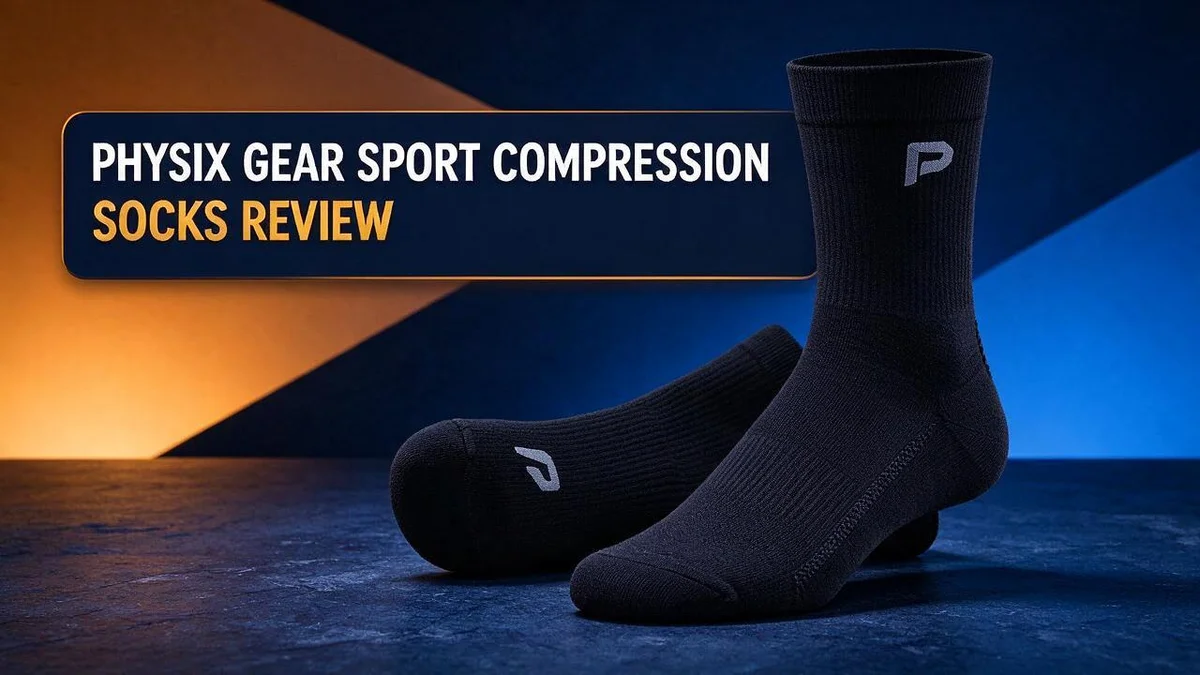
Physix Gear Sport Compression Socks Review: Do They Really Help Recovery?
Tired legs can slow you down fast. Long shifts, hard runs, and cramped flights all take a toll.
That is where Physix Gear Sport Compression Socks come in. They offer 20 to 30 mmHg graduated compression from heel to upper calf.
The fabric blends nylon and spandex. It wicks moisture and feels comfortable and breathable, according to CNET.
People wear them for running, nursing, shin splints, travel, plantar fasciitis, and maternity. Reviewers also call them durable.
So do these socks live up to the hype? This review covers the features, the fit, and who benefits most.
In a Nutshell
-
Graduated compression: The socks apply 20 to 30 mmHg of pressure. The squeeze is firmest at the ankle and eases as it moves up the leg.
-
Full lower leg coverage: They run from the heel to the upper calf. That covers the whole area where shin splints and calf fatigue often show up.
-
Comfort and breathability: CNET found them comfortable and breathable. The moisture wicking fabric helps keep your feet dry on long, warm days.
-
Durability: YourCentralValley noted that the socks hold up well with regular wear. That matters if you wash them often.
-
Recovery claims: Physix Gear says the socks support circulation and recovery. Treat this as a brand claim, since the research gives no independent proof.
-
Bottom line: The research lists no major drawbacks. These socks look like a solid pick for athletes, travelers, and anyone on their feet all day.
Compression Level and Graduated Fit
Compression strength shapes how the socks feel all day. Many shoppers never think about it until they try a pair.
Graduated fit works in a simple way. The fabric squeezes most at the ankle. Then the pressure eases as it moves up the leg.
This design helps blood move back up to the heart. Less pooling can mean less swelling after long hours on your feet.
Moderate pressure suits many active people. Runners, nurses, and travelers often find it a comfortable middle ground.
Sizing plays a big role in comfort. Measure your ankle and calf first. Then compare those numbers with the brand size chart.
A sock that fits well still applies even pressure. One that runs too small can pinch or roll down.
Try them on in the morning. Legs tend to swell less then, so the fit feels more accurate.
Lighter pressure may suit someone new to compression. Stronger levels often need a professional recommendation.
Mild soreness during the first few days is common. Your legs need time to adjust to steady pressure.
Stop wearing them if pain, numbness, or tingling appears. Those signs mean the fit or level may not suit you.
People with health conditions should talk to a doctor first. Medical advice matters before starting any compression wear.
Keep the fabric smooth when you pull them on. Wrinkles can create uneven pressure spots on the skin.
Roll the sock down slowly after wearing. Quick tugging can stretch the material and weaken its grip.
Wear them for a full day and check how your legs feel at night. Less heaviness usually signals a good match.
A consistent fit makes the compression feel more useful. Good habits help you get the most from every wear.

- Experience Superior Comfort: Our calcetines de compresion provide unparalleled support for all-day...
- Unleash Your Full Potential: Whether for sports or work, these sock compression socks are designed...
Last update on 2026-10-24 / Affiliate links / Images from Amazon Product Advertising API
Material and Fabric Quality
Fabric shapes how a sock feels after hours on your feet. The Physix Gear blend pairs nylon with spandex, and each fiber does a different job.
Nylon is a smooth synthetic fiber. It helps the sock feel light and resist wear.
Spandex brings the stretch. It lets the fabric return to shape after you pull the sock on. This helps the compression stay steady through the day.
Blends like this one balance softness and support. Pure cotton holds moisture and can lose its shape faster. Synthetic blends dry quickly and keep their form longer.
Moisture wicking is another key feature. The fabric pulls sweat away from your skin instead of holding it. Dry skin feels less itchy and less sticky during a long run or a long flight.
Smooth fabric also reduces friction. Less rubbing can mean fewer hot spots around the heel and toes. Many people with sensitive skin look for this detail.
On hot days, breathable fabric helps keep heat from building up around your calves.
Think about your daily routine. A runner sweats more than someone seated at a desk. A nurse on a long shift may want fabric that stays fresh. A traveler sitting for hours benefits from skin that stays dry and calm.
Care matters too. Wash the socks in cool water. Skip fabric softener, since it can coat the fibers and reduce wicking. Air drying helps the spandex keep its stretch over time.
Loose fabric often signals worn elastic. If the sock slides down the leg, the spandex may be wearing out. Replacing a worn pair keeps the compression working as intended.
Comfort and Breathability
Comfort decides whether you keep wearing compression socks. A pair that feels hot or scratchy often ends up in the back of the drawer. Airflow matters just as much as the squeeze.
Think about how your feet feel after several hours. Swelling often grows as the day goes on, so a sock needs to stay soft and calm from morning to night. Look for a snug feel around the arch, not a pinch.
Seams deserve a close look too. Flat or lightly stitched seams sit well against the toes and heel. Thick seams can rub, which leads to blisters on long runs or long flights.
Temperature changes the comfort level. In a warm office, your feet may sweat more than you expect. In cool weather, a thinner layer keeps your legs warm without feeling bulky under pants.
Padding is light in most compression socks, so the fabric does most of the work. That keeps the sock close to the skin and reduces bulk in tight shoes.
Try a pair during a normal day. Wear them at work, on a walk, or during chores. Pay attention to itching, hot spots, or a feeling that the top band digs in. Small issues show up quickly during regular activity.
Sensitive skin needs extra care. Look at the cuff and top band before you buy, and check how the fabric meets your ankle. If you notice redness or irritation, take the socks off and let your skin rest.
Layering works well for travel and sports. A compression sock can sit under regular athletic socks or leggings for extra warmth. Keep the layers thin so your shoes still fit.
Comfort grows with routine. Many people find the sock feels better after a few wears. Give your feet time to adjust, then decide whether the comfort level fits your life.
Top 3 Alternatives
CEP Compression Socks

- 20-30mmHg Targeted Compression for Peak Performance – Patented technology applies precise...
- Train Harder, Recover Faster – Targeted compression helps alleviate pain from common leg and foot...
Last update on 2026-10-24 / Affiliate links / Images from Amazon Product Advertising API
CEP makes high quality compression socks for runners and active people. Many users like the firm, graduated fit that supports the calves during long workouts. The socks feel snug without feeling painful. They also work well on recovery days when your legs feel tired. Athletes often wear them after a hard race to help with soreness.
Sockwell Compression Socks

- RECOMMENDED FOR: All day/everyday wear, flying and travel, prolonged sitting or standing, exercise...
- 4 ZONES OF FIRM (20-30 mmHg) GRADUATED COMPRESSION: helps to minimize swelling, reduce fatigue...
Last update on 2026-10-24 / Affiliate links / Images from Amazon Product Advertising API
Sockwell focuses on all day comfort. The socks use a gentle graduated fit that supports circulation while you sit or stand. The top band is soft, so it does not dig into your leg. Many office workers, nurses, and frequent flyers enjoy this option. It is a good choice if you spend long hours on your feet or in a chair.
Blitzu Compression Socks

- Plantar Fasciitis & Ankle Pain Relief: Our ankle brace provides effective plantar fasciitis relief...
- Adjustable Ankle Support for Men & Women: Designed for a comfortable fit, this ankle brace for women...
Last update on 2026-10-24 / Affiliate links / Images from Amazon Product Advertising API
Blitzu offers a light and breathable style that feels great in warm weather. The fabric pulls moisture away from your skin, so your feet stay dry. These socks suit running, hiking, and everyday wear. The brand also provides a sizing chart, which helps you find the right fit. Check the chart before you order so your socks feel comfortable from the start.
Durability and Care
Good care helps your socks last longer. Simple habits keep the elastic working well for months. Check the care label before every wash.
Skip fabric softener when you wash them. Softener coats the fibers and can reduce the stretch over time. Choose a mild detergent instead.
Bleach and harsh stain removers can break down nylon and spandex. Treat small marks with a gentle soap and a soft cloth instead.
Heat is the biggest enemy of compression fabric. Skip the dryer and lay the socks flat to air dry. Direct sunlight can fade the colors, so choose a shady spot.
Let the socks dry completely before wearing them again. Damp fabric can feel uncomfortable and may wear faster from friction.
Wash them after each heavy workout or long day. Sweat and oils build up over time and can weaken the fibers.
Rotating two or more pairs gives each sock time to rest. The fibers recover their shape between wears. This habit spreads out daily wear and tear.
Store folded socks in a drawer rather than a tight pile. Use a mesh bag during washing to protect the fabric from zippers and hooks.
Pull the sock gently over your hand and look for thin spots. Hold it up to a light to spot tiny holes.
Replace the socks when the fit feels off or the fabric looks worn in places. Pilling and sagging mean the compression no longer works as expected.
Keep a small log of purchase dates. Writing down when you started wearing each pair helps you track its life. This simple note makes replacement timing easy.
Small routines add up over time. A little attention each week keeps your pair ready for morning runs, long flights, and busy workdays. Start with one habit this week.
Suitable Activities: Running, Nursing, Travel and More
Runners often look for extra leg support on long miles. The Physix Gear Sport Compression Socks cover the area from heel to upper calf. That wide coverage helps many runners feel supported from start to finish.
Shin splints can turn a simple run into a painful chore. Some runners wear compression socks to help manage that sore, tight feeling during training.
Plantar fasciitis causes sharp pain under the heel, especially after a period of rest. The heel coverage in these socks may appeal to people who feel that discomfort during daily walks.
Nurses and other healthcare workers spend hours on their feet. A graduated fit may help legs feel less heavy by the end of a long shift.
Pregnancy brings changes to the legs and ankles. Maternity wearers often choose compression socks for a more comfortable day on their feet.
Long flights can leave ankles puffy and legs stiff. Many travelers pull on compression socks before boarding. The socks may help ease that heavy feeling on a long trip.
The brand says these socks support circulation and recovery. That claim makes them a good fit after a hard workout or a long day of errands.
Match the sock to the activity. A runner needs different support than a traveler or a nurse. Choose the use that matters most, then wear the socks for that moment.
Standing jobs, road trips, and busy shopping days also call for good leg support. Many people keep one pair for work and another for weekend hikes. Each pair then meets a different need.
Sports fans who stand through long games and hikers on rocky trails may also find them useful. The graduated fit works for many different routines.
Circulation and Recovery Claims
Physix Gear says its Sport Compression Socks support circulation and recovery. These claims appear in the brand’s product listings. Shoppers want to know what that really means for their legs.
Compression works by applying gentle pressure to the lower leg. This pressure may help blood move back up to the heart. Some people feel this as a lighter, less tired feeling in their calves.
Recovery is the second claim. The brand suggests the socks may help legs bounce back after hard training or long shifts. Less swelling and less soreness are the goal.
The benefits come from the brand’s own listings. Independent test results are not shared in the research. Readers should keep that in mind before buying.
Who may notice the difference most? People who stand or sit for long periods often report heavy legs. Athletes may also like the idea of faster recovery between workouts.
Calf comfort depends on the individual. One person may feel a clear change while another feels little. Give the socks a fair trial over several days before deciding.
Talk with a doctor first if you have circulation problems. Conditions like poor venous flow, diabetes, or skin issues need medical advice. Compression is not right for everyone.
Many runners also use compression after long runs. Standing jobs and travel days create similar leg strain. Good circulation habits, such as walking and stretching, work alongside the socks.
Think of these socks as a support tool, not a cure. They may add comfort during a busy day. Pair them with movement, water, and regular breaks for the best results. Keep expectations realistic.
Pros and Cons
Pros
- Comfortable and breathable, according to CNET reviews
- Durable fabric that holds up over time
- A graduated fit may help legs feel less heavy
- Coverage from heel to upper calf
- Useful for running, travel, nursing, and more
Cons
- The circulation and recovery claims come from the brand itself
- Calf comfort depends on the individual wearer
- People with circulation problems should talk with a doctor first
- No major drawbacks appear in the current research
Who Should Buy It
Some shoppers want one pair that handles many jobs. This sock may suit someone who runs on weekends, works long shifts, and then boards a flight.
Desk workers may also benefit from a simple daily pair. Many people sit through long meetings or drives, and legs can feel tired afterward. A light compression sock may offer a sense of support during those hours.
Hobbyists who hike or garden may also find a use. Long walks on uneven ground can strain the calves. A sock that stays in place can keep focus on the trail rather than on sore legs.
New compression wearers make a good audience. Many first time wearers prefer a moderate level at the start. Begin with a few hours a day and notice how your legs respond.
Fit matters more than most buyers expect. Measure your calf and ankle before ordering. A snug and even feel keeps the socks in place all day.
People who want low effort gear should also consider these. Pulling on a sock is simple, and it takes little time. Many wearers like a routine that fits into a morning rush.
Gift shoppers may find these a practical pick. Athletes, nurses, and frequent flyers often appreciate useful gear. Add a note about sizing so the recipient can choose the right fit.
Comparison shopping still makes sense. Several brands sell compression socks, so reading a few reviews helps. Check the fabric, the coverage, and the return policy before you decide.
Start with a short trial. Wear the socks for a day or two and see how they feel. Good sizing makes the choice easier.
Final Verdict
Physix Gear Sport Compression Socks earn a solid recommendation from us. They give most shoppers a simple, reliable pair for daily wear.
Reviewers praise the comfort and the breathable feel. Local news coverage also credits the durability. These points suggest a dependable everyday sock.
Our research found no major complaints. That is a good sign. Still, the evidence comes from a small set of reviews and brand listings, so we cannot call the pair perfect.
Our bottom line: these socks suit the shopper who wants one pair for many jobs. They make a friendly first pair for anyone curious about compression. They also work as a backup pair for people who already wear it.
Think about how you will use them before you buy. Choose them if you want steady support on busy days. Check the size chart first to avoid guesswork.
Set realistic expectations. Compression socks help some people feel better, but they do not replace medical care. Your results may differ from other wearers.
We also noticed that reviewers rarely name direct rivals. That makes side by side comparison hard. If you own a favorite pair already, test both for a week and compare how your legs feel.
Best for: active people, travelers, and workers on their feet.
Standout traits: comfort, breathability, and durability.
Watch out for: sizing mistakes and unproven brand claims.
Overall, Physix Gear delivers a dependable sock that is easy to like. We think most buyers will feel happy with the choice. Order the right size, wear them for a few days, and let your legs decide.
Frequently Asked Questions
How long can I wear them each day?
Many wearers put them on in the morning and take them off at night. Start with a few hours on your first days. Stop if your skin feels numb or looks marked.
Can I wear them on a long flight?
Yes. Flights and travel are common uses for these socks. Pull them on before you board, and walk the aisle when you can. Movement helps your legs too.
Are they useful for shin splints or plantar fasciitis?
The product lists both as uses. A graduated fit may ease leg fatigue during daily activity. They do not cure these conditions, so see a clinician if the pain keeps coming back.
How should I wash them?
Nylon and spandex blends are easy to care for. Check the care label first. Rinse them after each wear and let them air dry. Heat can weaken elastic over time.
Do nurses and expecting mothers wear them?
Nursing and maternity wear are both listed uses. Many nurses wear them through long shifts. Expecting mothers should check with their doctor before they start a new compression routine.