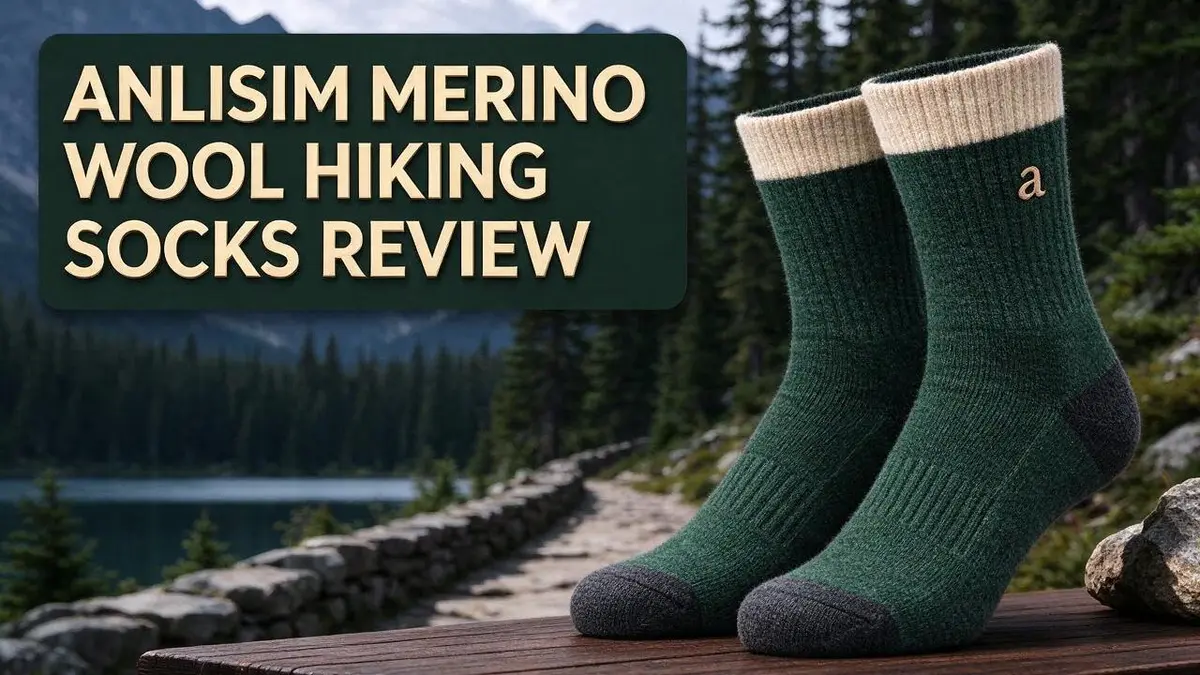
Anlisim Merino Wool Hiking Socks Review: Warmth, Cushioning and Durability Tested
Sore, damp feet can ruin a good hike. Anlisim Merino Wool Hiking Socks aim to fix that problem.
These socks use a blend of 70% merino wool, polyester, spandex, and nylon. The mix gives you warmth, stretch, and a snug fit.
The extra thick cushioning softens every step on rocky trails. A compressive arch band keeps each sock in place.
You can choose ankle or crew styles. Packs come with four or five pairs.
Reviewers praise the moisture wicking and shock absorption. One user did report pilling after use.
In this review, we look at comfort, fit, and durability. Then you can decide if these socks belong in your hiking pack.
In a Nutshell
- Best for: Hikers who want warm, padded socks for cool or cold trails. Cold weather outings suit these socks best.
- Warmth: The thermal knit holds heat well. One reviewer says it also regulates temperature when the weather shifts during a hike.
- Support: The compressive arch support keeps the sock snug under your foot. This secure fit helps limit slipping and rubbing inside your boots.
- Pack sizes: You can buy 4 or 5 pairs in one pack. That makes it easy to rotate fresh pairs on multi day trips.
- Watch out: One user reported pilling after use. Reddit hikers also ask if this is normal for merino blends, so gentle washing is a smart habit.
- Verdict: These socks look like a solid pick for cold season hiking. Hikers in hot weather may find the thick build too warm for their needs.
Fabric Blend and Materials
Merino wool does most of the heavy lifting in these socks. Its natural fibers feel soft and pull moisture away from your skin.
Natural wool also resists odor. Many hikers notice that merino socks smell less after a long day on the trail.
The polyester in the blend adds strength. It dries quickly and helps the sock keep its shape over many miles.
Spandex gives the sock stretch. This stretch lets the fabric move with your foot instead of sagging.
Nylon plays a quieter role. It adds abrasion resistance, so the sock handles rubbing from boots and rough rock.
Together, these fibers balance comfort and toughness. Each fiber covers a job that the others cannot do alone.
Wool also handles temperature swings well. Your feet stay warmer on chilly mornings and cooler as the day heats up.
Pure wool dries slower than a blend like this one. That difference matters on long hikes where your socks get wet from sweat or rain.
Some wool blends can pill over time. Pilling happens when short fibers rub together and form small balls on the surface.
Gentle washing helps the fabric last longer. Wash the socks inside out in cool water and skip the high heat dryer.
Air drying also protects the spandex. Heat can weaken elastic fibers over many wash cycles.
Fabric choice should match your trail. Thick blends like these suit cold weather, while lighter options fit warm summer hikes.
Lightweight options can feel cooler. Check the sock weight if you hike in mild or hot conditions.
Check the fiber mix on the label before you buy. A clear fiber list helps you pick the blend that fits your hiking plans.

- For All-Season Wear: Built for active lifestyles in every season, these mid-calf socks are crafted...
- For Hikers & Trail Walkers: These socks feature a Zoned Cushioning System with thick terry padding...
Last update on 2026-10-24 / Affiliate links / Images from Amazon Product Advertising API
Cushioning and Arch Support
Thick padding changes how your boots feel. Before a long hike, try these socks inside your usual pair. Extra bulk can make a snug shoe feel tight, so check your toes.
The cushion sits mostly under the heel and the ball of the foot. These zones take the most impact on steep descents. This placement helps where your feet hit the ground hardest.
The arch support works differently from the cushion. It hugs the middle of your foot and keeps the sock snug. Loose socks can bunch and rub, so this feel matters on long trails.
Some hikers need more arch lift than a sock can provide. If your arches ache, a separate insole may help. Socks alone cannot fix every foot concern.
Cushion level matters for different terrain. Rocky trails call for more padding than smooth dirt paths. Flat routes may feel better with a thinner layer under your foot.
Your foot size affects how the padding feels, too. Snug socks on a small foot can squeeze the arch. Measure your foot before you pick a size, and compare it with the size chart.
Cushion can also change your stride. Some hikers feel more stable with a firm base under the heel. Padding that feels soft at first may need a short test walk to judge.
Give your feet time to adjust to the padding. Wear the socks on short walks first. This slow start helps you spot hot spots early.
Pay attention to pressure points during your test. A small ridge or thick seam can feel sharp after an hour. Adjust your laces or try a different pair if needed.
Fit, Sizing and Sock Styles
Fit can make or break a day on the trail. A sock that slides or bunches can rub the skin and cause blisters. Checking the sizing first helps you avoid those problems.
Start with the size chart. Look at the size chart on the product page before you order. Measure your foot length in inches or centimeters, then compare the number with the chart.
Measure in the late afternoon. Feet swell during the day, especially after a long walk. Measuring at that time gives you a more accurate number for hiking socks.
Good fit feels snug but not tight. The heel should stay in place when you walk. Your toes should have a little room so they do not touch the front of your boot.
Check the cuff height. A cuff that digs into the calf can cause numbness on steep descents. Pull the top edge up and make sure it sits smoothly without leaving deep marks.
Think about your boots when you choose a style. Low hiking shoes or trail runners pair well with ankle height socks. High boots work better with crew socks, which cover more of the shin.
Consider your climate, too. In hot weather, a shorter cuff may feel more comfortable. In cold weather, a taller cuff keeps cold air out and adds a layer over the leg.
Some hikers want extra length for brush and wet grass. Others want less fabric to stay cool.
Test the fit at home first. Wear them around the house for a short time. Walk up and down stairs to see if the heel slips or the fabric bunches.
If the fit feels off, try a different size before your trip. Early testing gives you time to find a better match.
Top 3 Alternatives
Looking for other options? These three socks make strong alternatives to the Anlisim pair. Each one gives hikers comfort, warmth, and a good fit on the trail. Read on to see which one suits your feet.
Smartwool Hike Light Crew

- Indestructawool durability technology is intentionally knit into high impact wear zones, helping...
- Virtually Seamless toe technology is a flat knit toe seam designed for additional comfort

Last update on 2026-10-24 / Affiliate links / Images from Amazon Product Advertising API
Smartwool makes a light crew sock for everyday hikers. The merino wool blend keeps your feet warm on cool mornings. It also pulls sweat away from the skin. The cushioning sits in the right places, so your feet feel supported. The snug fit helps the sock stay up and in place on steep trails.
Darn Tough Hiker Micro Crew

- Lightweight with Cushion - Light and strong with a thin layer of cushioning along base of foot. Our...
- Micro Crew Height - A shorter, more concise take on the traditional crew height. Peeks just above...
Last update on 2026-10-24 / Affiliate links / Images from Amazon Product Advertising API
This sock comes from a brand known for durable construction. Its thin cushion works well in warm weather. Many hikers like the smooth, seamless feel against their toes. The ribbed cuff keeps the sock snug around the calf. It also dries quickly after a rainy hike.
Icebreaker Hike+ Light Crew

- DESIGNED FOR: Ultralight running socks for men, the Merino Blend Run+ Ultralight Crew Socks are made...
- MATERIAL CONSTRUCTION: Fabric blend made from Merino Wool (50%), Nylon (46%), Elastane (3%) and...
Last update on 2026-10-24 / Affiliate links / Images from Amazon Product Advertising API
Icebreaker focuses on natural merino fibers. This sock wicks moisture quickly and helps control odor. It works well for day hikes and travel days. The light build keeps your feet cool without feeling thin. The crew height protects your ankles from rubbing.
Moisture Wicking and Temperature Regulation
Sweat builds up fast on a steep climb. Damp skin can feel cold the moment you stop for a snack.
These socks are described as moisture wicking. The fibers pull sweat away from your skin, so the inner layer stays drier. Dry skin creates less friction. That helps lower the risk of blisters on your heels and toes.
A reviewer also claims these socks help regulate temperature. That claim fits what merino is known for. Think of it as a promise to test yourself. Your own feet will show you the truth.
Your socks are only one part of your setup. Your boots matter too. A boot with poor airflow can trap heat, even when the sock does its job. Look for boots with mesh panels or breathable linings for warmer days.
Try a short walk on a cool morning, then another on a warmer afternoon. Notice whether your toes feel clammy or chilled. Your personal test tells you more than any single review.
Moisture control and warmth both shape how your feet feel on the trail. These socks look promising for both goals. Keep your expectations realistic, and test them early so you know what works for you.
Durability and Pilling Concerns
Durability matters more than many hikers expect. A sock that thins out after a few trips can ruin a good hike. This section looks at how these socks hold up over time.
Pilling shows up as small fabric balls on the surface. Friction causes them to form. Heels, toes, and the area around the ankle rub the most inside a boot.
One user reported pilling after use, and a Reddit thread asks whether this is normal for merino blends. Pilling on its own does not always mean the socks failed.
Check the heel and toe first. Small pills on the upper leg often matter less than thin spots under the foot. Those zones take the most abuse on steep descents.
Rotating pairs gives each set time to recover. Wearing the same pair on two days in a row builds up more friction. Keep a second pair for rest days.
Hold each sock up to light after a hike. If you can see light through the fabric, the wear is serious. Pills can be trimmed with a fabric shaver, but thin spots cannot be repaired.
The nylon and spandex in the blend help the sock keep its shape. Those fibers support the knit through many wears. Still, rough trails wear down any sock over time.
Track your wear in a simple log. A quick note in your phone shows when a pair has done its job. You can then replace worn socks before a big trip.
Pilling can appear fast on new socks and slow down after a few wears. Give the fabric a short settling period before you judge it. Compare the pills after five or six wears, not after one.
Care and Washing Tips
Good care keeps merino wool socks soft and warm. Caring for your Anlisim socks takes little effort. A simple routine helps them last through many hikes.
Rinse off dirt and salt before washing. Sweat salt can stiffen fibers over time. A quick rinse keeps the knit fresh between full washes.
Wash your socks in cold water. Warm or hot water can shrink fibers and dull the cushion. Choose a gentle cycle on your machine.
Use a mild detergent. Harsh soaps can strip the natural oils in merino wool. Skip fabric softener, too, because it coats the fibers and reduces wicking.
Turn each pair inside out before you wash. This protects the outer surface from rubbing against the drum. It also keeps zippers and hook fasteners from snagging the knit.
Place socks in a mesh laundry bag. This keeps pairs together and stops them from tangling. It also prevents small socks from slipping into the machine gaps.
Air dry your socks away from direct sun. High heat from a dryer can shrink the blend and weaken the elastic. Lay them flat or hang them over a rack.
Store socks dry and clean. Damp socks invite odor and mildew. Fold each pair and keep them in a cool drawer or a breathable bin.
Hand washing works well for a quick refresh after a muddy trip. Rinse in lukewarm water, press out the water gently, and lay them flat to dry. Avoid wringing, because twisting can stretch the knit.
Check the care label before every wash. Care labels give specific guidance for your pair. Following them keeps your socks ready for the next trail.
Pros and Cons
Pros
- Cushioning softens each step on rocky, uneven trails.
- Arch support may ease foot fatigue on long days.
- A secure fit helps stop heel slip inside your boots.
- Multi-pair packs make it easy to keep a full rotation ready.
- Many shoppers leave positive feedback online.
Cons
- Extra thickness can feel bulky in snug or low profile boots.
- Full padding may run warm on hot summer hikes.
- Some hikers prefer the feel of pure wool over a blend.
- Long-term wear data is still limited, so results may vary.
Who Should Buy It
If you spend weekends on the trail, these socks may suit you well. They fit people who want warmth and comfort without much fuss.
Hikers with sweaty feet often gain the most. Merino blends move moisture away from the skin, so your feet feel less clammy on steep climbs. You can keep going without stopping to swap socks.
Cold weather hikers will also appreciate them. Wool stays warm even when it gets a little damp. That helps on frosty mornings, windy ridges, and early starts when the air still bites.
Campers can use a dry pair for sleeping. Changing into clean, warm socks at camp feels good after a long day of walking. Your toes will thank you once the sun drops.
Gift shoppers may find these socks a practical choice. A hiker rarely turns down a fresh pair for the next trip. They also make a useful addition to a winter gear bag.
Some people should look elsewhere. Trail runners who want a thin, lightweight sock for fast miles may prefer a lighter design. Shoppers with wool sensitivity should test a pair first, since merino can still feel itchy on some skin. Those with very sensitive skin might want a softer cotton blend instead.
Before you decide, think about your usual trails. Match the sock to your hike length. Short walks need less thickness. Multi-day treks often call for extra warmth and padding for your feet.
Final Verdict
The Anlisim Merino Wool Hiking Socks earn a solid recommendation for most trail users. They deliver comfort and warmth where it counts. The few drawbacks are easy to manage.
Our overall take: these socks suit hikers who want a dependable, cushioned layer for regular outings. They feel like a practical upgrade over basic cotton socks.
Start with one test hike. Wear a fresh pair on a short, familiar trail. Notice how your boots feel at the toe box and around the ankle.
Match the sock to your boot. Try them with the exact boots you plan to wear on longer trips. A good match matters more than any feature list.
Pay attention to your feet after the first few miles. Dry skin and steady warmth are good signs. Hot spots or tightness tell you to adjust.
Our confidence level: moderate to high. Early feedback looks positive. Long term data is still thin, so we stay cautious about big promises.
Who should buy now? Hikers who want a cushioned, secure sock for cooler or mixed weather will likely feel happy. The pack sizes also help you build a reliable rotation.
Who should wait? Anyone with very snug boots or a strong preference for pure wool may want another option. Summer heat hikers may also want a lighter pair.
The bottom line: Anlisim delivers a comfortable, warm, and supportive sock for the trail. Test one pair, check the fit, and let your feet decide.
If your feet stay dry and happy through that first hike, you have found a keeper. Then you can head out with confidence on your next adventure.
Frequently Asked Questions
Can pilling happen with these socks?
Yes, one shopper reported pilling after use. A Reddit user also asked whether pilling is normal for merino blends. Expect some fuzz over time, and check the fabric after a few months.
Should I choose ankle or crew style?
Ankle styles suit low cut boots, trail runners, and short day hikes. Crew styles add coverage for tall boots and cold mornings. Pick the height that matches your boot collar so the top edge does not bunch up.
Can I wear these socks every day?
You can wear them casually, but they are built for hiking. The thick padding can feel heavy in office shoes or sneakers. Save them for trail days and use lighter socks for everyday wear.
Do online reviews tell the full story?
Review roundups such as Treeline Review and OutdoorGearLab mention this product, but their exact rankings are unclear. Read recent reviews that mention durability. Long-term results are still limited, so compare those comments with your own hiking habits.
How many pairs should I rotate?
Start with one pair for a test hike. Rotate two pairs on multi-day trips so one pair can dry fully before you wear it again. Dry socks feel better and last longer on the trail.