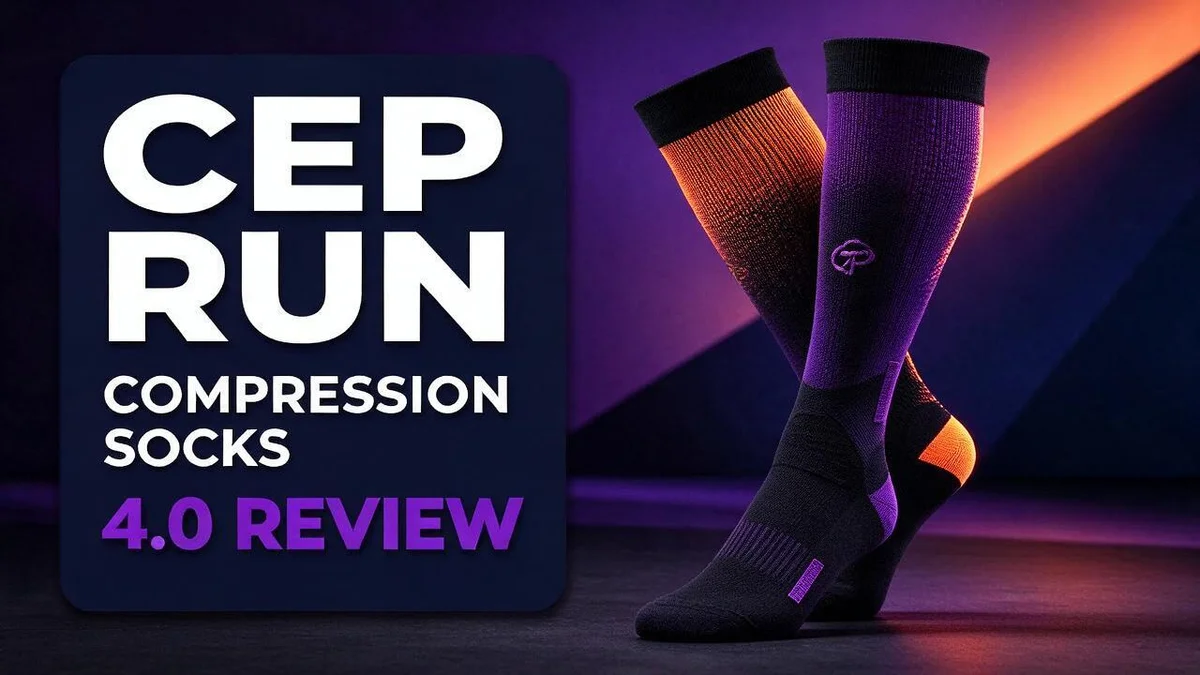
CEP Run Compression Socks 4.0 Review: Cooling, Compression and Real-World Running Performance
Tired legs can ruin a good run. Sore arches and swollen ankles make it worse. CEP Run Compression Socks 4.0 aim to fix that.
These socks use targeted arch and ankle compression to support your joints.
Air channels in the footbed keep your feet cool. Mesh like calf panels and toe ventilation zones boost airflow.
The fabric wicks moisture away. Reviewers also mention better circulation, less swelling, and good odor control.
One review claims a 5% performance boost, or about 10 to 12 minutes in a marathon. No one has verified that claim independently.
The 4.0 line includes Men’s Tall, Women’s Run, Men’s Run Socks in black, and Women’s Calf Sleeves. Let’s see if they deserve a spot in your running kit.
In a Nutshell
-
Upgraded design: The Tall 4.0 improves on the 3.0 Tall. Returning CEP fans get a fresh version of a familiar sock.
-
Extra airflow: Mesh style calf panels and toe ventilation zones let heat escape from your lower legs and toes.
-
Circulation support: The compression may boost circulation and reduce swelling after long efforts.
-
Comfort details: Cushioning protects your feet, and odor control keeps the socks fresher. One review also promises a blister free run.
-
Joint feedback: Sources say the sock gives your joints sensory stimulation. This may lower injury risk and ease pain.
-
Keep in mind: The research lists no clear downsides, but the performance claims are not independently verified. Test the socks on a short run first.
Fabric and Ventilation Technology
The fabric does more than feel soft. It pulls sweat away from your skin, so the surface stays drier during a run. Dry skin rubs less, and many runners notice that difference on longer days.
Think of the sock as one system. The fabric, the footbed, and the calf panels all work together. Each part handles a different job, so heat and moisture do not build up in one spot.
Breathability matters most when temperatures rise. A thick sock can trap warmth around your ankles. A lighter knit lets air move through the weave while the compression stays firm.
Wet socks can also shift on your foot. When the fabric stays dry, it holds its position better. A snug fit then stays put from the first mile to the last.
Check the fit before race day. Pull the socks on with clean, dry feet. Smooth out any wrinkles so no spot presses too hard. Test them on a short run first.
In cooler weather, runners may pair them with a thin base layer on the legs. Personal comfort should guide that choice, since everyone runs at a different temperature.
Keep an eye on how your skin feels during long efforts. Hot spots or rubbing signal that the fit or fabric needs a closer look.
Good ventilation also helps after the run. Dry fabric cools faster once you stop moving, so your legs feel fresher during the cooldown walk.
Wash them after every use. Sweat salts can slowly stiffen the knit over time. Air drying helps protect the stretch and keeps the socks working well for many runs.

- 20-30mmHg Targeted Compression for Peak Performance – Patented technology applies precise...
- Train Harder, Recover Faster – Targeted compression helps alleviate pain from common leg and foot...
Last update on 2026-10-24 / Affiliate links / Images from Amazon Product Advertising API
Compression Design and Support
Good compression should feel supportive, not tight. Many runners want gentle pressure that stays comfortable over many miles. The 4.0 line gives you several ways to find that balance.
Height changes the feel. The Tall version covers more of the calf, so it suits runners who want fuller leg coverage on longer routes. The Run socks sit lower, which many people prefer for shorter or faster sessions.
Calf sleeves offer another option. They let you keep your favorite socks and shoes while still adding compression where your legs work hardest. They also fit easily under many outfits, so they suit runners who switch routines often.
Pressure should never cause pain. Pull the sock on and check how it feels around the arch and ankle. A snug, even hold is ideal. Numbness, tingling, or deep marks mean the fit is too tight, so take it off and try a different size.
Sock height also matters for stability. A sock that slides down the leg can bunch under the foot and cause discomfort mid-run. Look for a top band that stays in place when you stride.
Many runners also wear compression after a hard session. Sources suggest the socks may help your legs feel lighter, so some people wear them while resting or traveling home after a race. Listen to your body first.
Finally, test these socks on shorter runs before a big event. Build up the time you wear them slowly. Keep a simple log of how your legs feel after each run. Notes like these make it much easier to judge whether the compression helps your routine over time.
Fit, Sizing and Comfort on the Run
Fit matters more than most runners expect. A sock that sits well keeps your foot stable from the first mile to the last.
Start with the size chart. Compare your foot length and calf width with the brand guide before you buy. Measure in the evening, because feet often swell a little by then.
Heel fit deserves close attention. The heel should sit snug without slipping up and down. A loose heel can rub, so pay close attention to that spot.
Think about your calf too. The upper band should rest comfortably below the knee without digging in. Even pressure all the way around feels best during a long effort.
Comfort changes over time. Your feet expand during a long run.
A sock that feels perfect at mile two may feel different at mile fifteen. Test the fit on a longer training session to see how it holds up.
Watch for bunching. Look for flat seams and a smooth toe closure. If you feel a ridge under a toe, the sock may be the wrong size.
Lacing affects the fit. Lace your shoes so the midfoot feels secure. Loose laces let the sock shift, and tight laces can pinch the top of the foot.
Dry socks feel best. Wash them in cool water and air dry them. Heat from a dryer can shrink the elastic and change the fit over time.
Final check before you run. Stand, walk, and jog in place for a minute. If the sock slides, bunches, or pinches, try a different size.
Top 3 Alternatives
Physix Gear Sport

- Experience Superior Comfort: Our calcetines de compresion provide unparalleled support for all-day...
- Unleash Your Full Potential: Whether for sports or work, these sock compression socks are designed...
Last update on 2026-10-24 / Affiliate links / Images from Amazon Product Advertising API
Physix Gear Sport gives runners a snug, supportive fit for daily training.
The graduated design applies gentle pressure at the ankle and eases up the calf. Many people enjoy the lightweight feel and quick drying fabric. Athletes also appreciate the breathable mesh that keeps airflow steady.
Best for: runners who want steady support without bulk.
Sockwell Graduated Compression

- RECOMMENDED FOR: All day/everyday wear, flying and travel, prolonged sitting or standing, exercise...
- 4 ZONES OF FIRM (20-30 mmHg) GRADUATED COMPRESSION: helps to minimize swelling, reduce fatigue...
Last update on 2026-10-24 / Affiliate links / Images from Amazon Product Advertising API
Sockwell Graduated Compression works well for long days on your feet.
The soft knit feels comfortable from morning until night. It also suits travelers, nurses, and anyone who sits for long hours. Its gentle compression can ease heavy, achy feelings in the legs.
Best for: people who need all day comfort.
Feetures Elite Max Cushion

- Sports Sock: These Feetures socks are engineered with Targeted Compression and anatomical design...
- Max Cushion: These Feetures socks for women and men have high-density cushioning to provide extra...
Last update on 2026-10-24 / Affiliate links / Images from Amazon Product Advertising API
Feetures Elite Max Cushion adds extra padding under the foot.
This cushion absorbs shock during hard workouts and fast trail runs. The sock also wicks moisture away from the skin. Many fans say the padding feels plush without making the shoe feel tight.
Best for: runners who want extra comfort on hard surfaces.
Performance and Recovery Claims Examined
Many runners hope compression gear will help them feel fresher. The brand describes benefits like faster recovery and less swelling. Some people feel a real difference, while others notice little change at all.
Think about the 5 percent claim. One review says the socks improved performance by about 5 percent. In a marathon, that works out to roughly 10 to 12 minutes. That sounds exciting, but it comes from one person’s experience.
Expectations shape how we feel. When a runner expects less soreness, the body may feel less sore. Researchers call this a placebo effect, and it can be strong in sports.
A simple way to test the claims is to track your own data. Log your pace, heart rate, and how tired your legs feel the next morning.
Do this on several runs with your usual socks. Then repeat the test with the new pair. Patterns over several weeks tell you more than one good day.
Set a clear goal for each run. Ask whether the socks help you finish strong or simply feel comfortable. Both results count. A comfortable run is still a good run.
Focus on recovery habits too. Sleep, fluids, and easy days often matter more than gear. Socks can support your routine, but they cannot replace rest. Use them as one tool, not the whole plan.
Reviews vary widely, so read several opinions before you decide. Look for runners with a similar build and training load. Their experience may match yours more closely than a headline ever could.
Odor Control, Blister Protection and Durability
Odor control starts with the fabric. The CEP Run Compression Socks 4.0 use a moisture wicking material. Sweat moves away from your skin. Drier feet give odor less room to build.
Air channels in the footbed add another layer of protection. Air moves around your foot as you run. This airflow keeps the space inside your shoe less damp.
Toe ventilation zones add airflow where feet often sweat most. Your toes sit close together and trap heat. Extra airflow there keeps that area drier.
Blisters often come from rubbing. Wet skin rubs more easily than dry skin. That is why moisture control matters for blister protection.
Smooth fabric also helps reduce friction on long runs. Check your heels and toes after each session for hot spots. Spotting early warning signs lets you adjust before a blister forms.
Blister protection also depends on your running surface. Trail dirt can cling to damp socks and increase rubbing. Clean your shoes regularly so grit does not sit against your skin.
One review claims these socks are blister free, with a guarantee. Treat that claim as one opinion, not a promise. Your own feet will tell you the real answer.
Durability depends on how you care for them. Repeated stretching can weaken elastic over time. Rotating between two or three pairs gives each one time to recover its shape.
Check for thinning fabric, loose compression, or sagging around the arch. These signs suggest the socks have lost their support. Replace them before they stop doing their job.
Good socks protect your feet, but they work best with the right habits. Keep your nails trimmed and your shoes well fitted. Small steps like these support comfort on every run.
Model Variants: Tall, Run Socks and Calf Sleeves
CEP offers several versions of the 4.0 line. Each one suits a different type of runner. Choosing the right option starts with your training habits.
The Men’s Tall 4.0 reaches higher up the calf. It upgrades the earlier 3.0 Tall model. Runners who want extra coverage often prefer this style.
The Women’s Run 4.0 sits at a shorter height. It works well for daily miles and quick workouts. Many people use it for everyday training.
The Men’s Run Socks 4.0 in Black offer a classic look. The dark color hides dirt and wear. They slip easily into a regular training rotation.
The Women’s Calf Sleeves 4.0 work in a different way. You can wear them with your favorite socks or on their own. This gives you more control.
Sleeves also offer flexibility. Pull them on for a warm up and remove them after a run. Try them on a short walk before a long outing.
Think about your weekly routine. Ask how often you run and how far you go. Then choose the style that matches that pattern.
Mixing styles can also work well. Some runners keep one pair for hard sessions and another for easy days. This approach gives you more options.
Compare the variants side by side. Check the height, the fabric feel, and how each one fits your leg. Small differences can change comfort a lot.
Women and men may also notice different fit details. Check the brand guide for each model. The right style should feel supportive without feeling tight.
Read several reviews before you decide. Opinions vary, and your legs are unique. Test each style on a few runs to see what works best for you.
Pros and Cons
Pros
- Keeps feet cool on warm days.
- Offers odor control through the fabric.
- Adds cushioning under the foot.
- Supports better circulation, according to some reviews.
- Some runners report less soreness after long efforts.
Cons
- Current research lists no clear downsides yet.
- Many benefit claims lack independent proof.
- Comfort feels personal, so results vary by runner.
- Trying them on several runs gives the most honest answer.
Who Should Buy It
Regular runners who log steady weekly miles may find these socks the most useful. Repeated training puts daily stress on the lower legs. A snug, supportive sock can help them feel more settled on long days.
New runners can also give these socks a fair try. Many beginners feel unsure about gear, so a clear choice makes shopping easier. Pick the style that matches your current weekly distance.
Race day planners often want gear that feels familiar. Wearing the same socks during training helps you avoid surprises. Test them on at least two long runs before your event.
Some people wear compression for travel or long standing days. The research does not test these uses, so results may differ.
Trail runners should check more reviews before buying. The research does not describe rough terrain, so ask others about that use.
Runners with a busy schedule may like the simple routine. Pull them on, head out, and go. Fewer steps can make training feel easier to keep up with.
Runners who train with a partner can share tips. Compare fit notes and talk about what feels right. Honest feedback from friends often helps more than a single review.
Anyone who dislikes tight socks should start slowly. Compression can feel firm at first. Wear them on short runs before trusting them on long efforts.
Older adults who want gentle support should talk with a doctor first. Compression needs can differ by health history. A medical opinion keeps the choice safe and sensible.
In short, these socks suit consistent runners who want to test a supportive option. Read several opinions and wear a pair before you commit.
Final Verdict
The CEP Run Compression Socks 4.0 make a strong case for runners who want a cooler, more supported stride.
The 4.0 line builds on the 3.0 Tall. That upgrade shows CEP keeps refining its design.
Heat control stands out in the research. The air channels and toe ventilation zones help the foot stay fresh on warm days.
The targeted arch and ankle support adds a steady feel. Many runners like that locked in sensation during longer efforts.
One review cites a 5% performance gain, or about 10 to 12 minutes in a marathon. Nobody has verified that claim independently. Treat it as a bonus, not a promise.
Socks also support your training rather than replace it. Good sleep, smart pacing, and the right shoes still matter.
Our verdict is simple. These socks earn a place in your running drawer if you value comfort and support.
Start with one pair. Wear them on an easy run, then on a long run. Notice how your feet and calves feel afterward.
Pair them with your usual shoes. Check that the toe area still feels roomy inside the shoe.
Keep a short log. Write down the temperature, the distance, and any rubbing or tightness.
If the log looks good, add a second pair or try another variant. If something feels off, adjust the size or send them back.
Overall, the balance of ventilation and targeted support sets this line apart.
Final rating: a solid recommendation for steady runners. The CEP Run Compression Socks 4.0 are worth a real test on your own roads and trails.
Frequently Asked Questions
Can I wear these socks on hot days?
Yes, many runners wear them when the weather turns warm. The airy design helps keep feet from feeling stuffy. Test a short run first so you know how your feet handle the heat.
Can I wear them on rest days?
Many runners keep them on for light walks on rest days. Take them off at night or if they feel tight. Listen to your body before you add extra wear time.
How long should I wear them in one session?
Start with one short run. Add more time over several weeks. Look for red marks or pinching on your skin, and remove the socks if you see them.
What warning signs should I watch for?
If you feel numbness, tingling, or sharp pain, take them off right away. Talk with a doctor first if you have circulation problems or diabetes.
Do I need a special way to wash them?
The research does not list care steps, so check the label. Wash them gently and let them air dry to help them keep their shape.