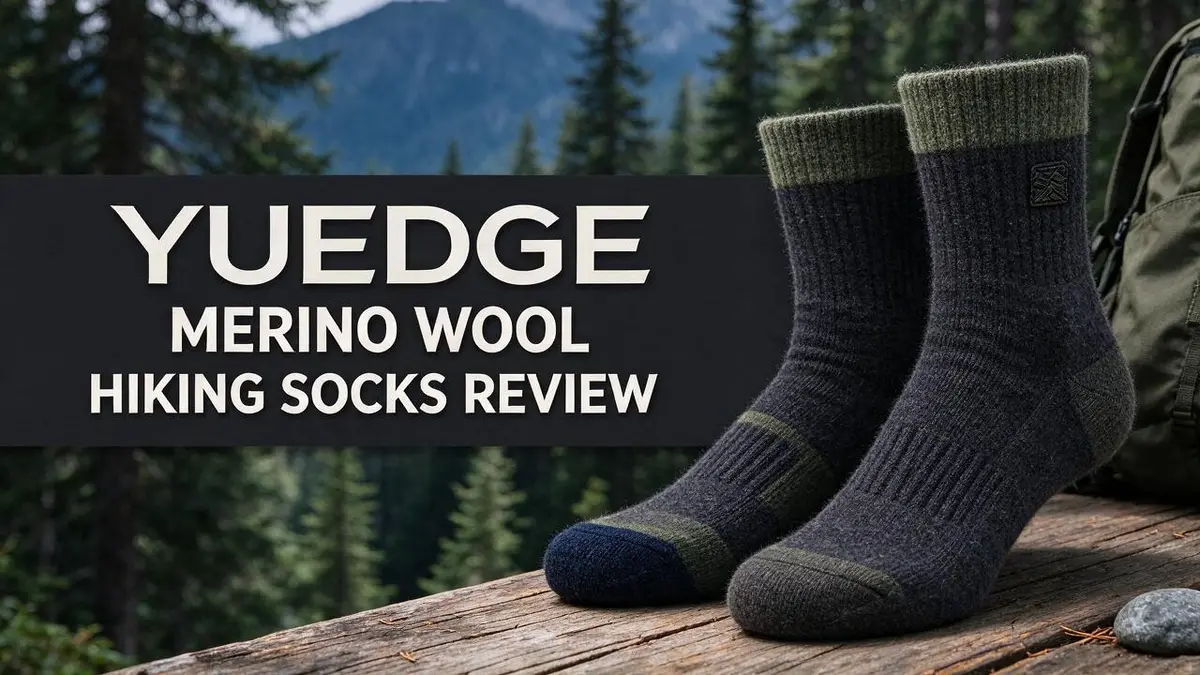
YUEDGE Merino Wool Hiking Socks Review: Cushioning, Comfort and Durability Tested
Sore, sweaty feet can ruin a good hike. Your socks matter more than most hikers think.
The YUEDGE Merino Wool Hiking Socks aim to fix that problem. They offer terry cushioning, arch support, and a reinforced heel and toe.
The listing says these socks absorb moisture, reduce stuffiness, and keep your feet warm. Shoppers on Amazon UK give them 4.6 out of 5 from 961 reviews.
That score looks great. But does it hold up on the trail?
This review covers the key features, the strengths, and the possible weak spots. We also compare YUEDGE with Darn Tough, Smartwool, and Bridgedale. By the end, you will know if these socks deserve a place in your pack.
In a Nutshell
-
Cushioning: The socks use terry cushioning to soften each step. Your soles get extra comfort on long, rocky trails.
-
Support: Built in arch support gives the midfoot a snug, steady feel. That fit helps the sock stay in place as you walk.
-
Reinforced spots: The heel and toe carry extra reinforcement. These areas usually take the most punishment on a hike.
-
Fabric check: Listings say Merino wool, and one says soft wool blend. The exact Merino content is not confirmed for every model. Read the label before you buy.
-
Durability question: Wool socks often wear thin first at the heel and forefoot. We found no YUEDGE specific complaints, but long term wear still needs more proof.
-
Rival options: Darn Tough, Smartwool, and Bridgedale all make strong hiking socks. Compare them if you want a brand with a longer track record.
Material and Wool Composition
Fiber choice shapes how a sock feels on the trail. Material matters more than most hikers expect. This section looks at what goes into these socks and what the label really means.
Merino wool comes from sheep with fine, soft fibers. These fibers bend easily against the skin. That gives a gentle feel that many people find comfortable on long days.
Wool also holds warmth without feeling heavy. Even when damp, the fibers keep some insulation. This helps during cool mornings and chilly stops along a mountain path.
A blend works differently. A soft wool blend mixes wool with other fibers. Manufacturers often add nylon or polyester to the mix. These fibers add stretch and help the sock keep its shape after many washes.
Nylon brings strength to high wear areas. It can also help the sock fit snugly around the ankle and calf. Still, a higher synthetic share may reduce the pure wool feel.
Check the label before you buy. The percentage of wool tells you how much natural fiber the sock contains. A higher wool share usually means more softness and warmth. A lower share often means more stretch and quicker drying.
Not every YUEDGE model lists the same material. Some pages name pure Merino, while others mention a blend. Because of this, read the tag or product details for each size and style you consider.
Look for the exact percentage on the packaging. Compare it with the fiber list on the inside tag. If the details do not match, trust the tag and ask the seller for clarification.
Fiber content also affects care. Pure wool often needs gentle washing and air drying. Blends can handle slightly rougher care, which may suit busy hikers who want easy upkeep.

- Double Layer Design with Terry Loop Lining offers ultra thick cushioning and enhanced warmth for...
- WOOL SOCKS - The materials for this stylish men wool socks is very soft and comfortable, Fuzzy inner...
Last update on 2026-10-24 / Affiliate links / Images from Amazon Product Advertising API
Cushioning, Arch Support and Fit
Cushioning matters most on rocky descents. Padding should match your shoe. A fuller cushion suits sturdy boots, while lighter padding fits trail runners better.
Fit starts at the midfoot. A good sock should hug the arch without pinching. If the band feels tight after ten minutes, the sock may be too small.
Arch height changes everything. Flat feet may enjoy the lift, while high arches may need a closer look. Try the socks on at home first. Walk up and down stairs to see how the midfoot responds.
Heel fit is the next test. A snug heel pocket prevents slipping and blisters. If the heel lifts with each step, the sock may feel loose on steep climbs. Good heel control also keeps the socks from bunching under your foot.
Toe room counts too. Toes need space to spread on long downhill stretches. Compare the sock length with your longest toe, and leave a little extra room for swelling later in the day.
Cuff height also changes comfort. A taller cuff can shield the shin from boot edges. A shorter cuff keeps the ankle airy during warm summer hikes.
Layering can improve fit. Thin liner socks under these may reduce friction. Just make sure the boot still closes easily over both layers.
Sizing charts vary between brands. Measure your foot in the evening, when it swells a little. Then match that length to the chart before you order.
A short test hike helps most. Wear the socks on a familiar trail for an hour. Pay attention to hot spots, bunching, and any slipping near the heel. Make notes after each walk, then decide whether the fit feels right for longer trips.
Moisture Management and Warmth
Your feet sweat more than most people expect. On a steep climb, that moisture can soak your socks within minutes. Dry feet feel better and stay happier on the trail.
Wool fibers handle moisture in a helpful way. They can hold water vapor before the fabric feels wet. This keeps your skin drier for longer. Dry fibers also feel softer against the skin, and that comfort lasts on hot, sunny days.
Evaporation matters too. Air must move through the fabric for sweat to dry. A sock that breathes lets that happen, so your feet cool down after a tough section.
Wool also keeps warmth in cold air. A damp sock loses heat fast. A dry wool sock keeps your toes comfortable on a chilly morning or during a windy rest stop.
Breaks can cause a sudden chill. Sweat cools quickly once you stop walking. Wool slows that chill, so your feet stay warm between miles.
Layering boosts both comfort and dryness. Many hikers wear a thin liner under a wool sock. The liner pulls moisture away from the skin. The wool then holds warmth and lets vapor escape.
Pack a spare pair for long days. Swap them at lunch and you will notice the difference. Fresh socks feel cozy, and dry skin often means less irritation.
Weather changes the best choice. In warm weather, a lighter sock helps sweat move away. In cold weather, a thicker pair holds heat close to your feet.
Wool also performs well in wet conditions. Rain can soak your boots, yet wool still keeps some warmth when damp. Many hikers trust it over cotton for that reason.
Your feet will thank you on the trail. Stay dry, stay warm, and keep your focus on the view. Pay attention to how your feet feel at mile five.
Top 3 Alternatives
Darn Tough Hiker

- Midweight with Cushion - A warm and extremely comfortable choice when conditions demand it, this...
- Micro Crew Height - A shorter, more concise take on the traditional crew height. Peeks just above...
Last update on 2026-10-24 / Affiliate links / Images from Amazon Product Advertising API
Darn Tough Hiker socks offer a cushioned feel for long trail days. Many hikers like the strong construction that keeps seams in good shape over time. The fabric wicks sweat away from your skin, so your feet stay dry on warm climbs.
The sock comes with a lifetime guarantee. That promise gives you peace of mind if a pair wears out early. Frequent hikers often pick this option for its durability.
Smartwool Hike Light

- VERSATILE HIKING SOCKS. Perfect fit. Powerful durability. Formerly known as PhD Outdoor, these socks...
- LIGHT CUSHION. Made with light cushioning on the entire bottom of the foot, these merino wool hiking...
Last update on 2026-10-24 / Affiliate links / Images from Amazon Product Advertising API
Smartwool Hike Light socks feel thin yet supportive inside your boot. They use a light cushion under the foot and a snug arch band. This setup keeps your feet comfortable on mild day hikes.
The blend of merino wool and synthetic fibers adds stretch and quick drying. You may notice less odor after a full day on the trail. These socks suit hikers who want breathable comfort without bulk.
Icebreaker Hike Light

- DESIGNED FOR: Lightweight, soft, and breathable for everyday comfort, the Lifestyle Light Crew socks...
- MATERIAL CONSTRUCTION: Lightly cushioned fabric blend made from Merino Wool (60%), Nylon...

Last update on 2026-10-24 / Affiliate links / Images from Amazon Product Advertising API
Icebreaker Hike Light socks use pure merino wool, which feels soft against the skin. Merino naturally resists odor, so you can wear them for several days. The fine knit also helps regulate temperature on cold mornings and warm afternoons.
Many outdoor fans choose this pair for its smooth fit and gentle compression. These socks work well for hiking across three seasons. Pick them if you value natural fibers and a clean, minimal feel.
Durability and Reinforced Wear Zones
The reinforced heel and toe zones do most of the work. These spots take the hardest punishment on every hike. Extra yarn in these areas helps the sock last longer.
Terry cushioning also plays a role in durability. Its thicker loop surface shields the sole from constant rubbing. Less friction means less wear over many miles.
Heel pockets matter most on downhill hikes. Your foot slides forward on steep descents, so the heel takes more force. Choose a pair where that area feels thick and snug.
Check the reinforcement before you hike. Turn the sock inside out and look closely at the heel pocket. A firm, even knit suggests solid construction.
Stitching tells a story too. Look for tight seams that lie flat without gaps. Loose loops or pulled threads often show early signs of wear.
Reviews offer useful long term feedback. Over 961 shoppers rated these socks 4.6 out of 5 on Amazon UK. That score suggests many owners find them sturdy after regular use.
Still, the listing claims need real testing. Every sock faces different trails and washing habits. Keep a simple note of wear after each few hikes.
Rotating two or three pairs gives each sock time to recover. Fibers rest between trips and keep their shape longer. Simple rotation can stretch the life of your favorite pair.
Wash them inside out on a gentle cycle to protect the knit. Hot water and fabric softener can weaken fibers over time.
Watch the toe box for thinning as the season goes on. Replace socks when you see holes or thin patches near the ball of the foot. Early replacement protects your feet on rough ground.
Care and Washing Tips
Clean socks last longer and feel better on the trail. Good care also keeps the cushioning springy and the fit snug.
Use cool or lukewarm water. Hot water can shrink wool fibers and make the knit feel stiff.
Choose a detergent made for wool. Regular detergents may strip natural oils from the fibers. A mild wool soap keeps the fabric soft.
Skip bleach and fabric softener. Bleach weakens the fibers. Softener can coat the fabric and reduce its ability to wick sweat.
Hand washing works well too. Fill a basin with cool water, swish the socks gently, and press out the soap. Avoid wringing them hard.
Turn off Velcro and zippers before washing. Hook fasteners can snag the knit and create small holes.
Never use a hot dryer. High heat can shrink the socks and weaken the elastic. Lay them flat on a towel instead.
Shape the socks while they are still damp. Smooth out the heel pocket and toe box so they dry in their natural form.
Store them folded or rolled, not stretched on a hanger. Stretching can make the cuff lose its shape over time.
Remove pills with a fabric shaver. Small balls of fiber can form on the surface after many trips. A gentle shave keeps the sock looking fresh.
Wash your socks after each hike, even if they look clean. Sweat and dirt can build up in the fibers and cause odor.
Treat odors early. Soak the socks in cool water with a splash of white vinegar for thirty minutes before the regular wash. This helps neutralize smells without harsh chemicals.
Follow these simple steps after every trip. Your feet will notice the difference on every climb.
Value for Money
Smart hikers judge a sock by how long it keeps working. A pair that holds its shape through many trips earns its place in your pack. Let’s see how these YUEDGE socks measure up in daily use.
Use frequency changes the math. Someone who hikes every weekend will wear through socks faster than an occasional walker. Plan to replace them when thin spots or loose cuffs appear.
Compare them with widely known brands. Bridgedale, Darn Tough, and Smartwool all have loyal fans. Darn Tough often gets praise for its lifetime guarantee, so it sets a high bar.
YUEDGE focuses on comfort. Terry cushioning and arch support keep the fit balanced on long climbs. Many reviewers rate them highly, which suggests steady comfort for most feet.
Material content needs a closer look. Some listings describe a soft wool blend rather than pure Merino. A blend can still perform well, but it may dry or wear differently. Check the label before you hike.
Season range counts too. These socks suit spring, fall, and winter hikes. Summer trails may call for a thinner option.
Wear patterns matter most. Pure wool often wears first at the heel and forefoot. Since YUEDGE has not confirmed this issue, test a pair on a short hike first. Then inspect them after a few outings.
Think about the full picture. Socks that fail early waste your time and your trip plans. Reliable socks protect your feet and your schedule.
Overall, these socks suit regular hikers. They offer solid comfort, decent wool content, and good reviews. Occasional walkers may find that a simpler pair does the job just as well.
Pros and Cons
Pros
– Pulls sweat away from the skin on steep climbs.
– Keeps feet warm on chilly morning starts.
– Adds padding under the sole for rocky trails.
– Helps reduce that hot, stuffy feeling inside boots.
Cons
– Material content is not clear for every model.
– Pure wool can wear faster at the heel and forefoot.
– Some socks have a toe seam that may need adjusting.
– Long term wear data is limited, so results may vary.
Who Should Buy It
Day hikers who walk local trails every few weeks will likely enjoy these socks. They suit people who want a reliable pair for regular outings. Comfort matters more than pack weight for this group, and the everyday feel makes them easy to reach for.
Hikers with sweaty feet may also find them useful. A sock that handles moisture can make long walks feel less damp. Many people say dry feet make the trail feel more enjoyable.
New hikers often feel lost in the sock aisle. This pair gives a simple starting point with cushioning and arch support. Beginners can learn what they like before buying a larger collection. They also make a fine gift for a friend starting out on trails.
Weekend campers who walk short loops between campsites will appreciate an easy, everyday fit. People who wear boots for long shifts or travel days can benefit too. Padding under the sole helps on hard surfaces as well as dirt paths. Comfort often carries over from the trail to busy city streets.
Some shoppers should look elsewhere. Ultralight backpackers who count every ounce may prefer thinner socks. Winter mountaineers facing extreme cold may need a warmer, more specialized option.
Shoppers who need guaranteed pure Merino should check the fabric label before ordering. Content can vary by model, and reading the label takes less than a minute. Hikers with very narrow or very wide feet should also compare sizing charts first.
Bottom line: if you want a comfortable everyday hiking sock, this pair fits well. Choose it for steady trail use rather than extreme conditions.
Final Verdict
The YUEDGE Merino Wool Hiking Socks earn a solid recommendation from us. Amazon UK shoppers give them a 4.6 out of 5 rating across 961 reviews.
That score shows steady satisfaction among real buyers. Many reviewers praise the warmth and the dry feel inside their boots.
We found no complaints aimed directly at YUEDGE. That is a good sign for a sock that many people wear on rough ground.
The reinforced heel and toe add extra confidence on uneven trails. These spots take the most pressure, so the added protection matters.
Here is a simple plan before you commit:
- Test one pair on a short local walk.
- Check the fit around the heel and arch.
- Wear them with your usual boots to confirm there is no rubbing.
- Rotate several pairs so each one rests between hikes.
This plan lets you judge the socks with your own feet. Every hiker has a different foot shape, so personal testing beats any review.
Read the product page carefully before you order. The listing claims give a helpful overview, but your own trail experience will tell the full story.
We also like that these socks keep things simple. You put them on, lace up, and focus on the view instead of your feet.
Our verdict: YUEDGE delivers a comfortable, well rated option for hikers who want reliable everyday socks. Give them a trial walk, and let your feet make the final call.
Frequently Asked Questions
Can I machine wash these socks?
Yes, but gentle care helps them last longer. Check the care label first. Use cold water and a mild detergent on a delicate cycle. Skip fabric softener, since it can coat the fibers and reduce softness. Let them air dry flat to keep their shape.
Do I need to break them in before a long hike?
Yes, a short break-in helps. New socks can feel firm at first. Wear them around the house or on a short walk before a big trip. This lets the fabric soften and settle around your feet.
Can I wear them for running?
They suit steady walking better than fast running. The thick padding can feel bulky during quick strides. Runners who want a lighter feel may prefer a thinner athletic sock for speed work.
Can I layer them over a liner sock?
Yes, a thin liner can add extra protection against friction. Layering helps most on spots that rub, like the heel or toes. Keep an eye on boot room, though. A double layer can feel tight in some boots, so test them before a long day out.
Are they good for travel or city walks?
Yes, they work well for everyday use. The soft feel suits sneakers and casual boots. They also pack light, so they fit easily in a travel bag for trips.