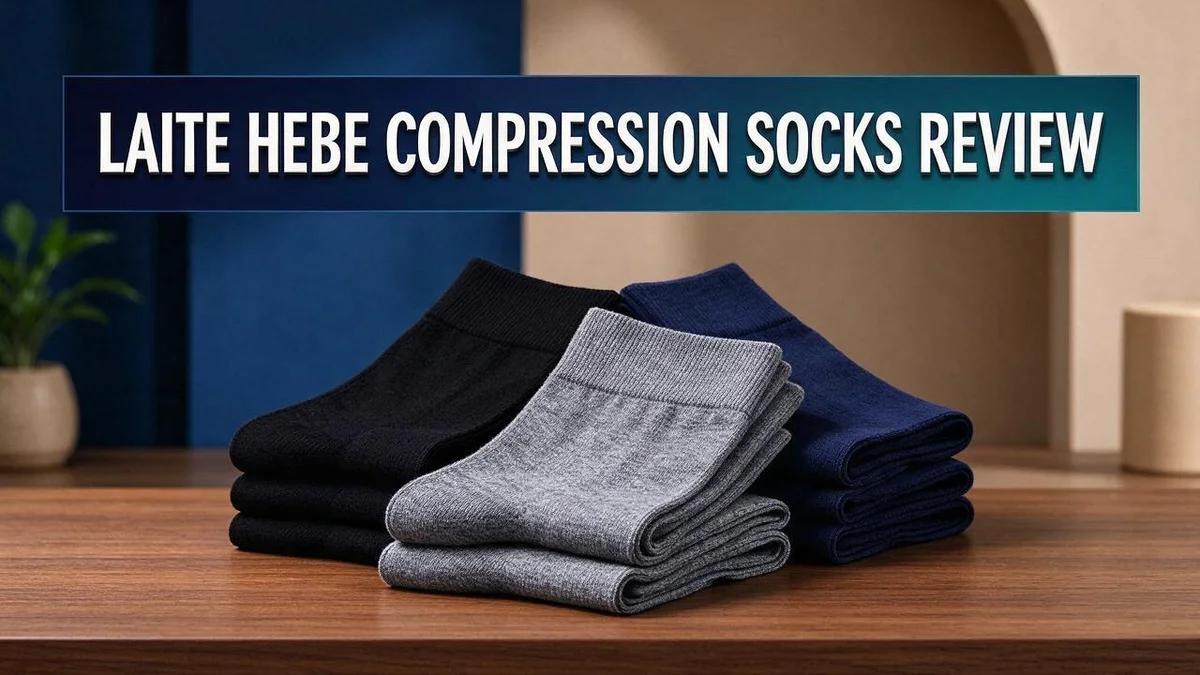
Laite Hebe Compression Socks Review: Do They Really Work for Circulation and Soreness?
Tired legs can ruin a good day. Long shifts, hard workouts, and hours of sitting all take a toll.
The Laite Hebe Compression Socks promise a simple fix. The listing claims graduated compression of 15 to 20 mmHg.
The material also claims to stay cool during workouts and warm during rest. The socks cover your feet, ankles, and legs.
The maker says they support circulation and ease swelling. It also claims relief for muscle soreness and plantar fasciitis pain.
Laite sells a three pack for medical use and a six pack for running and sports.
But how do they fit? Some shoppers wonder if they feel too tight. No independent tests exist yet.
This review covers the claims, the open questions, and how the socks compare with Bombas and ProCompression.
In a Nutshell
-
Mild to moderate pressure: The listing claims graduated compression at 15 to 20 mmHg. That level suits daily wear and light exercise.
-
Full coverage: The socks wrap the feet, ankles, and legs. This gives support from the arch up the calf.
-
Pain relief claims: The maker says the socks ease muscle soreness and plantar fasciitis pain. These are manufacturer claims, not tested results.
-
Proof is thin: I found no independent testing, no sizing chart, and no verified reviews. Shoppers must trust the listing for now.
-
Fit is the big question: Without a size guide, buyers may struggle to pick the right pair. Check the return policy before you order.
-
Brand comparison: Bombas has a name for high quality. Laite is a newer option with fewer proven details.
-
Bottom line: The Laite Hebe socks look promising but unproven. They fit shoppers who want to test a new pair for themselves.
Compression Level and Key Features
Compression socks work by applying steady pressure to the lower legs. That pressure is the main feature, so it deserves a closer look. The right level depends on how you plan to use them.
Pressure fits daily life. Lighter support often feels comfortable for people who stand or walk for long shifts.
Stronger support feels firm and can be hard to wear for hours. The Laite Hebe range sits in a middle zone that many everyday wearers may find easy to live with.
The pressure shape matters too. Graduated socks should push hardest at the ankle. The fabric should ease off as it climbs toward the calf.
The listing does not explain how much the pressure drops from one zone to the next. Without testing data, the exact pressure stays a claim rather than a fact.
Coverage is another strength. The socks reach from the toes to the upper leg. You do not need separate sleeves or foot covers.
Pick the pack that fits your routine. The three pack suits everyday wear or medical use. The six pack suits runners and gym goers who need spare pairs for rotation.
A larger set also cuts down on laundry gaps during busy weeks.
Check the pressure before you buy. Anyone with a health condition should ask a doctor first. Too much pressure can harm some people, especially those with circulation problems or skin issues. A professional can confirm which level is safe.

- 15-20 mmHg Graduated Compression Support-Designed with 15-20 mmHg graduated compression to deliver...
- Targeted Leg Support for Long Hours-Whether you are standing, sitting, walking, traveling, working...
Last update on 2026-10-24 / Affiliate links / Images from Amazon Product Advertising API
Material and Temperature Control
Temperature control matters more than many shoppers expect. Feet sweat during long hours, and damp skin can feel cold or itchy. Fabric that moves moisture away can keep the foot comfortable.
The listing does not name the exact fibers. That gap matters. A blend with synthetic yarns often dries faster than pure cotton.
The brand has not shared a full fiber list, though. Shoppers should check the label when the pack arrives.
Heat can also work against compression. Warm legs swell more on summer days, so the sock must stay breathable. Thick knit can trap heat and make the calf feel hot after an hour.
Try a simple home test. Wear the socks for thirty minutes while sitting at a desk. Notice whether the foot feels dry or sticky. Pay attention to any itch or hot spots. Then remove them and check the skin for redness.
Care affects temperature too. Harsh heat in the dryer can break down elastic fibers and change how the fabric breathes. Wash them in cool water, lay them flat, and air dry them.
Moisture control also affects odor. Socks that stay dry usually smell less after a long day. Rotating pairs and letting shoes air out can help even more.
Seasons change how these socks feel. In winter, a lighter pair may suit indoor use. In summer, a thinner knit could help on long walks. Many people rotate two pairs to match the weather.
Bottom line: The material story sounds helpful. Still, wearer proof is missing, so use these tips to judge comfort for yourself. Keep short notes after each wear.
Fit, Sizing and Comfort
Fit matters more than most shoppers expect. A pair that feels right on a store shelf can feel different after a long day on your feet.
Start with your own numbers. Measure your calf at its widest point and note your foot length. Then compare those figures with the brand’s options.
The listing offers no clear sizing chart. You may need to rely on your measurements and a little patience.
Live fitting clips offer one useful clue. A shopper asked whether the socks feel too tight, and no answer followed. Watch for that same worry when you try them on yourself.
Timing changes everything. Legs swell during the day, so put the socks on in the morning. Early wear shows the true fit and whether the top band digs in. Morning wear also gives a clearer picture.
Pay attention to how the sock feels after an hour. Mild snugness feels supportive. Pinching, numbness, or tingling means the pair is too small or too strong for you.
Heel placement counts too. If the heel pocket sits too low or too high, the sock can slip during walks. A snug heel keeps the sock in place all day.
Toes need room too. Check that the toe area feels roomy, and that the seams lie flat against your skin.
Think about your leg shape as well. Wide calves or narrow ankles may need a different fit. Since sizing details are limited, take a close look before you wear them out.
Plan for a swap. Check the seller’s return terms before you buy. That way, you can exchange for another size if the first pair feels wrong.
Top 3 Alternatives
Physix Gear Compression Socks

- Experience Superior Comfort: Our calcetines de compresion provide unparalleled support for all-day...
- Unleash Your Full Potential: Whether for sports or work, these sock compression socks are designed...
Last update on 2026-10-24 / Affiliate links / Images from Amazon Product Advertising API
Many people like these socks for everyday wear. They feel soft against the skin and hold their shape after many washes. The graduated fit helps blood flow during long days on your feet. Runners also pull them on after workouts to ease sore legs. They work well for travel, too. Nurses and teachers often choose them for busy shifts. Check the sizing chart before you order, because the right fit matters most.
CEP Compression Run Socks

- 20-30mmHg Targeted Compression for Peak Performance – Patented technology applies precise...
- Train Harder, Recover Faster – Targeted compression helps alleviate pain from common leg and foot...
Last update on 2026-10-24 / Affiliate links / Images from Amazon Product Advertising API
If you run often, these socks may suit you best. They offer strong support in the arch and calf. The fabric stays breathable, so your feet stay cool on warm trails. Many athletes wear them during marathon training blocks. The fit feels snug but never painful. Longer runs feel easier because your muscles get steady support. Give them a few runs to see how they feel.
Sockwell Elevate Compression Socks

- Moderate compression supports circulation with a barely-there ultra light cushion.
- Built-in arch support, welt top with tab, and breather panel enhance performance.
Last update on 2026-10-24 / Affiliate links / Images from Amazon Product Advertising API
These socks focus on comfort for people who stand or sit for hours. The gentle pressure aims to reduce leg fatigue at the end of the day. Many users say the cushioned sole feels great on hard floors. The top band stays in place, so the socks do not slip down. Office workers and travelers often reach for this pair on long flights. Choose these if you want a relaxed fit with steady support.
Circulation, Swelling and Recovery Claims
Laite Hebe makes bold claims about circulation. The listing says the socks promote blood flow and reduce swelling. These are manufacturer claims, not verified facts.
Swelling often builds in the feet and ankles after long hours. Many people notice puffiness by evening. Gentle support may help with that pattern, but results vary from person to person.
Recovery claims need a closer look. The brand also says the socks ease muscle soreness. Some athletes use compression after training, yet the research offers no proof for this product.
Plantar fasciitis relief is another claim. This heel pain comes from the tissue under the foot. A sock may feel supportive, but it cannot treat the condition alone.
Ask a doctor first if swelling is serious. Swelling in one leg, pain, redness, or warmth needs medical care. Do not rely on socks for these signs.
Watch for clear signs of change. Many people describe lighter legs or fewer evening cramps. These signs are personal and not measured by the brand.
The research also lacks independent testing. No lab data shows how much blood flow improves. Without that data, the claims stay uncertain.
Who may benefit most? People who sit or stand for long periods may notice the biggest difference. Those with no known circulation problems can usually test the socks with less risk.
Simple tracking helps. Note your ankle size in the morning and evening for one week. Compare how your legs feel with and without the socks. This gives you your own evidence.
Keep expectations realistic. The socks may feel good during a long shift. They may also feel like nothing at all. Honest results come from your own body, not from marketing.
Suitable Activities and Pack Options
Your daily routine should guide which socks you buy. Start by listing the places where you wear compression most often. Each activity brings different needs.
Active people often look at the sports set first. The listing says the socks feel cool during workouts. That claim matters if you run, hike, or lift weights. A spare pair also helps when you train several days in a row.
Travelers may find a different use for these socks. Long flights can leave feet and ankles feeling heavy and tired. Wearing compression on a plane might make the trip feel more comfortable. The listing does not confirm this, so treat it as a possibility rather than a promise.
Shift workers also spend long hours on their feet. Nurses, cooks, and retail staff often stand for most of a shift. Compression may feel helpful during those days. Many people change into a fresh pair at home to keep their routine simple.
Office workers can try a simple approach. Many people sit for hours without moving much. Wear the socks at a desk on a day when your legs feel tired. Notice whether the pressure feels steady or uncomfortable after a while.
Pregnancy, recovery after surgery, and other medical needs call for extra care. Ask a doctor before using compression for these reasons. A professional can suggest the right strength and fit for your body.
Plan your pack size around your weekly habits. Light users may only need a few pairs. Heavy users or sports fans may want more. Rotate pairs so each one rests between wears.
Test one pair before you commit to a larger set. Wear it for a full day that matches your main activity. Check how it feels at the end of the day. If it works well, you can order more with confidence.
Value for Money
Value means more than the box in your hand. A good sock should fit well, last well, and suit your daily life. The Laite Hebe listing gives some clues, but it leaves big gaps.
Wear rotation can stretch a pack further. Owning two or three pairs lets you rest one pair while you wear another. This habit may help the elastic recover between uses. Rotation also helps you spot early changes in fit.
Durability is the biggest unknown. The research does not include long term wear tests. Nobody has confirmed how many washes these socks can handle. Compression fabric often loses its grip over time, so track how the socks feel after a few months.
Care habits affect how long socks last. Many makers suggest gentle washing and air drying. Heat from dryers can weaken elastic fibers. Following simple care steps may protect the comfort you get from them.
Compare the set to a known benchmark. Bombas is often seen as a high quality option. Its reputation gives shoppers a useful reference point for materials and build. Laite Hebe would need to match that standard through its own results.
Check the claims against your own experience. Write down how your legs feel after a week. Note whether swelling drops, whether cramps fade, and whether the socks stay comfortable. Your notes will show whether the socks deliver real benefits for you.
Real value comes from steady comfort over time. These socks may suit people who want simple daily support. Verified results are still missing, so keep your expectations measured. Keep a short log so you can judge the results with facts, not guesses.
Pros and Cons
Pros
– Full coverage from the feet up to the legs
– Graduated compression listed at 15 to 20 mmHg
– Temperature material marketed to feel cool during workouts
– Two set sizes for medical or sports needs
– Simple choice between a 3-pack and a 6-pack
Cons
– Fit is unclear because a live fitting video asks if the socks feel too tight
– No sizing chart appears in the research
– No verified reviews from real buyers are available yet
– Compression levels are based only on the listing claims
Who Should Buy It
Some people notice puffy ankles by the end of the day. These socks may suit them. The maker claims the graduated design helps reduce swelling.
Heel pain sufferers should read the claims closely. The listing mentions relief for plantar fasciitis pain. However, no independent study backs this up. A doctor should check any heel pain that lasts.
Warm sleepers form another group to consider. The material is marketed to feel warm during rest. People who feel cold at night may enjoy that cozy feel. Very hot sleepers may want a different option.
Buyers who prefer a snug feel need to think about fit. A live try-on video asks whether the socks feel too tight, but no answer is given. Those who dislike tight socks should check the fit carefully.
Home workers who wear socks all day form another group. The warm rest feel may help during long hours indoors. Notice whether they stay comfortable without pinching the toes.
Gift shoppers have a simple option here. A sock set can be a practical present for a parent or friend who spends long days on their feet. Think about their daily habits before choosing a set.
Measure your feet and calves before you order. The research has no sizing chart, so a tape measure helps. Check the product page for any size notes.
People with a history of leg heaviness can speak with their doctor before trying compression. The compression levels in the listing are only claims, so professional advice matters more than marketing. The right buyer wants honest comfort and does not mind a few open questions.
Final Verdict
The Laite Hebe compression socks look like a promising everyday option. The listing covers the main features a buyer wants. Still, the proof is thin.
Treat this verdict as cautious optimism. The claims sound good, but no independent testing backs them up yet.
What lifts the verdict: the temperature control idea stands out. Few basic compression sets promise comfort during both workouts and rest. That feature could make daily wear easier.
What holds it back: the relief claims for soreness and heel pain come from the seller. Treat them as marketing statements, not medical results.
A smart plan lowers your risk. Buy from a seller with a clear return option, then wear one pair for a few days.
Notice how the socks feel at the toes, the calf, and the top band. Stop wearing them if you feel tingling, numbness, or color changes in your toes.
Keep your expectations realistic. Compression socks can ease a tired feeling, but they do not replace movement. Walk often, stretch, and drink water.
ProCompression is worth a quick look as a second name. Reading about it can sharpen your sense of what a good pair feels like.
Verified buyer reviews, a clear sizing chart, and lab results would raise my confidence fast. Until then, the verdict stays at a careful yes.
Our bottom line is simple: these socks deserve a trial, not blind trust. If they feel comfortable and your legs feel lighter, keep them. If they do not, return them and move on.
Frequently Asked Questions
Can I wear these socks on a long flight?
Many travelers wear compression socks during long sits. The research does not mention flights, so treat this as a general idea. Move your ankles often while you sit.
How should I put them on?
Pull the sock over your toes first. Then smooth the fabric up your leg without bunching. A bunched top band can feel uncomfortable, so take your time with each step.
How long should I wear them each day?
The research gives no wear time guidance. Many people remove compression socks at night. Check your skin for redness or marks after long days of wear.
Do these socks replace medical care?
No, they do not replace medical advice. If you have heel pain, leg swelling, or circulation concerns, see a doctor first. Socks can support comfort, but they cannot diagnose or treat a condition.
What should I check before the first wear?
Read the care label before you wash them. Look over the top band and seams for any flaws. Keep the packaging until you know how the fit feels on your legs.