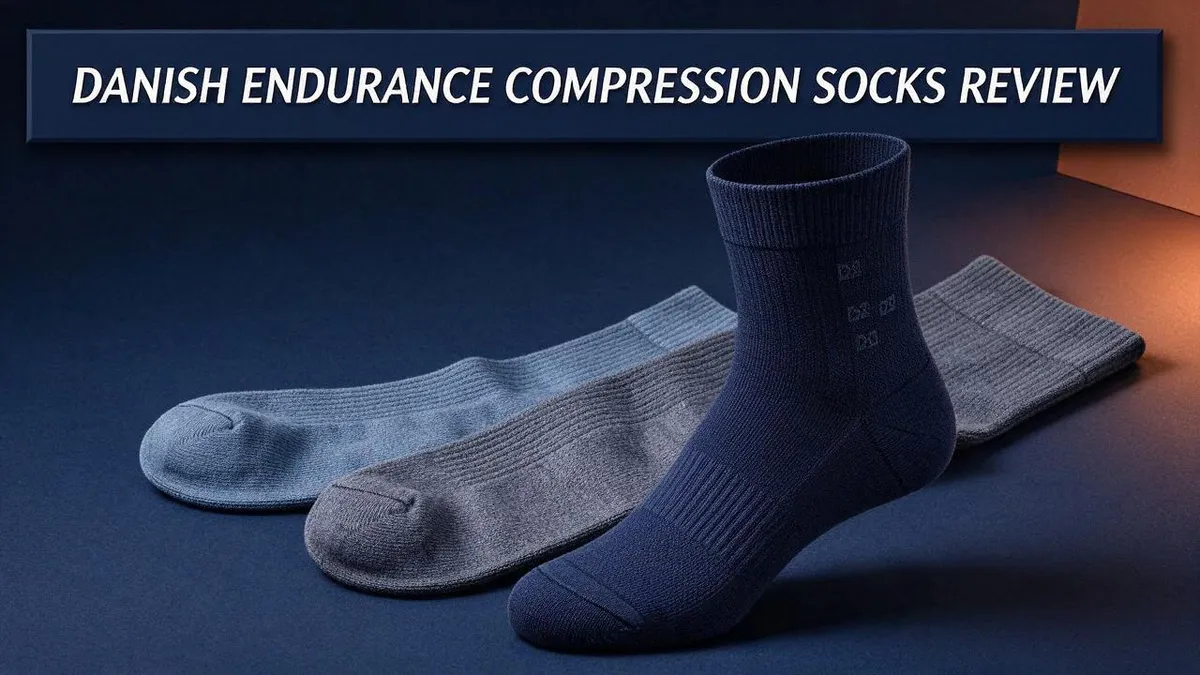
Danish Endurance Compression Socks Review: Real-World Performance, Fit and Value
Tired legs can ruin a good run. Heavy calves, sore ankles, and slow recovery hit many athletes. Danish Endurance Compression Socks aim to fix that.
These socks use graduated compression from 26 to 32 mmHg. The pressure starts at the ankle and eases up the calf. The brand calls them its highest compression running sock.
You also get arch compression and cushioning that reduces friction. The brand says the socks cut fatigue, swelling, and recovery time. Those claims are unverified, so we looked at what real reviewers say.
One reviewer found the calf elastic stays firm over time. Another called the cotton version soft and easy to wear. A third felt some rival socks were more comfortable.
Let’s see if these socks deserve a spot in your gear bag.
In a Nutshell
-
Strongest option in the brand’s lineup: Danish Endurance calls this its highest compression running sock. Runners who like a snug, supportive fit will notice the difference right away.
-
Plenty of choices: You can pick merino mid calf 3 packs, cotton compression socks, or running quarter socks in 3 packs. Each style suits a different routine and shoe type.
-
Soft cotton option: T3 describes the cotton version as soft and easy to wear. That makes it a friendly pick for everyday use and easy runs.
-
Recovery claims need proof: The brand says the socks reduce fatigue, swelling, and recovery time. Independent testing has not confirmed these claims yet, so treat them as promises.
-
Comfort trade off: One reviewer felt they were not as comfortable as some competitors. Runners with sensitive feet may want to test them on a short run first.
-
Our quick verdict: These socks suit runners who value firm support over a plush feel. Pick your style, start with a short outing, and see how your legs respond.
Compression Level and Graduated Design
Compression level shapes how these socks feel on every run. The pressure is strongest at the ankle and eases as it moves up the calf.
The unit is mmHg, which stands for millimeters of mercury. Doctors use the same unit for blood pressure. This makes the number easy to compare across brands.
This gradient helps move blood back up the leg to the heart. Less pooling in the lower legs may leave you feeling lighter after a long session.
Many runners find this firm level suits long efforts and hard training weeks. It feels more like gentle, steady support than a tight band.
Fit matters just as much as the number on the label. Measure your calf and ankle, then check the brand’s size chart before you choose.
A sock that is too loose loses its grip. A sock that is too tight can roll, bunch, or pinch.
Some people should speak with a doctor first. This includes anyone with circulation problems, diabetes, or skin sensitivity. Firm compression is not right for every leg.
Try the socks on in the morning, when your legs feel least swollen. This timing gives you a more accurate fit.
Wear them for a short walk first. Notice whether the pressure feels steady or uneven. Steady pressure means a good match. Your comfort at this level tells you more than any chart.

- 21-26 MMHG GRADUATED COMPRESSION: Firm graduated support tested with Swiss MST IV technology, used...
- FOR RUNNING AND TRAVEL: Built for runners and frequent flyers. Knee-high compression socks for road...
Last update on 2026-10-24 / Affiliate links / Images from Amazon Product Advertising API
Material and Fabric Quality
The fabric decides how these socks feel after a long run. Danish Endurance offers more than one material, so you can match the sock to your needs.
The merino option suits many runners well. Merino wool pulls moisture away from the skin. It also helps control temperature, so feet stay drier in warm and cool weather.
The cotton version takes a different path. It feels soft against the skin and works well for easy days. Cotton holds moisture longer, so it may feel damp during hard, sweaty runs.
Knit density also changes the feel. A tighter knit often gives more support under the arch. A looser knit may breathe better but can lose its shape faster.
Always check the fiber mix on the label. Blends with synthetic fibers often help the sock keep its stretch. Choose the material that fits your climate and running style.
Think about your typical run before you choose. Short road runs call for lighter fabric. Long runs in wet weather may call for a thicker blend with extra material around the foot.
Good care protects the fabric too. Wash the socks inside out in cool water. Skip fabric softener, since it can coat the fibers. Air drying helps the elastic last longer.
Fabric quality shows over time. A good sock keeps its softness after many washes. Pilling and thin spots are signs that the material wears down fast. Test the feel on your foot before a big race.
Comfort and Fit
Start with two simple measurements. Measure your foot length and your calf at its widest point. Then match both numbers to the size chart.
Your heel should sit snugly in the heel pocket. If the sock slides down or bunches up, the size may be off for your shape.
Putting them on takes a little patience. Pull the sock inside out to the heel, then slide your foot in. Smooth the fabric up the leg with both hands so no wrinkles stay behind.
Give your toes a fair check, too. They should lie flat and never curl against the seam.
Watch for warning signs. Tingling, numbness, or a cold feeling can mean the fit is too tight. Take the socks off and try another size.
Mid calf styles need the right length. The top should sit below the knee and stay put during movement. A sock that ends too high can feel bulky behind the knee. Avoid rolling the cuff, since a folded band can dig into the skin.
Heat is another factor. On warm days, a snug knit can make your legs feel sweaty. Choose a lighter option for summer runs, and keep a spare pair ready.
Runners with wider feet or thicker calves should read the chart with care. Some brands offer more than one width, so look for those options first.
Comfort often improves after a few runs. Your legs adjust to the pressure, and the socks start to feel more natural.
Top 3 Alternatives
CEP Compression Socks

- 20-30mmHg Targeted Compression for Peak Performance – Patented technology applies precise...
- Train Harder, Recover Faster – Targeted compression helps alleviate pain from common leg and foot...
Last update on 2026-10-24 / Affiliate links / Images from Amazon Product Advertising API
CEP makes well-known compression socks for runners and active people.
The socks use graduated pressure that helps blood flow back up the legs.
Measure your calves before you order. A good fit gives you the most benefit.
Blitzu Compression Socks

- Plantar Fasciitis & Ankle Pain Relief: Our ankle brace provides effective plantar fasciitis relief...
- Adjustable Ankle Support for Men & Women: Designed for a comfortable fit, this ankle brace for women...
Last update on 2026-10-24 / Affiliate links / Images from Amazon Product Advertising API
Blitzu Compression Socks offer a simple, everyday option for busy people.
Many nurses, travelers, and office workers enjoy their graduated support.
The fabric pulls sweat away from the skin, so your feet stay drier.
Physix Gear Sport

- Experience Superior Comfort: Our calcetines de compresion provide unparalleled support for all-day...
- Unleash Your Full Potential: Whether for sports or work, these sock compression socks are designed...
Last update on 2026-10-24 / Affiliate links / Images from Amazon Product Advertising API
Physix Gear Sport socks focus on athletes and active lifestyles.
The blend of fibers keeps feet dry and cushioned during tough workouts.
Many buyers say the socks stay up well without slipping.
Arch Support and Anti-Friction Cushioning
Arch support plays a quiet but useful role in these socks. The arch band gently hugs the midfoot. Many runners feel steadier when their foot stays settled inside the shoe, and this matters most on long days.
The cushioning works in a different way. It sits between your skin and the shoe lining. This layer softens each step and absorbs some of the impact you feel on hard pavement. Some runners find the ride feels less jarring.
Friction is often the hidden problem on long runs. Sweat and constant movement can make skin rub against the fabric. Blisters often start this way, so smooth cushioning matters just as much as firm support.
Your arch height changes how these socks feel. A higher arch may notice the band more clearly. A lower arch may need a short time to adjust to the gentle lift. Either way, the feeling should stay calm and even.
Think about your shoes too. A thick insole can crowd the sock and create extra pressure. Try the socks with the same shoes you plan to wear on race day.
Test the cushioning on a short run first. Pay attention to the arch and the ball of your foot. If one spot stays sore, the sock may sit in the wrong place.
Good arch support should feel steady, not sharp. Sharp pinching under the foot is a sign to stop and reset the fit. Keep the fabric smooth and flat under the arch, with no bunched areas. Give your feet time to adapt before you judge the result.
Durability and Elastic Retention
Durability shows up in the calf first. Reviewers say the elastic stays firm over time. That is a good sign for runners who train week after week.
No sock lasts forever, though. Elastic wears down with every wash, every run, and every trip through a hot dryer. Rotation can slow that process down.
Wear one pair, then rest it for a day or two. The fibers get time to bounce back. A pack of three pairs makes this simple.
Check the cuff every few weeks. Pull it gently, then let go. A healthy band snaps back fast. A tired band feels loose and may slide down during a run.
Look at the heel and toe too. Thin spots near the heel often show up first. A small hole can grow fast on a long run. Catch it early and the sock keeps its shape.
Avoid hanging them by the cuff. The weight can stretch the band over time. Lay them flat or fold them in a drawer instead.
Think about your race calendar, too. Save your freshest pair for important runs. Older pairs work well for easy recovery walks.
Keep a simple log. Write down the date you first wear each pair. Note how many runs it has done. Many runners replace socks when the compression feels weaker, even if the fabric still looks fine.
Your legs will tell you when it is time. Trust that feeling. Fresh socks give you a firm, supportive feel on every mile.
Available Variants and Suitable Activities
Danish Endurance Compression Socks come in several variants. Each style suits a different kind of activity. Choosing the right one helps you get the most from every pair.
Merino mid calf three packs suit cooler days. The longer length covers the calf fully. Hikers and walkers often pick this style for long days outdoors.
Cotton compression socks fit everyday life. They feel soft against the skin. Many people wear them for standing shifts, errands, or long afternoons at a desk.
Running quarter socks are made for movement. They sit low on the ankle, so they stay hidden under running tights or shorts. Runners who train on roads or trails often reach for this style first.
Match the sock to the sport. Cyclists may prefer mid calf styles for extra coverage. Gym goers who do strength training or cross training may like the lighter quarter option. Rest days call for the cotton pair, since comfort matters most then.
Rotate your pairs for the best results. A runner who trains four times a week can keep two running pairs in rotation. That gives each pair time to dry and rest between sessions.
Travel is another good use for these socks. Long flights and road trips can leave legs feeling tired. A pair of mid calf socks in your carry on bag can make the journey more comfortable.
Race weekends also call for planning. Pack one fresh pair for each day of the event. That way, you always have a clean option ready.
Value for Money
Think about how often you will wear them. A sock you use every week gives far more benefit than one that sits in a drawer. Ask yourself how many runs, long days, or flights you plan each month.
Start small before you commit to a full set. Wearing one pair for a few weeks shows how the fit and feel suit your routine. Pay attention to how the socks feel after a full day, not only after a short walk.
The brand claims less fatigue, less swelling, and faster recovery. Those claims are not verified yet, so treat them as a hope rather than a promise. Keep notes on soreness and energy, then judge the results by how your own legs feel after hard sessions.
Comfort matters as much as performance. One reviewer found these less comfortable than some rivals. A sock you dread wearing will sit unused, no matter what it promises on paper.
Plan for the life of each pair. Write down when you start wearing a pair and how many sessions it covers. This record helps you spot when a pair has done its job and when it is time to replace it.
Think about your own goals, too. A weekend jogger may need fewer pairs than a daily trainee. Choosing the right number for your routine means you will wear every pair fully and feel the benefit each time.
In the end, the best choice is the pair you reach for often. Frequent use and honest comfort matter more than any promise on the label.
Pros and Cons
Pros
- Graduated compression runs from 26 to 32 mmHg, ankle to calf.
- Arch compression gives the foot extra support.
- Cushioning helps block friction on long runs.
- The calf elastic reportedly stays firm over time.
- The cotton version feels soft and is easy to wear.
Cons
- One reviewer found them less comfortable than some rivals.
- The brand’s claims about less fatigue and faster recovery are unverified.
- Direct competitors are not named, so a side by side check is harder.
Who Should Buy It
Some people will get more from these socks than others. Runners who log long weekend miles often look for extra support from the ankle up.
Workers who stand for hours also make good candidates. Nurses, teachers, and retail staff often finish a shift with tired legs and sore feet. Socks like these may feel helpful during a long day on your feet.
People who sit at a desk all day form another group. Long stretches without movement can leave legs feeling heavy. These socks may suit anyone wanting extra support while seated. Results vary from person to person.
Shoppers with sensitive skin should read the fabric label first. Fiber blends can feel different from one pair to the next. A quick check helps avoid itching or irritation during long wear.
People who want a light, casual sock may find these too firm. Compression at this level feels snug by design. Some people simply prefer a looser fit for sleeping or lounging. Comfort first shoppers should compare a few options before they decide.
Older adults who want steady daily support also make sense as buyers. Many people notice heavy legs with age. Easy daily wear fits into a normal routine without extra effort.
Anyone with a circulation condition or a medical concern should speak with a doctor first. This applies if you have diabetes, varicose veins, or past blood clots. Compression socks are not right for every body. A professional can give safe advice.
Final Verdict
Danish Endurance Compression Socks earn a solid recommendation for committed runners. They look like a smart pick for people who want firm support and are happy to test it.
The strongest point is the brand’s focus on high compression. This gives the line a clear purpose. It suits athletes who know they like a snug feel.
Choose your style by how you train. The merino mid calf 3 pack fits cooler runs and longer days on your feet. The running quarter socks 3 pack suits shorter sessions. The cotton pair fits easy daily wear.
Keep your expectations realistic. The research offers little hard proof of faster recovery. Treat those gains as a possible bonus, not a promise.
The missing rival comparison also matters. Without named competitors, you should judge the socks by your own feel. Your legs will tell you more than any roundup.
Fit matters most with compression gear. Check the size chart before you order. A sock that is too tight or too loose will not give you the support you want.
Here is a simple plan. Try one pack on your regular route. Notice how your calves feel after the run and the next morning. Then decide if the fit works for you.
Our final call is positive but careful. Buy them if you want strong support and plan to wear them often. Skip them if you prefer a loose, light sock.
Danish Endurance has built a dependable option for serious runners. A fair trial will show you quickly whether it belongs in your gear bag.
Frequently Asked Questions
Can I wear them for races or only for training?
Many runners wear them on race day too. Test them on a few long runs first. Never wear a brand new pair for the first time on race day. A pair that feels right during training will likely feel right when the pressure is on.
How do I wash them to keep the compression?
Wash them in cool water with a mild soap. Air dry them flat or hang them up. Heat from a dryer can wear out the elastic faster, so skip it when you can.
Can I wear them after a run?
Some runners wear compression socks after training to help their legs feel rested. Keep them on for a few hours, then take them off. If you notice tingling, numbness, or tightness that does not ease, remove them right away.
What styles can I choose from?
The range includes merino packs with calf height socks and quarter length packs for running. Cotton options suit everyday wear. Pick the length that matches your shoes and your routine.
How many pairs should I start with?
Start with one pack of three. This lets you rotate pairs so each one gets rest between wears. Rotating also helps you spot any change in fit over time.